giant cane Care (Arundinaria gigantea)

Also known as: river cane
giant cane

About giant cane

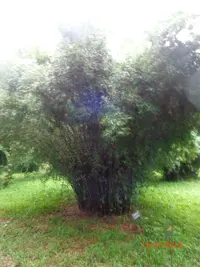
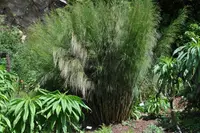
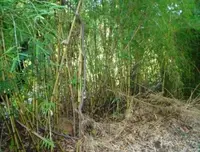
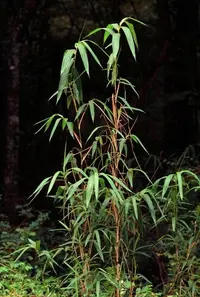
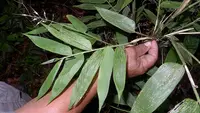
Giant cane, Arundinaria gigantea, is a tall, clumping bamboo native to riverbanks and wetlands in the southeastern United States. It forms dense, upright thickets with hollow, jointed stems and narrow leaves.

The plant spreads by rhizomes, creating large colonies over time, which makes it useful for screening and erosion control but requires space and monitoring. It prefers moist soil, regular water, and sun to light shade.

With suitable conditions and room to spread, it is generally robust and long-lived. Understanding how to care for giant cane helps prevent unwanted spreading and keeps stands healthy.

Main Plant Requirements

Care Difficulty

Moderate Care

Light Preference

Full Sun

Water Requirements

Keep Soil Moist

Temperature Preference

Cold Hardy

Hardiness Zone

5–9

Soil Texture

Loamy, Clay, Organic-rich

Soil pH

Acidic (5.5–6.5), Slightly acidic (6.5–7.0)

Soil Drainage

Waterlogged tolerant

Fertilization

Minimal (feed rarely)

Get Personalized Care Plan

Scan your plant to receive care tips personalized for your specific plant

Available on iOS and Android

How to Care for the giant cane

This clumping bamboo prefers bright sites with some protection from harsh midday sun.

  • Provide 4–6 hours of direct morning sun with light shade or filtered light in the afternoon to reduce leaf scorch.
  • Plant giant cane where it receives at least bright, open shade; dense shade reduces cane density, height, and leaf color quality.
  • In hot summers, monitor for curling or yellowing leaves as a sign of excess sun stress, and use nearby shrubs or trees to create partial shade.

This species thrives in consistently moist ground but dislikes stagnant, airless soil.

  • Water when the top 3–5 cm of soil feels barely moist, aiming to keep the root zone evenly damp rather than saturated.
  • In the first 1–2 growing seasons, check soil every few days in warm weather; drooping, rolled leaves signal thirst, while soft, yellowing leaves suggest overwatering.
  • Ensure deep, loamy soil with good drainage; in heavier clay, create raised beds or shallow swales so Arundinaria gigantea has moisture without standing water.

This hardy bamboo tolerates a wide temperature range but grows best in moderate conditions.

  • Active growth is strongest around 65–85°F (18–29°C); expect slower shoot production outside this range.
  • Established plants typically survive down to about -10°F (-23°C), though repeated deep freezes can kill young culms and reduce height the following season.
  • In hot spells above 95°F (35°C), growth may pause and leaves may curl; provide mulch to cool roots and reduce stress during peak summer heat.

This species grows best in moderately humid air but usually adapts to typical outdoor conditions.

  • Aim for 40–60% humidity; it tolerates brief drier spells if soil moisture is stable.
  • Dry air with curling leaf tips or browning edges signals humidity stress in giant cane.
  • Increase humidity outdoors with nearby mulched beds or grouped plantings that slow evaporation around the clump.

This bamboo prefers moist, deep, structured soil that stays aerated yet never stagnant.

  • Use a loamy, organic-rich base with 30–40% compost to support vigorous rhizome and culm growth.
  • Ensure steady drainage; slightly raised beds or gentle slopes help prevent waterlogging over the root zone.
  • Target slightly acidic to neutral pH around 6.0–7.0, avoiding strongly alkaline or saline sites.
  • On heavier clay, improve aeration by working in coarse sand and fine pine bark to create stable pore spaces.

This species can be grown in containers, but only with careful control of root spread and weight.

  • Choose a wide, heavy container that physically restrains rhizomes and prevents the tall foliage from tipping in wind.
  • Select thick-walled clay or concrete to keep the root zone cooler and more stable than in thin plastic pots.
  • Elevate the container on blocks so drainage holes stay clear and runoff leaves the base quickly, limiting soggy pockets.

This native bamboo grows well in average soil, but light feeding improves vigor in poor or exhausted sites.

  • Apply a balanced slow-release fertilizer (around 10-10-10) at half strength once in early spring as new shoots emerge.
  • In very lean soils, repeat a light application in midsummer, or top-dress with 2–5 cm of compost.
  • Avoid overfeeding giant cane; excessive nitrogen causes weak, floppy growth and more frequent mowing or cutting.
  • Stop fertilizing in late summer so growth can harden off before winter, and never feed during dormancy.

Pruning Arundinaria gigantea is mainly used to manage height, density, and remove weak canes.

  • Schedule main pruning in late winter or very early spring before strong new growth starts.
  • Cut dead, winter-damaged, or pest-damaged canes at ground level using sharp bypass pruners or loppers.
  • Thin crowded clumps by removing some of the oldest, thickest culms to improve air flow and light penetration.
  • For a tidier hedge or screen, lightly tip back the tallest shoots, but avoid shearing too hard into fresh foliage.

This species is usually grown in-ground, so care focuses on thoughtful transplanting and occasional container up-potting.

  • Plan transplanting or repotting in early spring or early fall when temperatures are mild and soil is evenly moist.
  • Look for roots circling the pot, roots emerging from drainage holes, or declining vigor as signs a container plant needs more space.
  • Move to a container 1–2 in wider, or into a prepared bed with loose, well-drained soil and ample horizontal room for rhizomes.
  • Reduce root stress by watering thoroughly before and after moving, shading for 3–7 days, and trimming only broken roots or canes.

Arundinaria gigantea is most reliably propagated by division of rhizomes rather than from seed.

  • Divide clumps in early spring just as new shoots appear, when soil is workable and not waterlogged.
  • Use a sharp spade or saw to separate sections with several healthy culms and a strong rhizome and root mass.
  • Replant divisions at the same depth in moist, well-drained soil, firming soil around roots to remove air pockets.
  • Keep divisions evenly moist and lightly shaded for the first few weeks until new growth indicates establishment.

This bamboo is cold hardy in much of its native range and usually needs minimal winter care in the ground.

  • Plants tolerate moderate frost, but top growth can burn in exposed, windy sites during severe freezes.
  • Apply a 5–8 cm mulch layer over the root zone in late fall to buffer freeze–thaw cycles and retain moisture.
  • For containers in colder areas, move pots into an unheated garage or against a sheltered wall to protect roots from deep freezing.

Care Tips

Rhizome Containment

Install a 30–45 cm deep root barrier or use a bottomless stock tank before planting to confine rhizomes and keep the clump from spreading into lawns, paths, or neighboring beds.

Selective Culm Thinning

Each late winter, remove the oldest, dullest culms at ground level to open the stand, improve air movement, and direct energy into stronger new shoots for the coming season.

Wind and Snow Management

In exposed sites, lightly tie groups of culms with soft garden twine before heavy wind or snow to reduce lodging and breakage, then remove the ties in early spring so new growth can expand freely.

Mulch for Shoot Protection

Apply a 5–8 cm layer of coarse organic mulch over the root zone in late fall to buffer soil temperature, protect emerging spring shoots, and maintain a more stable moisture regime.

Targeted Cane Harvesting

If using canes for stakes or crafts, cut mature, firm culms in late winter when sap flow is low, which both provides durable material and functions as a controlled thinning step when growing giant cane.

Common Pests and Diseases

Bamboo mites

This pest feeds on the undersides of leaves, causing fine yellow stippling, bronzing, and a faded, dusty look on the foliage. Heavy infestations can reduce vigor and make clumps of giant cane look dull and stressed.

Solution

Rinse leaf undersides with a strong stream of water every few days to knock mites and eggs off, then improve humidity and reduce heat stress where possible. For persistent problems, apply a horticultural oil or insecticidal soap thoroughly to leaf undersides at 7–10 day intervals, making sure to repeat treatments to catch newly hatched mites.

Bamboo aphids

These insects cluster on young shoots and leaf bases, sucking sap and excreting sticky honeydew that can lead to sooty mold growth. Symptoms include distorted new growth and sticky, shiny surfaces on stems and nearby leaves.

Solution

Prune and discard heavily infested shoots, then wash remaining stems and leaves with water to remove aphids and honeydew. If needed, use insecticidal soap targeted at tender shoots and the undersides of leaves, and encourage natural predators such as lady beetles by avoiding broad-spectrum insecticides when caring for giant cane.

Bamboo borers

These insects tunnel into culms, creating small entry holes, internal galleries, and weakened or dying canes that may yellow and dry out prematurely. Infested culms often show sawdust-like frass near the entry points.

Solution

Cut and remove affected culms at ground level as soon as boring damage is noticed, and dispose of them away from the planting area to break the life cycle. Maintain vigorous growth through proper watering and nutrition, and avoid leaving cut or dead culms lying near the stand, since these can attract borers.

Leaf rust

This disease causes small yellow to orange pustules on leaves that may coalesce into larger discolored patches, sometimes leading to premature leaf drop. Symptoms include a dusty spore layer on the leaf surface when rubbed.

Solution

Remove and destroy affected leaves and thin overly dense clumps to improve airflow through the stand. Avoid overhead irrigation, and if rust recurs or is severe, use a labeled fungicide for ornamental grasses or bamboos, applied according to instructions during the early stages of infection.

Leaf spot

This disease produces tan to brown spots with darker margins on leaves, often starting on older foliage and expanding under warm, wet conditions. Symptoms include a patchy, speckled canopy and early shedding of damaged leaves.

Solution

Rake and discard fallen leaves, prune out the worst affected foliage, and space or thin canes to allow faster drying after rain or watering. Water at ground level rather than over the foliage, and in persistent cases apply a broad-spectrum ornamental grass fungicide early in the season to protect new leaves.

Interesting Facts

Last native US bamboo

This species is one of only three bamboos native to North America and forms the largest natural bamboo stands historically found in the United States, especially in the Southeast.

Foundation of canebrake ecosystems

Dense stands, known as canebrakes, once covered large floodplains and river valleys and provided critical habitat structure, food, and nesting sites for many specialized animals, including some now-endangered birds and insects.

Unusual flowering behavior

It flowers infrequently and irregularly, often with entire local populations blooming around the same time, followed by heavy seed production and dieback of culms, a pattern that complicates its long-term study and management.

Botan icon

Did you know?

Extensive loss of canebrake habitat, mainly through agriculture and river alteration, has made this bamboo a focal species in some ecological restoration projects aiming to recover rare wildlife communities that depend almost entirely on giant cane.

FAQs about giant cane

This species spreads strongly by rhizomes, forming large, dense clumps or thickets over time. In gardens, use root barriers, mow edges, or regularly remove unwanted shoots to keep it within the desired area.

Grow Healthy Plants with Botan Care

Keep your plants happy and healthy with plant identification, disease detection, and easy care guidance.

Botan plant care app — identify plants on mobile

Explore More Plants