Root containment strategy
Install a solid root barrier 45–60 cm deep along property lines before planting to keep clumps contained and make future division or removal significantly easier.

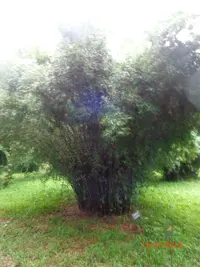
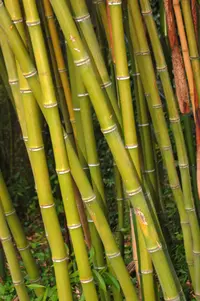
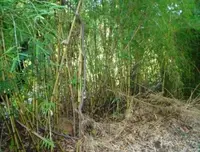
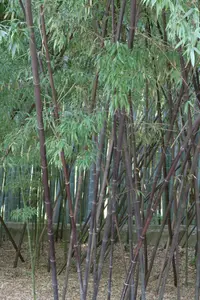
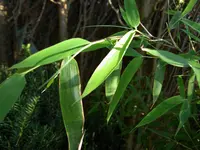
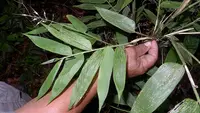
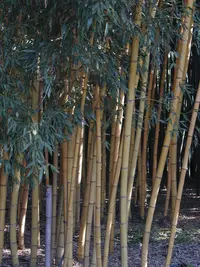
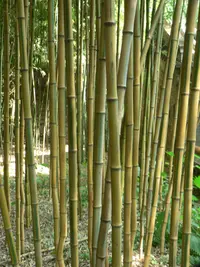
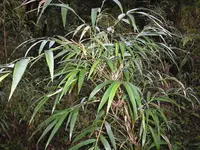
Hedge bamboo (Bambusa multiplex) is a clumping bamboo species grown mainly as a dense living screen or ornamental shrub. It forms many upright, woody canes with fine, narrow leaves that create a full, bushy appearance. Native to China and parts of Southeast Asia, it adapts well to many warm and mild climates and is often used in urban landscapes. Its clumping habit, moderate height, and relatively controlled spread make it easier to manage than running bamboos. It generally prefers bright light, regular moisture, and well-drained soil, which helps explain how to care for hedge bamboo in home gardens or larger plantings.

Care Difficulty
Moderate Care

Light Preference
Full Sun

Water Requirements
Regular Water

Temperature Preference
Warm Climate

Hardiness Zone
8–11

Soil Texture
Loamy, Sandy, Organic-rich

Soil pH
Acidic (5.5–6.5), Slightly acidic (6.5–7.0)

Soil Drainage
Moist but well-drained

Fertilization
Moderate (every 2–4 weeks)
Scan your plant to receive care tips personalized for your specific plant
Available on iOS and Android
This clumping bamboo prefers bright, indirect light with some direct sun each day.
This bamboo prefers evenly moist, well-drained soil without staying soggy.
This species grows best in warm, frost-free to light-frost climates.
This bamboo prefers moderately humid air but usually adapts to typical indoor and outdoor conditions.
This species grows best in loose, moisture-retentive but well-draining soil that allows rapid root expansion.
This bamboo is suitable for container growing when the pot is chosen to manage its vigorous, clumping root system.
Bambusa multiplex benefits from steady, moderate feeding to support dense, healthy growth in active seasons.
Pruning Bambusa multiplex helps control size, improve air flow, and maintain an attractive clump.
Dense, fast-rooting growth means this bamboo occasionally needs more space or division to stay vigorous.
Bambusa multiplex is commonly propagated by division and culm cuttings rather than by seed.
This bamboo is moderately cold tolerant but benefits from basic winter preparation in cooler regions.

Plant Health Check
Not sure what's wrong with your plant? Check your plant's health inside the app.
Unlike running bamboos, Bambusa multiplex forms tight clumps with short rhizomes, so it expands slowly and is less likely to become invasive in managed landscapes.
Among many tropical bamboos, Bambusa multiplex is notable for its ability to tolerate brief drops close to 15°F, which allows it to be cultivated in mild temperate regions as well as subtropical climates.
The culms of Bambusa multiplex are thin-walled but tough and flexible, which makes them useful in their native range for light construction, garden structures, and craft applications where moderate strength and bending capacity are needed.

Bambusa multiplex includes numerous horticultural forms, such as dwarf, variegated, and golden-culm cultivars, and this genetic and morphological diversity has made it one of the most widely used ornamental clumping bamboos in warm-climate urban landscaping.
Yellowing leaves often result from water stress, nutrient imbalance, or root problems. Check for soggy or very dry soil, compacted roots, or nutrient-poor substrate, and adjust watering, drainage, and fertilization rather than reacting only to leaf color.
Keep your plants happy and healthy with plant identification, disease detection, and easy care guidance.