


Divide clumps
Every 2–3 years, lift and divide overgrown rhizome clumps in late spring, replanting vigorous sections with several shoots to keep the stand dense, healthy, and easier to manage when growing carrycillo.

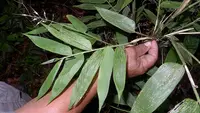
Carrycillo, Olyra latifolia, is a shade-loving tropical bamboo grass native to Central and South American forests. It forms arching clumps with broad, flat leaves and slender, cane-like stems.
The plant often grows as an understory grass, sometimes leaning on nearby shrubs or trees for support. Its soft foliage and relatively compact habit make it suitable for sheltered gardens or large indoor containers.
This species prefers warm, humid conditions, consistent moisture, and rich, well-drained soil. Once its needs are understood, it is moderately easy to grow, and basic knowledge of how to care for carrycillo helps it stay healthy over time.

Care Difficulty
Moderate Care

Light Preference
Partial Shade

Water Requirements
Regular Water

Temperature Preference
Tropical / Frost Sensitive

Hardiness Zone
10–11

Soil Texture
Loamy, Silty, Organic-rich

Soil pH
Acidic (5.5–6.5), Slightly acidic (6.5–7.0)

Soil Drainage
Moist but well-drained

Fertilization
Light (every 4–6 weeks)
Scan your plant to receive care tips personalized for your specific plant
Available on iOS and Android
Olyra latifolia prefers bright, filtered light that mimics an understory forest habitat.
This clumping bamboo-like grass prefers consistently moist but not waterlogged soil.
This species thrives in warm, frost-free conditions typical of tropical to subtropical climates.
This clumping bamboo prefers moderately humid air but adapts to most home conditions.
This species grows best in evenly moist, well-structured soil that balances drainage and water retention.
This bamboo adapts well to container growing when the pot supports its spreading root system and height.
Olyra latifolia responds well to light feeding but grows acceptably in fertile, organic soil without heavy fertilization.
Pruning Olyra latifolia is mainly cosmetic and helps maintain a tidy, controlled clump.
Carrycillo is usually grown in the ground, so transplanting is more common than container repotting.
Olyra latifolia is most reliably propagated by division, though seed is also possible.
In mild to warm climates, Olyra latifolia needs minimal winter care but dislikes hard freezes.

Plant Health Check
Not sure what's wrong with your plant? Check your plant's health inside the app.
This species is a shade-tolerant woody grass native to humid forests from Mexico through Central America into northern South America and the Caribbean, where it typically forms loose clumps in the forest understory rather than dense thickets.
Its distinctive broad, flat structures that look like leaves are actually modified branches called cladodes, while the true leaves are reduced, a trait that helps it capture light efficiently under low-light forest conditions.
The foliage serves as a host resource for specialized herbivorous insects in Neotropical forests, contributing to local food webs where many bamboo-feeding species depend on it for part of their life cycle.
Brown tips usually come from low humidity, irregular watering, or excess fertilizer salts. Maintain even moisture, increase humidity slightly, and flush the potting mix occasionally. Avoid letting the root zone dry out completely between waterings.
Keep your plants happy and healthy with plant identification, disease detection, and easy care guidance.

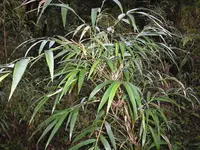
Argentinian quila
Chusquea quila
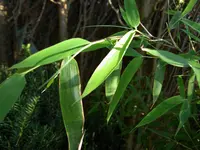
umbrella bamboo
Fargesia murielae
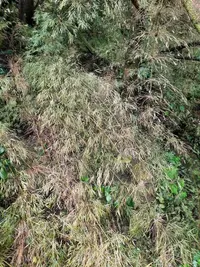
Rhipidocladum racemiflorum
Rhipidocladum racemiflorum
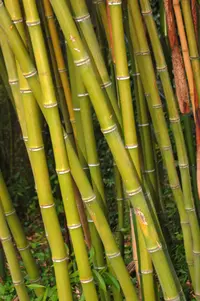
Giant Timber Bamboo
Phyllostachys reticulata
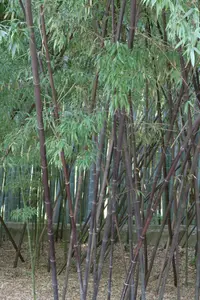
black bamboo
Phyllostachys nigra
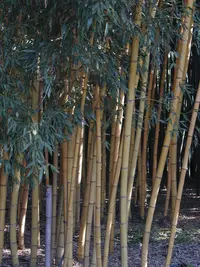
sulphur bamboo
Phyllostachys sulphurea
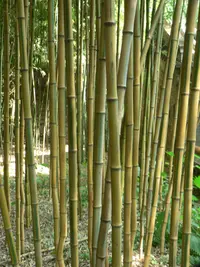
yellow grove bamboo
Phyllostachys aureosulcata
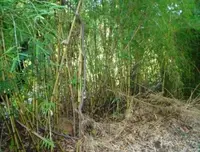
Chilean bamboo
Chusquea culeou