Rhipidocladum racemiflorum Care

Rhipidocladum racemiflorum

About Rhipidocladum racemiflorum

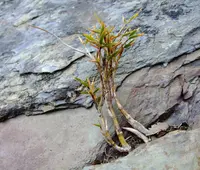
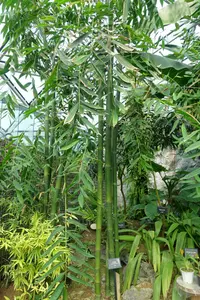
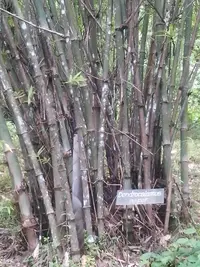
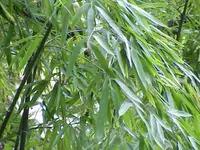
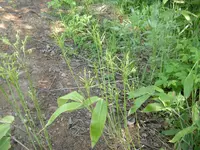
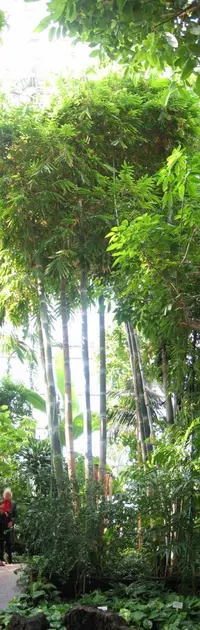
Rhipidocladum racemiflorum is a clumping bamboo species known for its slender, arching canes and fine foliage. It forms dense, upright thickets rather than running aggressively. Native to tropical and subtropical regions of the Americas, this bamboo prefers warm conditions and consistent moisture. It is often grown as an ornamental screening plant or as part of a mixed landscape. Growth can be fast where conditions are suitable, but it is less tolerant of cold and drought, which can make it more demanding in cooler or very dry climates. Those who want to care for Rhipidocladum racemiflorum should provide bright light, shelter from harsh wind, and well-drained but evenly moist soil.

Main Plant Requirements

Care Difficulty

Moderate Care

Light Preference

Partial Shade

Water Requirements

Moderate Water

Temperature Preference

Warm Climate

Hardiness Zone

Unknown

Soil Texture

Loamy, Sandy, Organic-rich

Soil pH

Acidic (5.5–6.5), Slightly acidic (6.5–7.0)

Soil Drainage

Well-drained

Fertilization

Minimal (feed rarely)

Get Personalized Care Plan

Scan your plant to receive care tips personalized for your specific plant

Available on iOS and Android

How to Care for the Rhipidocladum racemiflorum

This clumping bamboo prefers bright, indirect light with some gentle direct sun each day.

  • Provide 3–5 hours of morning sun with light shade or filtered light the rest of the day, especially in hotter climates.
  • Allow partial shade in the afternoon; strong sun from 1–4 p.m. can scorch leaves, causing pale tips and brown patches.
  • If stems become weak and leaves sparse, light is too low; in winter, compensate for shorter days by avoiding deep shade from buildings or trees.

This species prefers evenly moist but not waterlogged soil, supported by sharp drainage.

  • Water when the top 3–5 cm of soil feels slightly dry, aiming for consistently damp soil around the root zone, not saturated.
  • Use well-drained, loamy soil; pooling water, sour smell, or blackened roots indicate overwatering and poor drainage that must be corrected.
  • In hot, windy periods, increase watering as leaf tips curl or roll; in cool seasons, reduce frequency while preventing the root area from fully drying.

This bamboo grows best in mild, frost-free conditions with stable temperatures.

  • Aim for 65–80°F (18–27°C) during active growth for strongest culm and leaf development.
  • Protect from frost; brief dips to 32°F (0°C) may damage foliage, and prolonged exposure below 28°F (-2°C) can injure culms and rhizomes.
  • In hot summers above 90°F (32°C), provide afternoon shade and reliable soil moisture to limit heat stress, leaf curl, and tip scorch on Rhipidocladum racemiflorum.

This clumping bamboo benefits from moderately humid air, especially in warm indoor or sheltered outdoor settings.

  • Aim for 50–70% humidity, as very dry rooms can slow growth and cause leaf tips to dry.
  • Tolerates short dry spells but persistent low humidity leads to brown leaf edges, curling, and increased leaf drop.
  • Increase humidity with a nearby humidifier, grouped plants, or a wide pebble tray kept with water below the pot base.

This species prefers a loose, organic-rich, well-drained mix that stays evenly moist but not waterlogged.

  • Use a loamy mix of 50–60% peat-free compost, 20–30% fine bark, and 20–30% perlite or coarse sand for structure and drainage.
  • Target slightly acidic to neutral pH around 6.0–7.0, avoiding strongly alkaline mixes that can limit nutrient uptake and weaken canes.
  • Ensure rapid drainage so water runs through within seconds, since prolonged saturation promotes root rot and suffocation of fine feeder roots.
  • Improve aeration by avoiding compaction, lightly loosening the top 2–3 cm occasionally, and never growing Rhipidocladum racemiflorum in heavy clay-based garden soil in containers.

This bamboo is suitable for container growing when the pot is chosen and managed to support its clumping, upright habit.

  • Select a deep, wide, heavy container that resists tipping as the canes gain height and act like a sail in wind.
  • Choose thick-walled ceramic or concrete pots outdoors to buffer root temperatures and slow moisture loss in hot, exposed sites.
  • Use a pot with large, unobstructed drainage holes and elevate it on spacers so excess water clears quickly after irrigation or rain.

This clumping bamboo benefits from light, balanced feeding during active growth but tolerates lean conditions.

  • Use a balanced, slow-release fertilizer or dilute liquid feed (around 1/4–1/2 strength) for Rhipidocladum racemiflorum in spring.
  • Apply every 6–8 weeks through the warm growing season, skipping applications if growth is already strong.
  • Avoid high-nitrogen lawn fertilizers that cause weak, lush shoots prone to lodging or pest issues.
  • Stop feeding in late summer to early fall so new culms harden before cooler weather.

Pruning helps maintain healthy culms and a tidy outline without stressing this bamboo.

  • Carry out main pruning in late winter to early spring before strong new growth starts.
  • Remove dead, damaged, or crossing culms at ground level using sharp bypass pruners or a fine-tooth saw.
  • Thin congested interior stems to improve air flow and light penetration, keeping the clump upright and manageable.
  • Limit tip-cutting of young culms, as heavy topping can reduce height and screening value over time for Rhipidocladum racemiflorum.

Transplanting or shifting containers is mainly needed when the clump becomes root-bound or outgrows its space.

  • Check for roots circling the pot, water running straight through, or slowed culm production as signs it needs a larger container.
  • Plan major transplanting or repotting in late winter to early spring, just before vigorous new shoot growth.
  • Move to a pot only 1–2 sizes larger or to a well-drained in-ground site, keeping planting depth the same.
  • Loosen outer roots gently, water thoroughly after planting, and shade from intense sun for 7–10 days to reduce stress on Rhipidocladum racemiflorum.

Propagation is possible but more specialized, so it is not commonly done by casual growers.

  • Division of established clumps in late winter to early spring is the most practical method for home growers.
  • Lift part of the clump, then cut sections with several healthy culms and a solid root mass using a sharp spade or saw.
  • Replant divisions immediately into moist, well-drained soil and keep shaded and evenly watered until new shoots appear.
  • Seed propagation is rare and slow, so most Rhipidocladum racemiflorum plant care relies on maintaining existing clumps.

This bamboo prefers mild, frost-free to light-frost climates and needs protection in colder areas.

  • In regions with light frost, apply a 5–8 cm mulch layer over the root zone to moderate soil temperature.
  • Shelter clumps from cold, drying winds using fencing or nearby shrubs to reduce leaf scorch.
  • For container plants in colder climates, move pots into an unheated garage or sheltered porch before hard freezes.
  • Avoid waterlogged soil in winter, as saturated roots combined with freezing conditions increase rhizome loss in Rhipidocladum racemiflorum.

Care Tips

Install sturdy supports

Use rigid bamboo canes or metal stakes placed at planting time and tied loosely with soft ties so the clumping culms stay upright and do not splay under their own weight as they elongate.

Manage running rhizomes

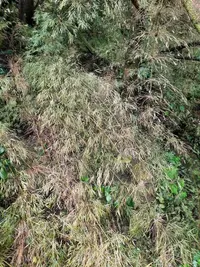
In open ground, install a HDPE bamboo barrier 60–75 cm deep or trench and cut rhizomes annually along the bed edge to keep the plant from spreading into lawns or neighboring beds.

Encourage dense screening

Tip-prune the youngest culms just above a node once they harden to encourage side-branching and a fuller, denser screen rather than a few tall, bare stems.

Mulch for culm protection

Maintain a 5–8 cm layer of organic mulch over the root zone to buffer soil temperature, reduce moisture swings, and protect shallow rhizomes from heat stress and light frost.

Plan for mature size

Allow enough horizontal space and avoid planting near foundations, narrow paths, or small containers, since caring for Rhipidocladum racemiflorum is easier when its natural clumping habit has room to develop without constant division.

Common Pests and Diseases

Bamboo mites

This pest lives on the undersides of leaves, causing pale stippling, fine yellow speckling, and eventual leaf bronzing or drying on thin-leaved bamboo like Rhipidocladum racemiflorum.

Solution

Rinse foliage thoroughly with a strong but gentle stream of water every few days and remove heavily damaged leaves; if populations persist, apply a miticide based on horticultural oil or insecticidal soap, ensuring full coverage of the leaf undersides and improving humidity and air circulation to reduce stress on the plant.

Bamboo mealybugs

These insects appear as small white cottony masses along culms and leaf bases, extracting sap and leading to yellowing leaves, stunted shoots, and honeydew that can attract sooty mold.

Solution

Isolate affected plants, wipe or swab visible colonies with cotton pads dipped in 70% isopropyl alcohol, then follow with repeated sprays of insecticidal soap or light horticultural oil, paying attention to leaf sheaths and crevices, and prune out heavily infested stems when possible.

Bamboo scale

This pest forms small, flattened or dome-shaped bumps on culms and leaf sheaths, weakening the plant over time and sometimes causing patchy yellowing or reduced shoot vigor.

Solution

Physically scrape or rub off accessible scale with a soft brush or cloth, then apply horticultural oil to thoroughly coat stems and leaf bases, repeating at label intervals; maintain good plant vigor through proper watering and nutrition to help the plant outgrow light infestations as part of responsible Rhipidocladum racemiflorum care instructions.

Bamboo leaf rust

This disease produces yellow to orange-brown pustules on leaf surfaces, which can merge into larger necrotic patches and cause premature leaf drop under warm, humid conditions.

Solution

Remove and discard infected leaves and fallen debris, increase spacing and air movement around the clump, avoid wetting the foliage when watering, and in severe, recurring cases consider a labeled copper or other fungicidal spray applied preventively during warm, humid periods.

Leaf spot fungi

Symptoms include small brown or purplish spots on leaves that may develop pale centers and dark margins, sometimes coalescing into larger dead areas on fine-textured bamboo foliage.

Solution

Trim and dispose of affected leaves, avoid overhead irrigation, and improve airflow around the plant; for persistent outbreaks, apply a broad-spectrum fungicide labeled for ornamental bamboo and monitor new growth regularly, correcting any excess moisture or crowding that favors disease spread.

Interesting Facts

South American clambering bamboo

This species is a woody, clambering bamboo native to tropical South America, where its long, relatively thin culms use surrounding vegetation for support instead of forming rigid upright clumps.

Distinctive raceme flowering

Its name racemiflorum refers to its flowers being arranged in racemes, a type of flower cluster where multiple spikelets are borne along an elongated axis rather than in dense heads or panicles.

Hollow, nodal-structured culms

Like many bamboos, its culms are hollow between the nodes, but the solid nodes and lignified walls give an efficient combination of strength and flexibility that supports its scrambling growth habit.

FAQs about Rhipidocladum racemiflorum

This bamboo is moderately fast-growing, forming new culms each warm season once established. Growth rate depends on moisture and fertility, but many clumps add 30–90 cm in height per year in suitable climates.

Grow Healthy Plants with Botan Care

Keep your plants happy and healthy with plant identification, disease detection, and easy care guidance.

Botan plant care app — identify plants on mobile

Explore More Plants