Rhizome Containment
Install a 30–45 cm deep root barrier or plant in a large, bottomless container sunk into the ground to keep spreading rhizomes from invading lawns and nearby beds.

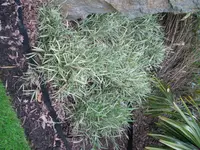
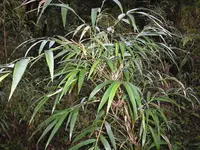
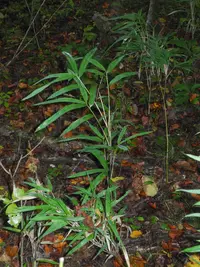
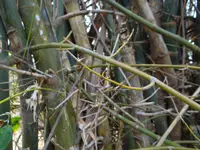
Dwarf white stripe bamboo, Pleioblastus variegatus, is a compact, spreading ornamental grass-like bamboo often used as a groundcover or edging plant. It forms dense clumps of slender canes with narrow green leaves striped with creamy white. Native to East Asia, it has been widely introduced into temperate gardens for its bright foliage and low, tidy habit. This species is vigorous and can become invasive if not contained, which is the main factor that affects how easy it is to manage. It prefers consistently moist, well-drained soil and moderate light, and learning how to care for Dwarf White Stripe Bamboo helps keep it both attractive and controlled.

Care Difficulty
Moderate Care

Light Preference
Partial Sun

Water Requirements
Regular Water

Temperature Preference
Cold Hardy

Hardiness Zone
5–9

Soil Texture
Sandy, Loamy, Organic-rich

Soil pH
Acidic (5.5–6.5), Slightly acidic (6.5–7.0)

Soil Drainage
Moist but well-drained

Fertilization
Light (every 4–6 weeks)
Scan your plant to receive care tips personalized for your specific plant
Available on iOS and Android
This compact bamboo prefers bright, gentle light to keep its foliage dense and well variegated.
This species likes consistently moist, not soggy, soil that never fully dries out.
This hardy bamboo tolerates a wide temperature range but grows best in mild conditions.
This bamboo tolerates a wide humidity range and rarely needs special humidity control.
This species prefers loose, moist, well-drained soil that does not stay waterlogged.
This bamboo is suitable for growing in containers if root spread is controlled.
This bamboo responds well to light, consistent feeding during the growing season.
Pruning helps maintain size, density, and appearance in Pleioblastus variegatus plantings.
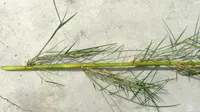
This bamboo spreads by rhizomes and may need periodic transplanting or division to stay controlled and vigorous.
Pleioblastus variegatus is most reliably propagated by division of established clumps.
This bamboo is fairly cold hardy but benefits from simple winter care, especially in containers or harsh climates.

Plant Health Check
Not sure what's wrong with your plant? Check your plant's health inside the app.
This bamboo typically tops out around 60–90 cm in garden settings, making it one of the smallest running bamboos commonly cultivated for groundcover and edging rather than tall screens.
Its leaves show a distinct pattern of creamy white striping on a medium-green blade, and the variegation is stable, meaning new shoots reliably emerge with the same striped pattern rather than reverting to solid green.
Unlike many subtropical bamboos, this species tolerates temperate climates and can remain evergreen or semi-evergreen in mild winters, forming dense, lawn-like colonies when regularly cut back to encourage fresh foliage.

In some temperate gardens this species is intentionally mowed or sheared to ground level once or twice a year, a practice that would severely damage many other bamboos, but here it stimulates a flush of short, vividly variegated new shoots that create a tight, ornamental carpet.
This species spreads by running rhizomes and can be aggressive in open ground. Root barriers, regular edging, or container planting help confine it. In small gardens, physical containment is essential for predictable growth and easier management.
Keep your plants happy and healthy with plant identification, disease detection, and easy care guidance.