Guadua paniculata Care

Guadua paniculata

About Guadua paniculata

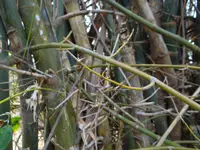
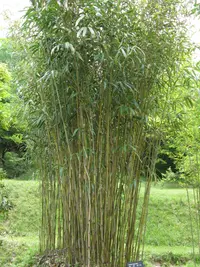
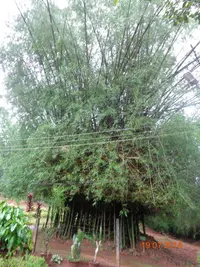
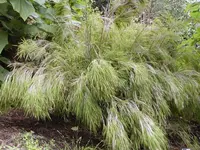
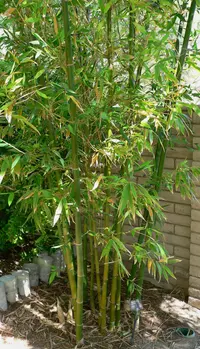
Guadua paniculata is a large, clumping bamboo native to tropical regions of Central and South America. It is mainly found in warm, humid forests and along riverbanks. This species forms dense thickets with tall, upright culms and abundant side branches, creating a strong natural screen or windbreak.

The plant grows fast under suitable conditions, which can make it demanding in terms of space and long-term management. It prefers consistently moist but well-drained soil and thrives in warm climates with plenty of light. Understanding how to care for Guadua paniculata starts with recognizing its size potential and need for room to spread.

Main Plant Requirements

Care Difficulty

Moderate Care

Light Preference

Full Sun

Water Requirements

Regular Water

Temperature Preference

Tropical / Frost Sensitive

Hardiness Zone

10–12

Soil Texture

Loamy, Sandy, Organic-rich

Soil pH

Acidic (5.5–6.5), Slightly acidic (6.5–7.0)

Soil Drainage

Moist but well-drained

Fertilization

Minimal (feed rarely)

Get Personalized Care Plan

Scan your plant to receive care tips personalized for your specific plant

Available on iOS and Android

How to Care for the Guadua paniculata

This tropical bamboo needs strong light to fuel fast cane and leaf growth outdoors.

  • Provide 6–8 hours of direct sun daily, ideally with morning sun and light afternoon shade in hot climates to reduce leaf scorch.
  • Tolerates partial shade (3–4 hours of direct or bright filtered light), but culms may grow thinner and height may be reduced for Guadua paniculata.
  • Avoid deep shade, which leads to sparse foliage and weak canes, and monitor summer exposure, adding shade cloth if midafternoon sun above 90°F (32°C) causes leaf curling or bleaching.

This species prefers consistently moist but well-drained soil to support rapid clump expansion.

  • Allow the top 3–5 cm of soil to dry slightly, then water deeply so moisture penetrates at least 20–30 cm into the root zone.
  • Increase watering during hot, dry periods when new shoots emerge, watching for rolled or folding leaves as an indicator that moisture is too low for Guadua paniculata.
  • Improve drainage with organic matter or raised beds; yellowing leaves, sour odor, or soggy soil signal overwatering, while crispy tips and slow shoot growth suggest underwatering.

This bamboo thrives in warm, frost-free conditions typical of tropical and subtropical climates.

  • Optimal growth occurs around 70–90°F (21–32°C), with strong shoot production and dense foliage in consistently warm seasons.
  • Plants can survive brief dips to about 28–30°F (-2 to -1°C), but repeated frost damages leaves and young culms, so protection or site selection is important in marginal areas.
  • Tolerates heat up to 100°F (38°C) if soil moisture is maintained; during cooler seasons below 60°F (16°C), growth slows and new shoot formation is reduced.

This bamboo prefers moderately humid air but tolerates short dry spells if well watered.

  • Aim for 50–70% humidity to support vigorous culm and leaf growth.
  • Dry air causes leaf-tip browning and curling; persistent symptoms suggest the need for higher humidity.
  • Increase humidity outdoors by mulching heavily around the base and grouping plants to reduce evaporation.

Guadua paniculata performs best in deep, fertile, well-structured soil that drains freely but retains consistent moisture.

  • Use a loamy mix with 40–60% mineral soil, 20–30% well-rotted compost, and 10–20% coarse sand or fine bark for structure.
  • Ensure rapid drainage yet moisture retention by avoiding heavy pure clay and avoiding very light, droughty sand.
  • Target a slightly acidic to neutral pH around 6.0–7.0, amending extremely acidic or alkaline sites before planting.
  • Improve aeration and root penetration by incorporating coarse organic matter and avoiding compaction from frequent foot traffic or machinery.

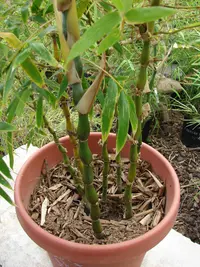
This species can be grown in large, heavy containers only when space and structural support are carefully planned.

  • Choose a wide, deep container (at least 60–80 L) to accommodate strong rhizome spread and prevent root binding pressure on the pot walls.
  • Select thick-walled, heavy materials such as concrete or ceramic to stabilize tall, wind-catching culms and reduce tipping risk.
  • Raise the container on feet so all drainage holes stay clear, preventing waterlogging that can rot dense rhizome clusters.

Nutrient-rich soils support strong culm and leaf production, so targeted feeding benefits Guadua paniculata in managed plantings.

  • Use a balanced NPK fertilizer (such as 10-10-10) or well-aged compost at the start of the warm growing season.
  • Apply granular slow-release fertilizer every 3–4 months during active growth, following label rates for woody ornamentals.
  • Dilute liquid feeds to 1/2 strength and apply to moist soil only, avoiding contact with culms to limit burn risk.
  • Reduce or stop fertilization in cool or dormant periods to prevent weak, frost-sensitive shoots.

Thoughtful pruning keeps Guadua paniculata safe, manageable, and productive in landscape or plantation settings.

  • Carry out main pruning in late dry season or late winter before strong new shoot growth begins.
  • Remove dead, damaged, crossing, or pest-infested culms at ground level using sharp loppers or a pruning saw.
  • Thin crowded clumps by taking out a few older culms to improve light penetration, airflow, and shoot quality.
  • Avoid cutting the tops of healthy young culms; this preserves natural height, strength, and clean vertical form.

This large clumping bamboo is usually field grown, so management focuses on transplanting divisions rather than routine repotting.

  • Transplant in warm, moist seasons when new root growth is starting and heat or drought stress is minimal.
  • Lift and move young clumps or container plants when roots circle the pot, growth slows, or soil dries very quickly.
  • Prepare the new site with deep, loosened, well-drained soil and plant at the same depth as previously grown.
  • Water thoroughly before and after transplanting, shade the clump for 1–2 weeks, and maintain even moisture to limit root stress.

In practice, Guadua paniculata plant care relies mainly on vegetative propagation because flowering and seed are infrequent.

  • Use division of young, vigorous clumps in late spring or early rainy season when soil is warm.
  • Dig and split sections containing several culms plus a solid portion of rhizome and healthy roots.
  • Replant divisions promptly in moist, well-drained soil, firming well to remove air pockets around roots.
  • Keep humidity high and soil evenly moist for the first 4–6 weeks to support rapid root and shoot establishment.

This tropical to subtropical bamboo is sensitive to hard frost and benefits from basic winter protection in cooler regions.

  • In climates below about 28–30°F, grow in a sheltered microclimate or as a container specimen.
  • Apply a 7–10 cm mulch layer over the root zone to buffer temperature swings and conserve moisture.
  • Wrap young culms with breathable frost cloth during cold snaps to reduce stem damage and leaf burn.
  • Move container plants indoors to a bright, cool, frost-free space when prolonged freezing is forecast.

Care Tips

Wind-firm establishment

Stake young clumps with 2–3 solid posts and soft ties for the first 1–2 years in windy sites to prevent root rock, which helps culms anchor and lets new shoots emerge straighter and stronger.

Shoot protection zone

Mark a 1–1.5 m radius around the clump and keep it free of heavy foot traffic, parked equipment, or frequent digging so fragile new shoots are not crushed as they push up through the soil.

Selective culm thinning

Every 1–2 years, remove a few of the oldest, dull-colored culms at ground level with a sharp saw to open the clump, improve airflow, and direct energy toward thicker, younger shoots.

Rhizome direction control

In open ground, install vertical root barrier panels or a compacted trench 45–60 cm deep on sides where spread is not desired to steer rhizomes toward areas where you want to grow Guadua paniculata.

Mulch and debris management

Allow a 5–8 cm layer of leaf litter and chipped culms to accumulate around the base as a natural mulch, but rake and thin it lightly once a year to limit pests and maintain good air movement at the crown.

Common Pests and Diseases

Bamboo borer

This pest tunnels into culms and branches, creating small round exit holes and weakening the structural integrity of the clump. Symptoms include dying branches, reduced vigor, and sawdust-like frass near holes.

Solution

Remove and destroy heavily infested culms to break the life cycle, and keep stands well-thinned so light and airflow discourage beetle activity. In high-value plantings, monitor new exit holes regularly and use targeted trunk or culm treatments with a systemic insecticide labeled for borers, applied by a licensed professional when possible.

Bamboo mealybug

These insects cluster on culms, leaf sheaths, and roots, producing white cottony masses and sticky honeydew that can lead to sooty mold. Symptoms include yellowing foliage, stunted growth, and ant activity around the clumps.

Solution

Prune and discard heavily infested parts and wash exposed culms and leaves with a strong stream of water plus a mild insecticidal soap. Improve plant spacing and sanitation, and in persistent cases use a systemic product labeled for mealybugs on ornamental bamboos, following all safety and timing instructions carefully.

Bamboo mite

This pest lives on the undersides of leaves, causing yellow stippling, bronzing, and eventual leaf drop, especially during warm, dry periods. Fine webbing may be visible between leaf surfaces and veins on close inspection.

Solution

Increase humidity around the foliage, hose down the undersides of leaves regularly, and remove heavily damaged leaves to reduce populations. For ongoing infestations, apply a horticultural oil or a miticide specifically labeled for spider mites, rotating products if needed to reduce resistance.

Bamboo mosaic virus

This disease causes irregular light and dark green mosaic patterns, streaking, or mottling on leaves, sometimes with distorted or narrowed foliage and reduced growth. Symptoms include uneven clump development and poor shoot quality over time.

Solution

Remove and destroy severely affected culms or entire clumps to prevent spread, as there is no cure for viral infections. Control sap-feeding insects such as aphids and mealybugs that can transmit the virus, and avoid using contaminated tools or propagating from symptomatic plants when attempting Guadua paniculata care instructions.

Culm and leaf blight

This disease leads to brown to black lesions on leaves and young culms, often starting as small spots that enlarge and coalesce, causing premature leaf drop. Symptoms include thinning foliage, dieback of tender shoots, and poor new growth in humid, poorly ventilated sites.

Solution

Prune and discard infected leaves and culms, avoiding overhead watering and improving air circulation around the stand. In wet climates or severe cases, apply a fungicide labeled for foliar blights on ornamentals at the start of the rainy season and repeat as directed, always combining treatments with good sanitation and removal of fallen debris.

Interesting Facts

Clumping neotropical bamboo

This species is a large clumping bamboo native to Central America, especially Panama and Costa Rica, where it forms dense stands rather than running aggressively like many temperate bamboos.

Habitat along watercourses

G. paniculata commonly grows along riverbanks and moist lowland sites, where its extensive root system helps stabilize soil and reduce erosion in tropical landscapes.

Regional construction material

In parts of its native range it is locally harvested as a structural and scaffolding material, valued for its long, relatively straight culms that provide strong, lightweight poles when properly seasoned.

FAQs about Guadua paniculata

This bamboo is very fast-growing under warm, moist, fertile conditions, often adding several meters of height per year once established. Growth slows in poor soil, drought, cool temperatures, or when crowded by competition or restricted roots.

Grow Healthy Plants with Botan Care

Keep your plants happy and healthy with plant identification, disease detection, and easy care guidance.

Botan plant care app — identify plants on mobile

Explore More Plants