Rhizome Containment
Install a HDPE or metal root barrier 45–60 cm deep around planting areas to prevent running rhizomes from invading lawns, beds, or neighboring properties while still allowing a dense screen to form.

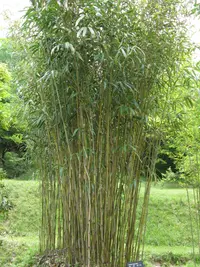
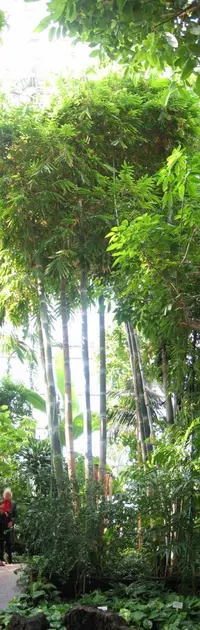
Arrow bamboo, Pseudosasa japonica, is an evergreen bamboo species valued for its upright canes and dense, glossy green leaves. It forms clumping thickets that create a tall, living screen or windbreak, often used in urban gardens and containers.
This species is native to Japan and Korea, where it grows in woodland edges and coastal areas. Its toughness, fast growth, and tolerance of pruning make it relatively easy to manage if space is available.
Arrow bamboo prefers bright, indirect light or light shade, evenly moist soil, and some protection from harsh drying winds. Understanding how to care for arrow bamboo helps keep its foliage lush and its clumps controlled over time.

Care Difficulty
Moderate Care

Light Preference
Partial Shade

Water Requirements
Regular Water

Temperature Preference
Cold Hardy

Hardiness Zone
6–9

Soil Texture
Loamy, Clay, Organic-rich

Soil pH
Acidic (5.5–6.5), Slightly acidic (6.5–7.0)

Soil Drainage
Moist but well-drained

Fertilization
Light (every 4–6 weeks)
Scan your plant to receive care tips personalized for your specific plant
Available on iOS and Android
Pseudosasa japonica grows best with bright, indirect light and some protection from intense midday sun.
Pseudosasa japonica prefers consistently moist but not waterlogged soil, especially during active growth.
This bamboo is relatively cold hardy but grows best in mild, stable temperatures.
This species prefers moderate humidity but usually adapts well in typical home conditions.
This bamboo favors moist, well-aerated soil that holds water yet drains freely.
This species is well-suited to container growing when the pot is chosen to support its spreading, upright canes.
Pseudosasa japonica responds well to moderate feeding during the main growing season for steady, leafy growth.
Pseudosasa japonica benefits from periodic thinning to maintain a tidy, upright clump and healthy culms.
Container-grown plants and dense clumps of Pseudosasa japonica need occasional shifting to fresh space for stable growth.
New plants of Pseudosasa japonica are most reliably produced by division of established clumps.
This bamboo is fairly cold hardy but benefits from basic winter care in colder regions, especially in containers.

Plant Health Check
Not sure what's wrong with your plant? Check your plant's health inside the app.
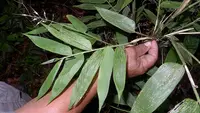
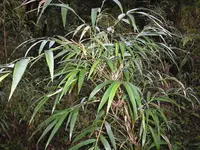
This species has elongated, lanceolate leaves that can reach 20–30 cm long, giving rise to the common name arrow bamboo and making it visually distinct from many broader-leaved bamboos.
Unlike many bamboos that demand full sun, this species tolerates and even thrives in partial shade, which has led to its frequent use as an understory and courtyard bamboo in Japanese gardens.
Its dense, upright culms and evergreen foliage are commonly used in coastal Japan and ornamental landscapes as living windbreaks and privacy screens, since the canes remain leafy from base to tip in mild climates.

This bamboo was historically planted around traditional Japanese houses to provide both practical wind protection and a source of straight, tough canes used for making simple tools, fishing rods, and garden stakes.
This species has running rhizomes and can spread steadily, especially in mild, moist climates. It is not the most aggressive bamboo, but root barriers and regular rhizome pruning are recommended to prevent unwanted expansion.
Keep your plants happy and healthy with plant identification, disease detection, and easy care guidance.