kamuro-zasa Care (Pleioblastus viridistriatus)

kamuro-zasa

About kamuro-zasa

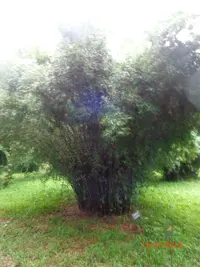
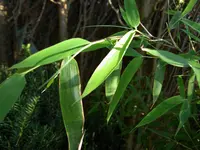
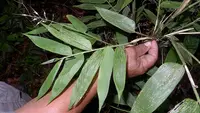
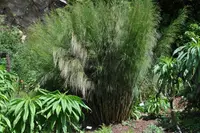
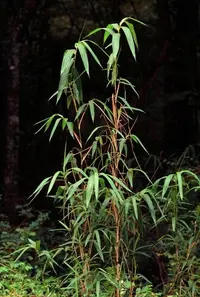
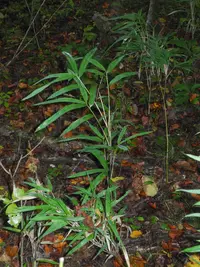
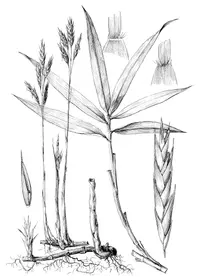
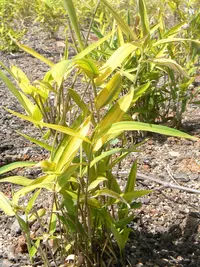
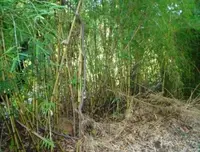
Kamuro-zasa, Pleioblastus viridistriatus, is a small, clumping ornamental bamboo valued for its bright yellow leaves streaked with fresh green. It forms dense, low mounds that create a bold groundcover or edging in garden beds.

This species is native to Japan and tends to spread by underground rhizomes, which makes it vigorous but sometimes in need of containment in small spaces. It adapts well to temperate climates and is generally easy to grow when given consistent moisture and partial shade.

Gardeners who learn how to care for kamuro-zasa usually find it a reliable foliage plant for adding color and texture to shaded or lightly sunny areas.

Main Plant Requirements

Care Difficulty

Easy Care

Light Preference

Partial Shade

Water Requirements

Regular Water

Temperature Preference

Cold Hardy

Hardiness Zone

5–9

Soil Texture

Loamy, Sandy, Organic-rich

Soil pH

Acidic (5.5–6.5), Slightly acidic (6.5–7.0)

Soil Drainage

Moist but well-drained

Fertilization

Light (every 4–6 weeks)

Get Personalized Care Plan

Scan your plant to receive care tips personalized for your specific plant

Available on iOS and Android

How to Care for the kamuro-zasa

This compact bamboo prefers bright exposure that protects its leaves from harsh midday sun.

  • Provide 3–5 hours of gentle morning sun with bright, filtered or dappled light for the rest of the day to keep foliage vividly striped on kamuro-zasa.
  • Tolerates partial shade, but in sites with less than 2–3 hours of direct light, expect looser growth and less intense yellow variegation.
  • In hot summers, shield from strong afternoon sun with trees, fences, or shade cloth to reduce leaf scorch and dry, brown tips.

This species prefers consistently moist but not waterlogged soil.

  • Water when the top 3–5 cm of soil feel slightly dry, aiming for evenly damp soil at root depth without puddling on the surface.
  • Increase watering frequency during hot, windy periods and active growth, and reduce in cool or rainy weather while still preventing complete drying.
  • Watch for yellowing, limp leaves as a sign of overwatering or poor drainage, and rolled, crispy leaf edges as an indicator that Pleioblastus viridistriatus is too dry.

This bamboo is cold-hardy yet grows best in moderate temperatures.

  • Optimal growth occurs around 60–80°F (16–27°C), with strong shoot production in mild spring and early summer conditions.
  • Established plants typically survive down to about 0°F (-18°C), with foliage burn likely below 10°F (-12°C) but rhizomes often resprouting in spring.
  • Handles summer heat up to about 90°F (32°C) if soil remains moist, but prolonged hotter, dry conditions can cause leaf scorch and slower growth.

This bamboo tolerates a wide humidity range but benefits from moderately moist air.

  • Target 40–60% humidity, which suits both outdoor planting and most home environments for kamuro-zasa.
  • It tolerates brief drier air, but prolonged very dry conditions may cause leaf-tip browning and rolling.
  • Increase local humidity outdoors with mulch over the root zone, or group containers together to reduce rapid drying.

This species prefers loose, moist, organic-rich soil with reliable drainage.

  • Use a loamy mix with high organic matter, such as garden loam blended with compost and leaf mold for structure and moisture retention.
  • Ensure drainage remains free by avoiding heavy, compacted clay; incorporate coarse sand or fine gravel if water lingers after rain or watering.
  • Aim for slightly acidic to neutral pH, roughly 6.0–7.0, which supports nutrient availability for Pleioblastus viridistriatus.
  • Improve aeration by periodically top-dressing with composted bark or fine wood chips rather than working soil deeply around established rhizomes.

This bamboo is suitable for container growing when roots and rhizomes are given controlled space and stable conditions.

  • Choose a wide, heavy container to resist tipping and to provide lateral space for spreading rhizomes.
  • Select thick-walled clay or concrete pots outdoors to moderate root temperature and slow moisture loss compared with thin plastic.
  • Use a slightly raised pot base or feet so drainage holes stay clear and runoff leaves the container quickly, preventing soggy lower layers.

This bamboo benefits from moderate feeding to support dense foliage and vigorous clump growth when grown in containers or lean soil.

  • Use a balanced slow-release fertilizer (around 10-10-10) or well-rotted compost at the start of spring for caring for kamuro-zasa.
  • Feed every 6–8 weeks during the growing season, adjusting based on soil richness and plant vigor.
  • Apply at half to three-quarter label strength for container plants to avoid salt buildup and leaf tip burn.
  • Reduce or stop feeding in late fall and winter, as growth slows and excess nutrients are not used efficiently.

Pleioblastus viridistriatus responds well to thoughtful pruning, which keeps the clump tidy and foliage fresh.

  • Best timing is late winter to early spring before strong new growth begins.
  • Cut out dead, winter-burned, or damaged canes at ground level with sharp bypass pruners.
  • Thin crowded or older stems to open the clump, encouraging brighter new leaves and better airflow.
  • In small plantings, shearing all top growth to 5–10 cm in early spring can renew compact, colorful foliage.

This bamboo is often grown in the ground, but container plants or crowded clumps benefit from periodic transplanting or division.

  • Consider moving or dividing when roots circle the pot, soil dries very quickly, or top growth becomes sparse.
  • Plan transplanting or repotting for early spring or early fall, avoiding extreme heat or freezing periods.
  • Divide dense clumps every 3–5 years, keeping vigorous sections with healthy rhizomes and discarding weak centers.
  • Water deeply before and after the move, shade for a few days, and maintain even moisture to limit root stress.

Division is the primary method for increasing plants of this bamboo, as seeds are rarely available and flowering is infrequent.

  • Lift part of the clump in early spring or early fall when soil is workable and temperatures are mild.
  • Split the clump into sections with 3–5 healthy culms and firm, fibrous roots using a sharp spade or saw.
  • Plant divisions at the same depth as before in moist, well-drained soil, and water thoroughly to settle roots.
  • Maintain consistent moisture and light shade for 1–2 weeks after planting to support new root formation.

This bamboo is fairly cold hardy but benefits from simple winter care in colder regions or exposed sites.

  • Tolerates light to moderate frost, though foliage may brown in prolonged freezes below about 0°F.
  • Apply a 5–8 cm layer of mulch around the root zone in late fall to insulate rhizomes and conserve moisture.
  • For containers, move pots into a sheltered, unheated but frost-sheltered area, keeping soil slightly moist.
  • In very windy or open spots, snow cover or temporary windbreaks help reduce desiccation and stem damage.

Care Tips

Rhizome Containment

Install a 30–40 cm deep physical root barrier or plant in a large, bottomless container sunk into the ground to confine running rhizomes and keep the clump compact over time.

Color Renewal Cutback

Shear the entire planting down to 5–10 cm in late winter or very early spring to remove winter-damaged foliage and encourage a fresh flush of bright variegated leaves.

Groundcover Density Management

Thin or lift and divide older, congested patches every 3–4 years to reduce self-shading, improve air flow, and maintain an even, healthy groundcover mat.

Mulch For Shoot Protection

Apply a 5–8 cm layer of shredded bark or leaf mold over the root zone in late fall to protect shallow rhizomes from freeze–thaw cycles and support vigorous spring shooting.

Controlled Shading Strategy

Use lattice, shade cloth, or the dappled shade of small trees to reduce intense afternoon sun, which helps prevent leaf scorch while still supporting strong growth when growing kamuro-zasa.

Common Pests and Diseases

Bamboo mites

This pest feeds on the undersides of leaves, causing fine yellow stippling, bronzing, and a dusty webbing between veins, especially during warm, dry weather.

Solution

Rinse leaf undersides with a firm stream of water every few days, then apply insecticidal soap or a horticultural oil labeled for mites, repeating as directed; increase humidity slightly and avoid drought stress, as dry, dusty plants are more vulnerable.

Bamboo aphids

These insects cluster on young shoots and leaf bases, sucking sap and causing curling, distortion, and sticky honeydew that can lead to sooty mold on the foliage.

Solution

Prune and discard heavily infested shoots, then wash remaining stems and leaves with water and treat tender growth with insecticidal soap, making sure to reach all hidden colonies; reduce excess nitrogen fertilizer that encourages soft, aphid-prone growth.

Bamboo scale

This pest appears as small, immobile bumps on culms and leaf sheaths, weakening clumps over time and causing yellowing canes and reduced vigor.

Solution

Scrape off localized colonies by hand or with a soft brush, prune out heavily infested canes, then treat remaining stems with a horticultural oil spray in late winter or early spring to smother overwintering scale, repeating as label directions suggest.

Bamboo mosaic virus

This disease causes mottled, streaked, or distorted foliage with irregular yellow patterns, while overall growth becomes weaker and less dense over time.

Solution

Remove and destroy symptomatic clumps promptly to prevent spread, disinfect cutting tools between plants, and source new plants from reputable nurseries that certify virus-free stock, as there is no curative treatment once a plant is infected.

Leaf spot

Symptoms include small tan to brown spots on leaves that may merge into larger blotches, sometimes with a yellow halo, especially in humid or crowded plantings.

Solution

Cut and dispose of badly spotted leaves to reduce inoculum, water at soil level rather than overhead, thin or divide dense clumps for better airflow, and if needed use a copper or chlorothalonil-based fungicide labeled for ornamental bamboos, applied according to directions as part of broader Pleioblastus viridistriatus plant care.

Interesting Facts

Naturally dwarf habit

This bamboo is genetically dwarf, typically forming clumps around 40–60 cm tall outdoors, which makes it one of the shortest temperate running bamboos used in gardens.

Seasonal leaf color shift

New leaves emerge in bright yellow with vivid green striping in spring, then gradually turn more green through summer, so the plant can look quite different from one season to the next.

Cold-hardy groundcover bamboo

Although tropical-looking, this species is hardy in much of the temperate US and often used as a dense groundcover; in colder climates the foliage may winter-burn, but the rhizomes usually survive and resprout from the base.

Botan icon

Did you know?

Gardeners commonly cut this bamboo to ground level every 1–2 years to rejuvenate its vivid striped foliage, and the plant is resilient enough to regrow a fresh, full canopy of leaves in a single growing season.

FAQs about kamuro-zasa

This bamboo spreads by running rhizomes and can become aggressive in open ground. Use root barriers, edging, or containers to confine it, and remove unwanted shoots regularly to prevent it from overtaking nearby planting areas.

Grow Healthy Plants with Botan Care

Keep your plants happy and healthy with plant identification, disease detection, and easy care guidance.

Botan plant care app — identify plants on mobile

Explore More Plants