Contain rhizome spread
Install a 30–45 cm deep physical rhizome barrier or trench-edge the planting area and slice wandering rhizomes once or twice a year to keep the clump from creeping into paths or neighboring plantings.

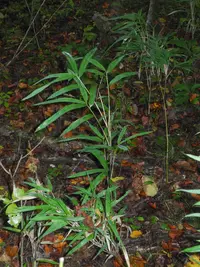
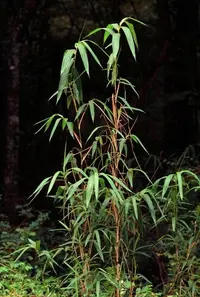
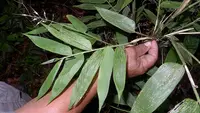
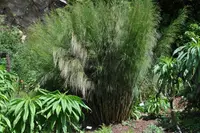
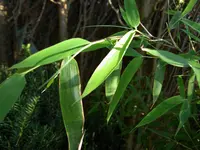
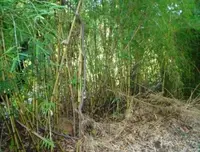
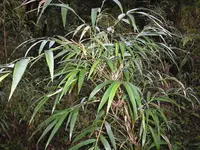
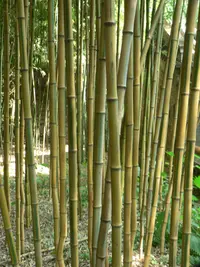
Hill cane (Arundinaria appalachiana) is a small, clumping bamboo native to the Appalachian region of the southeastern United States. It forms loose thickets of slender, arching canes with narrow leaves that often stay evergreen or semi-evergreen in mild climates.
This species typically grows in open woodlands and along slopes where soils are well-drained but retain steady moisture. It prefers bright filtered light or light shade, which is important when you plan how to care for hill cane.
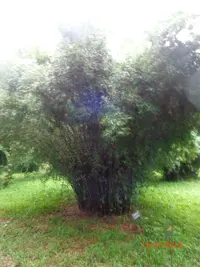
Growth is moderate rather than aggressive, and its clumping habit makes it easier to manage than running bamboos. Once established in suitable conditions, it is generally resilient and low-maintenance.

Care Difficulty
Moderate Care

Light Preference
Partial Shade

Water Requirements
Moderate Water

Temperature Preference
Cold Hardy

Hardiness Zone
6–9

Soil Texture
Loamy, Sandy, Organic-rich

Soil pH
Acidic (5.5–6.5), Slightly acidic (6.5–7.0)

Soil Drainage
Moist but well-drained

Fertilization
Minimal (feed rarely)
Scan your plant to receive care tips personalized for your specific plant
Available on iOS and Android
Arundinaria appalachiana prefers bright conditions that mimic open woodland edges.
This species prefers consistently moist but not waterlogged soil.
This bamboo is adapted to temperate climates with cool winters and warm summers.
This bamboo tolerates a wide humidity range but grows best with moderate ambient moisture.
Arundinaria appalachiana prefers a loose, moist, well-drained substrate that mimics woodland leaf litter.
This species can be grown in containers for several years if given a stable, deep setup.
This native bamboo needs modest feeding, as soils for hill cane are often already reasonably fertile.
Pruning Arundinaria appalachiana is mainly used to maintain a tidy clump and encourage fresh culms.
Hill cane is more often transplanted in the ground than kept long term in containers.
Arundinaria appalachiana is most reliably propagated by division of established clumps.
This species is reasonably cold hardy in much of its native range and usually needs only modest winter care.

Plant Health Check
Not sure what's wrong with your plant? Check your plant's health inside the app.
This species is one of just three bamboos native to North America and is the only one adapted to high, cool sites in the southern Appalachian Mountains, where it forms distinctive hill cane thickets.
Unlike many tropical bamboos that remain evergreen, this species is mostly deciduous in colder parts of its range, shedding many leaves in winter and flushing with new foliage in spring.
Its dense, arching culms and leaf litter create critical cover and foraging habitat for ground‑nesting birds, small mammals, and insects that are closely tied to Appalachian canebrakes.
Genetic and morphological studies show that this species is distinct from the two other North American Arundinaria species, with adaptations such as shorter, more arching culms and tolerance of drier, upland slopes rather than the wet lowland sites preferred by its relatives.
This species spreads by short rhizomes and forms clumps that can gradually expand, but it is not typically aggressive. Edging, root barriers, or periodic thinning of new shoots help keep it within the desired area.
Keep your plants happy and healthy with plant identification, disease detection, and easy care guidance.