Wind exposure planning
Plant in a position with steady air movement but not in a narrow wind tunnel, since strong, channeled gusts can snap tall culms and cause uneven, lopsided clumps.

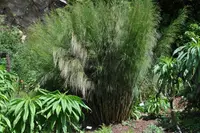
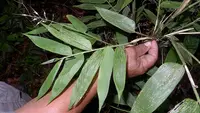
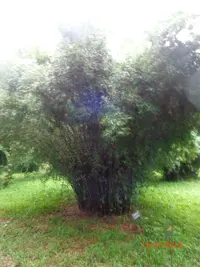
Branch broomreed, Cannomois virgata, is an evergreen restio, a grass-like plant native to the winter-rainfall regions of South Africa. It forms upright, reed-like clumps with fine branching stems that create a light, architectural texture.
This species typically grows in moist, well-drained, acidic to neutral soils and prefers mild, frost-free climates. It suits coastal gardens, naturalistic plantings, and contemporary landscapes where movement and structure are valued.
Branch broomreed can be moderately demanding, as it dislikes waterlogged conditions, prolonged drought, and very cold winters. Gardeners who learn how to care for Branch Broomreed usually find it long-lived and reliable in suitable climates.

Care Difficulty
Moderate Care

Light Preference
Full Sun

Water Requirements
Regular Water

Temperature Preference
Warm Climate

Hardiness Zone
9–11

Soil Texture
Sandy, Loamy, Organic-rich

Soil pH
Acidic (5.5–6.5), Slightly acidic (6.5–7.0)

Soil Drainage
Moist but well-drained

Fertilization
Minimal (feed rarely)
Scan your plant to receive care tips personalized for your specific plant
Available on iOS and Android
Cannomois virgata grows best in bright, open conditions with consistent sun exposure.
This species prefers consistently moist but not stagnant soil, especially while establishing.
This restio thrives in mild, coastal-type climates with limited frost and moderate summer heat.
This reed-like species tolerates a fairly wide humidity range but benefits from slightly moist air.
This species prefers consistently moist, light, well-aerated soil that does not become stagnant.
This species can be grown in containers, especially in cooler climates or where soil drainage is unreliable.
This restio generally needs modest feeding, but nutrition supports stronger growth in containers and poor soils when caring for Branch Broomreed.
Pruning Cannomois virgata is light and mostly focused on sanitation and maintaining a clean clump.
This species is usually grown in the ground, so focus on careful transplanting rather than frequent repotting.
Propagation of this restio is possible but somewhat specialized, most often done by seed under controlled conditions.
This plant is moderately hardy but benefits from some winter protection in colder or exposed sites.

Plant Health Check
Not sure what's wrong with your plant? Check your plant's health inside the app.
This species is naturally restricted to the winter-rainfall Cape fynbos region of South Africa, where it often grows along seeps, streams, and seasonally damp slopes within nutrient-poor, acidic soils.
Although it looks like a bamboo or reed, this plant belongs to the Restionaceae family, a group of rush-like flowering plants that evolved to fill the ecological role of grasses in the nutrient-poor, fire-prone fynbos biome.
In its native habitat, stands are adapted to periodic wildfires, with the plant regenerating from surviving clumps or from seed that germinates in the open, nutrient-enriched sites created after a burn.

The fine, flexible culms of this species have been locally used in South Africa for decorative thatching and floral arrangements, taking advantage of their long, straight, and durable stems as a sustainable alternative to traditional reeds.
Lack of flowering often comes from plants being too young, planted in too much shade, or stressed by poor drainage or heavy pruning. Allow clumps to mature, avoid cutting new shoots, and maintain consistent, moderate nutrition.
Keep your plants happy and healthy with plant identification, disease detection, and easy care guidance.