Core aeration timing
Schedule core aeration in early spring or early fall to relieve compaction and encourage deeper rooting, but avoid doing it during peak summer stress or drought so the turf can recover quickly.


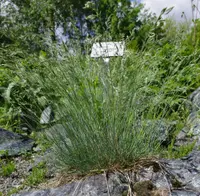
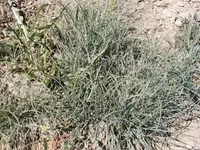
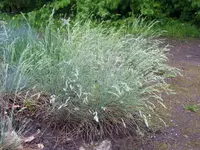
Buffalograss, Bouteloua dactyloides, is a warm-season perennial grass native to North American prairies. It forms a low, dense turf with fine, curly blades and a soft, gray-green color.
This species spreads by stolons, creating a relatively even, compact lawn that stays shorter than many traditional turf grasses. It is well adapted to full sun, open sites, and naturally dry or moderately dry conditions.
Buffalograss is valued for its drought tolerance and low mowing and fertilizer needs, which makes it appealing for low-input lawns and naturalized areas. Understanding how to care for buffalograss starts with recognizing that it prefers well-drained soil and does not perform well in heavy shade or consistently wet ground.

Care Difficulty
Easy Care

Light Preference
Full Sun

Water Requirements
Low Water

Temperature Preference
Cold Hardy

Hardiness Zone
3–9

Soil Texture
Sandy, Loamy, Clay

Soil pH
Slightly acidic (6.5–7.0), Slightly alkaline (7.0–7.5)

Soil Drainage
Well-drained

Fertilization
Minimal (feed rarely)
Scan your plant to receive care tips personalized for your specific plant
Available on iOS and Android
This warm-season grass needs strong, direct sun to form a dense, durable lawn.
This drought-adapted prairie grass prefers infrequent, deeper watering rather than frequent light applications.
This species is a warm-season grass that thrives in hot summers and slows or goes dormant in cooler weather.
Humidity is rarely a concern for Bouteloua dactyloides, which is adapted to open, dry grassland conditions.
Bouteloua dactyloides prefers lean, fast-draining mineral soils that mimic prairies and open plains.
This species can be grown in containers, mainly for small lawn patches, trials, or ornamental prairie-style displays.
Bouteloua dactyloides is adapted to low-fertility soils and needs only light feeding under most lawn conditions.
Pruning needs for Bouteloua dactyloides are minimal and mainly focused on appearance and plant health.
Bouteloua dactyloides is usually grown as turf, so transplanting plugs or divisions is more common than true repotting.
Bouteloua dactyloides is commonly propagated by seed and by vegetative divisions or plugs.
This warm-season grass is cold hardy in much of its range and usually needs no special winter care outdoors.

Plant Health Check
Not sure what's wrong with your plant? Check your plant's health inside the app.
Buffalograss uses the C4 photosynthetic pathway, which allows it to remain productive and water-efficient in hot, sunny conditions typical of North American prairies.
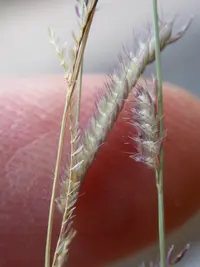
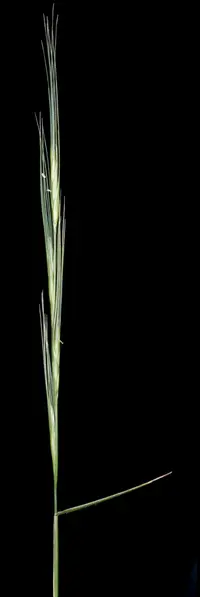
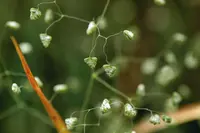
This species is usually dioecious, meaning male and female flowers occur on separate plants, and the male plants often produce taller, flag-like seed heads above the fine foliage.
It is one of the dominant shortgrasses of the central Great Plains, forming low, dense sod that stabilizes soils and supports prairie ecosystems under low rainfall and grazing pressure.

Some modern low-maintenance lawn cultivars were bred from naturally occurring buffalograss populations that survived decades of grazing, drought, and temperature extremes on the Great Plains, making them unusually resilient compared with many traditional lawn grasses.
This species spreads by stolons, forming a low, connected turf, but it is not usually invasive in managed lawns. Spread is moderate and strongly limited by shade, competition, and poor drainage, so edges remain relatively easy to control.
Keep your plants happy and healthy with plant identification, disease detection, and easy care guidance.