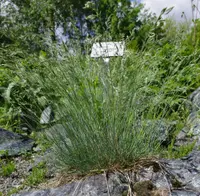
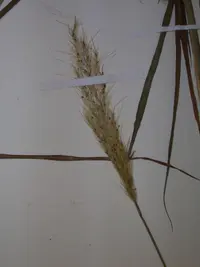
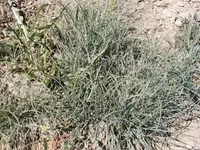
sixweeks grama Care (Bouteloua barbata)

sixweeks grama

About sixweeks grama

Sixweeks grama (Bouteloua barbata) is a small, fast-growing warm-season grass native to arid and semi-arid regions of the southwestern United States and Mexico. It is an annual species, completing its life cycle quickly, which makes it useful for short-term cover and erosion control.

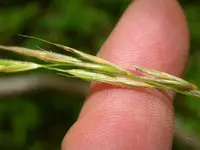
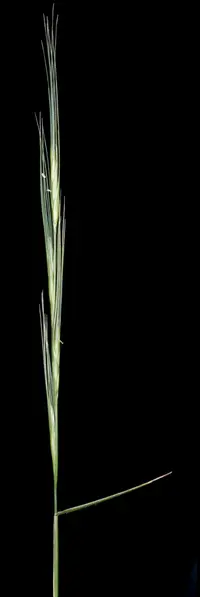
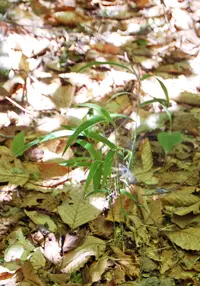
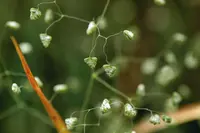
Plants form low, fine-textured tufts with delicate seed heads held on slender stems, giving a soft, airy look in naturalistic plantings. It is adapted to poor, sandy or rocky soils and low rainfall, so it tolerates drought once established but does not persist long without reseeding.

Because it is short-lived and responds strongly to site conditions, care for sixweeks grama focuses on providing enough sun and well-drained soil for reliable germination and self-seeding.

Main Plant Requirements

Care Difficulty

Easy Care

Light Preference

Full Sun

Water Requirements

Low Water

Temperature Preference

Warm Climate

Hardiness Zone

7–10

Soil Texture

Sandy, Loamy, Rocky

Soil pH

Slightly acidic (6.5–7.0), Slightly alkaline (7.0–7.5)

Soil Drainage

Well-drained

Fertilization

Minimal (feed rarely)

Get Personalized Care Plan

Scan your plant to receive care tips personalized for your specific plant

Available on iOS and Android

How to Care for the sixweeks grama

This warm-season grass thrives in bright, open sites with strong sun exposure.

  • Provide full sun for 6–10 hours/day; sixweeks grama develops denser, stronger growth in unobstructed light.
  • It tolerates light partial shade (3–4 hours of direct sun), but stems become thinner and seed heads fewer under reduced light.
  • In hot summers, strong afternoon sun is acceptable if soil is not compacted; in fall and winter, avoid shading from taller plants or structures that cut sun below 4–5 hours/day.

This desert-adapted species prefers infrequent, deep watering in fast-draining soil.

  • In the ground, allow the top 5–8 cm of soil to dry before watering; in arid heat, this may mean roughly every 7–14 days after establishment.
  • Ensure sandy or gravelly, sharply draining soil; puddling longer than 15–20 minutes indicates poor drainage and higher root-rot risk for Bouteloua barbata.
  • Signs of underwatering include rolled or bluish leaves and dry, brittle tips; yellowing, limp foliage and moss or algae on soil indicate overwatering.

This grass is adapted to hot, arid climates and performs best in warm conditions.

  • Active growth occurs around 75–95°F (24–35°C); growth slows notably below 60°F (16°C).
  • It tolerates heat up to about 105°F (40°C) if soil is free-draining; brief spikes higher are usually survived if roots are not waterlogged.
  • The plant can handle light frosts near 28–32°F (-2–0°C), but repeated hard freezes below 25°F (-4°C) may kill aboveground growth and reduce survival.

Humidity is rarely a concern for this drought-adapted grass, which thrives in dry air.

  • Target 20–40% humidity; sixweeks grama naturally occurs in arid and semi-arid habitats and does not need added moisture.
  • Dry indoor or outdoor air does not harm the foliage, provided soil is not kept wet.
  • If tips brown while soil stays wet, reduce watering and increase airflow rather than adding humidity.

Bouteloua barbata prefers lean, fast-draining soil that mimics dry, sandy habitats.

  • Use a gritty, sandy mix such as 50–70% coarse sand or fine gravel blended with low-organic topsoil or native mineral soil.
  • Ensure very rapid drainage; water should pass through in seconds and the top layer should dry fully between waterings.
  • Aim for slightly acidic to neutral pH, roughly 6.0–7.5, which suits most mineral-based sands and native field soils.
  • Avoid heavy clay, peat-heavy mixes, or high compost content, which hold excess moisture and reduce root aeration.

This species can be grown in containers if the pot is set up to stay dry and well-aerated.

  • Choose a wide, shallow container to accommodate fibrous, spreading roots without creating a deep, moisture-holding soil column.
  • Select unglazed terracotta or other porous materials so the sides of the pot also release moisture between waterings.
  • Elevate the pot on feet or bricks so drainage holes stay clear and runoff leaves the container area quickly.

This desert native sixweeks grama needs only light feeding in most garden soils.

  • Use a low-rate, balanced NPK granular or slow-release fertilizer in early spring if growth appears weak or soil is very poor.
  • Apply at 1⁄2 strength of the label rate to avoid forcing lush, floppy growth.
  • Supplement with a thin layer of compost instead of heavier synthetic feeding for established stands.
  • Stop fertilizing in late summer and do not feed during winter dormancy.

Bouteloua barbata benefits from minimal, targeted pruning to keep clumps tidy and vigorous.

  • Best time is late winter or very early spring before new shoots emerge.
  • Use clean hand shears to cut back dead flower stalks and dry foliage to a few cm above the crown.
  • Remove damaged or crowded stems to maintain an airy, upright shape and encourage new tillers.
  • Avoid cutting into green, actively growing shoots during the peak season to preserve flowering.

This short-lived warm-season grass is more often transplanted in-ground than repotted long term in containers.

  • Transplant in early to mid-spring once frost risk is low and soil is warming.
  • Signs a container plant needs attention include roots circling the pot, very fast drying soil, or stalled growth.
  • Shift to a only slightly larger container or into the ground, using a well-drained, gritty mix to limit waterlogging.
  • Water thoroughly after moving, then keep soil just lightly moist for 1–2 weeks to reduce root stress.

Bouteloua barbata is most commonly propagated from seed rather than division.

  • Sow fresh seed in late spring to early summer when soil temperatures are consistently warm.
  • Use a very well-drained sandy mix and press seeds lightly into the surface, keeping them just barely covered.
  • Maintain even, light moisture and bright light until germination, then allow the surface to dry slightly between waterings.
  • Direct seeding into prepared, weed-reduced garden soil often gives stronger plants than pot culture.

This warm-season grass is adapted to mild, dry winters and usually needs little special care in its hardiness range.

  • In regions with brief light frosts, allow top growth to brown naturally, then cut back in late winter.
  • Apply a thin, dry mulch layer around the crown in colder or wetter climates to improve drainage and insulate roots.
  • Container plants in zones colder than the plant’s rating should be moved to a sheltered, unheated but frost-free spot.

Care Tips

Encourage Dense Stands

Lightly rake or disturb the top 0.5–1 cm of soil around mature plants in late spring to help fallen seed make contact with the soil and thicken the stand over the next season.

Timed Reseeding

Allow some plants to dry and drop seed before mowing or cutting in late summer so the patch can self‑sow and maintain coverage without frequent replanting.

Avoid Heavy Mulches

Keep organic mulch very thin (or absent) around plants so the soil surface stays open and warm, which supports seedling emergence and reduces rot at the crown.

Foot Traffic Management

Confine regular foot traffic to narrow paths and leave adjacent patches undisturbed, since repeated trampling can damage crowns and shorten the life of plants when growing sixweeks grama in open ground.

Low‑Input Weed Control

Use a stiff broom or rake to comb through dry plants and dislodge small broadleaf weeds before they set seed, rather than relying on frequent herbicide use in fine‑textured plantings.

Common Pests and Diseases

Grasshoppers

These insects commonly feed on desert grasses, chewing irregular holes in blades and sometimes clipping whole stems, especially in hot, dry periods.

Solution

Reduce nearby tall weeds that harbor nymphs, encourage natural predators such as birds, and use floating row covers or fine netting over young stands during peak grasshopper season; in larger plantings, spot-treat severe outbreaks with a targeted grasshopper bait placed on the soil surface away from non-target plants.

False chinch bugs

These insects can aggregate in large numbers on warm-season grasses, sucking sap from stems and blades and causing wilting or pale, dry patches, particularly during hot, dry weather or after nearby weeds are disturbed.

Solution

Limit nearby mustard and weedy hosts, use a strong stream of water to dislodge bugs from foliage in small plantings, and encourage ground-dwelling predators; in severe cases around patios or paths, use perimeter barriers or spot applications of low-impact insecticidal soap directly on clusters rather than blanket treatments over the whole stand.

Leaf spot

This disease causes small tan to brown lesions on blades, sometimes with darker margins, which can merge into larger dead patches under prolonged warmth and humidity or overhead irrigation.

Solution

Remove and discard heavily spotted foliage to reduce inoculum, water at soil level in the morning so foliage dries quickly, and maintain good spacing or air movement; in persistent, high-humidity situations, a labeled grass-safe fungicide may be applied preventively to young, dense stands.

Smut

This disease produces dark, powdery spore masses in place of normal flower structures, which can reduce seed production and give inflorescences a blackened, distorted appearance.

Solution

Cut and remove affected seed heads before spores spread, avoid moving contaminated seed or debris into clean areas, and rotate or re-establish plantings from healthy, certified seed if infestations become widespread in a stand used for growing sixweeks grama.

Interesting Facts

Ephemeral desert annual

Sixweeks grama is typically a short-lived annual grass that completes its life cycle in only a few weeks, timed to brief pulses of rainfall in arid and semi-arid regions of the southwestern United States and northern Mexico.

Distinctive comb-like spikes

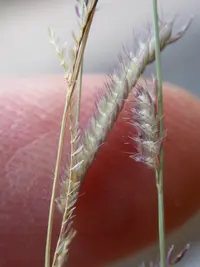
The flowering structures are delicate, one-sided spikes that resemble a small comb or eyelash, an adaptation that helps expose the tiny florets and seeds efficiently to wind for pollination and dispersal.

Soil-crust pioneer

This species often colonizes disturbed, sandy, or gravelly soils and can help stabilize loose surface material, playing a minor but useful role in early stages of desert soil crust and plant community recovery.

Botan icon

Did you know?

Sixweeks grama is frequently cited as one of the most drought-adapted short grasses in North American warm deserts, capable of germinating quickly after light rains and then persisting as a seed bank through prolonged dry periods, a strategy that allows populations to survive highly unpredictable rainfall patterns.

FAQs about sixweeks grama

This species is usually an annual grass, completing its life cycle in a single warm season. In mild climates and ideal conditions it may self-seed readily, so new plants appear each year even though individual clumps are short-lived.

Grow Healthy Plants with Botan Care

Keep your plants happy and healthy with plant identification, disease detection, and easy care guidance.

Botan plant care app — identify plants on mobile

Explore More Plants