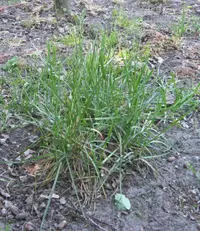
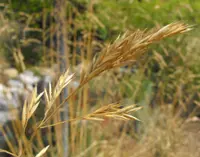
fringed brome Care (Bromus ciliatus)

fringed brome

About fringed brome

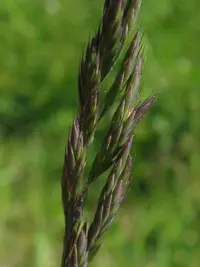
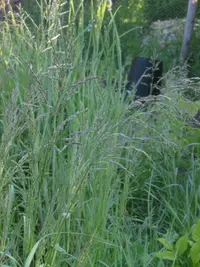
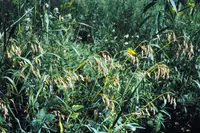
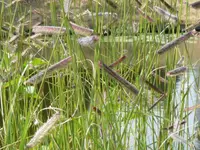
Fringed brome, Bromus ciliatus, is a cool-season perennial grass native to North America. It commonly grows in moist meadows, open woods, and stream banks. Plants form loose clumps with upright, arching stems and soft, narrow leaves. The flowering heads are airy and slightly nodding, giving the plant a fine, textured look. This grass is known for its adaptability to different soils and its tolerance of cold conditions. It tends to prefer moderate light, consistent moisture, and well-drained but not extremely dry soil. These traits make it relatively straightforward to care for fringed brome in naturalistic gardens and restoration plantings.

Main Plant Requirements

Care Difficulty

Easy Care

Light Preference

Partial Sun

Water Requirements

Moderate Water

Temperature Preference

Cold Hardy

Hardiness Zone

2–8

Soil Texture

Loamy, Silty, Organic-rich

Soil pH

Acidic (5.5–6.5), Slightly acidic (6.5–7.0)

Soil Drainage

Moist but well-drained

Fertilization

Minimal (feed rarely)

Get Personalized Care Plan

Scan your plant to receive care tips personalized for your specific plant

Available on iOS and Android

How to Care for the fringed brome

Bromus ciliatus prefers cool-summer light conditions that mimic open woodland edges or moist meadows.

  • Provide 4–6 hours of direct morning sun with light shade or filtered light in the afternoon, especially in warmer regions.
  • Plant in a site with partial shade where it receives dappled light under taller plants or trees to reduce leaf scorch risk.
  • In hot summers, protect fringed brome from intense midday sun, which can cause leaf browning, while avoiding deep shade that leads to weak, floppy growth.

This cool-season grass prefers evenly moist, well-drained soil rather than cycles of drought and saturation.

  • In the ground, water when the top 3–5 cm of soil feel dry, aiming for consistently moist but not soggy conditions during active spring and early summer growth.
  • Use soil structure and location for guidance; loamy, organic-rich, freely draining soil reduces waterlogging risk, while sandy sites may need slower, deeper watering.
  • Reduce watering frequency in late summer and fall, watching for underwatering signs like rolled or crispy leaves and overwatering signs like yellowing foliage and soft, rotting crowns in Bromus ciliatus.

This species is a cool-season grass that grows best in moderate temperatures and tolerates substantial cold once established.

  • Optimal active growth occurs around 55–75°F (13–24°C), with strongest performance in cool spring and early summer conditions.
  • Established plants tolerate winter lows down to about -20°F (-29°C) under typical snow cover, but young plants benefit from mulch in areas with freeze–thaw cycles.
  • In hot climates, growth slows above 80–85°F (27–29°C); provide extra moisture and partial shade during heat waves while avoiding planting in spots that trap reflected heat.

This cool-season grass tolerates a wide humidity range, so indoor air management is rarely critical.

This species prefers moist, well-structured, cool soils that do not stay waterlogged.

  • Use a loamy soil with moderate organic matter, such as a mix of garden loam, compost, and a small amount of coarse sand.
  • Ensure drainage is steady but not excessively fast, since Bromus ciliatus naturally grows in moist meadows and woodland edges.
  • Aim for slightly acidic to neutral pH, roughly 6.0–7.0, avoiding strongly alkaline or saline conditions that limit nutrient uptake.
  • Improve aeration and prevent compaction by incorporating coarse sand or fine grit, especially in heavier clay-based soils.

This grass can be grown in containers, mainly for temporary display or small garden spaces.

  • Choose a deep, relatively narrow pot to accommodate its fibrous root system and prevent the clump from drying out too quickly at the sides.
  • Select a heavier material such as ceramic or thick-walled plastic to stabilize tall, flexible foliage in windy locations.
  • Position the container where runoff can drain freely away, because standing water around the base can cool the root zone excessively and promote rot.

This native cool-season grass needs only light feeding in most garden soils, as caring for fringed brome focuses more on site choice than fertilizer.

  • Use a balanced slow-release fertilizer (around 10-10-10) or a thin layer of compost in early spring if growth seems weak.
  • Apply at half the label rate to avoid lush, floppy top growth and lodging.
  • Skip additional feeding in midsummer and late season unless soil is very poor.
  • Do not fertilize in late fall or winter, when the plant is dormant or semi-dormant.

Pruning Bromus ciliatus is straightforward and mainly supports tidy appearance and healthy regrowth.

  • Cut back dry or dead foliage in late winter or very early spring before new shoots emerge.
  • Remove damaged, diseased, or badly lodged stems during the growing season with clean hand pruners or shears.
  • Thin out crowded clumps by removing a few older stems at the base to improve air flow and reduce disease risk.
  • Deadhead seed heads if self-seeding is not desired, or leave some to support wildlife and natural reseeding.

This grass is usually grown in the ground, so care focuses on transplanting clumps rather than frequent repotting.

  • Transplant in early spring or early fall when temperatures are mild and soil is moist but not waterlogged.
  • Lift and move clumps every 3–5 years if the center thins out or if growth becomes crowded.
  • When moving a clump, dig wide to keep a solid root ball and replant at the same depth in prepared, well-drained soil.
  • Water deeply after transplanting, then keep soil evenly moist for 2–3 weeks to reduce root stress and support re-establishment.

Bromus ciliatus is commonly propagated by seed or by dividing established clumps.

  • Sow fresh or cleaned seed in fall outdoors or in early spring; light cover with soil and consistent moisture improves germination.
  • For division, split healthy clumps in early spring or early fall during cooler conditions.
  • Use a sharp spade or knife to separate sections with both roots and shoots, then replant promptly at the same depth.
  • Keep newly divided or seeded areas evenly moist and weed-free until plants are well established.

This cool-season, cold-hardy grass usually needs minimal winter care in temperate and cold regions.

  • Tolerates freezing temperatures and typical winter frost when planted in the ground with good drainage.
  • Leave dry foliage standing over winter to insulate crowns and provide habitat, then cut back in late winter.
  • In very exposed or dry sites, apply a light mulch around the base after soil freezes, keeping mulch off the crowns.
  • Container-grown plants in colder zones can be moved to a sheltered, unheated area to prevent root ball freeze–thaw damage.

Care Tips

Gradual site expansion

Start with a small clump in its first year, then divide and replant outer sections every 2–3 years to slowly expand a dense, even stand without leaving bare gaps.

Mow timing management

Delay the first mow or cutback until seed heads have fully turned tan and dropped if you want self-sown regeneration, then mow to 7–10 cm to tidy the area and encourage fresh basal growth.

Wildlife-safe seed use

Leave a portion of seed heads standing through late summer to provide food and cover for small wildlife, cutting only selected areas if you need access paths or a neater edge.

Erosion control planting

On slopes, plant clumps in staggered rows across the slope, 30–45 cm apart, so their fibrous root systems knit the soil and reduce erosion more effectively than a straight-line planting.

Low-input meadow integration

When growing fringed brome in a mixed meadow, place it in patches with other cool-season natives and avoid frequent disturbance so it can fill mid-height structure between shorter forbs and taller grasses.

Common Pests and Diseases

Leaf spot fungi

This disease causes small tan to brown spots on leaves that may merge into larger dead patches, especially in dense, humid stands. Symptoms include premature yellowing and thinning of foliage, which reduces vigor and seed production.

Solution

Remove and destroy heavily affected foliage and avoid overhead irrigation that keeps leaves wet for long periods. Thin or divide dense clumps to improve air movement, and if needed use a labeled fungicide for turf or ornamental grasses, applied according to local regulations and product directions.

Rust

This disease produces orange to brown powdery pustules on leaf surfaces, often followed by yellowing and early leaf death. Symptoms include reduced growth and a generally weakened appearance of the clump.

Solution

Cut back and discard infected leaves to reduce the amount of fungal spores present. Improve spacing and air circulation, avoid excess nitrogen fertilization, and in severe, recurring cases consider a grass-appropriate fungicide labeled for rust, following label instructions carefully.

Grass aphids

These insects cluster on stems and leaf bases, sucking sap and causing curling, distortion, and pale or yellow streaks. This pest can also leave sticky honeydew that encourages sooty mold growth.

Solution

Rinse colonies off plants with a firm stream of water and encourage natural predators such as lady beetles by avoiding broad-spectrum insecticides. For persistent infestations, use an insecticidal soap or horticultural oil sprayed thoroughly on infested areas during cooler parts of the day.

Grasshoppers

These insects chew irregular holes and notches along leaf blades and can defoliate young or small plantings when populations are high. Symptoms include ragged foliage and reduced overall density of the stand.

Solution

Hand-pick and remove grasshoppers where practical and reduce nearby tall weeds that provide shelter and breeding sites. In larger plantings, use physical barriers such as fine mesh around high-value areas, and if necessary apply a targeted grasshopper bait or insecticide according to local guidelines and product labels.

Ergot

This disease replaces developing grass seeds with dark, hardened fungal structures, sometimes exuding sticky spore masses during flowering. Symptoms include reduced viable seed production and contamination risk for wildlife forage or restoration seed lots.

Solution

Mow or cut seed heads before full flowering in infested patches to interrupt the life cycle and remove infected seed heads from the area. For seed production or restoration settings, use clean certified seed, rotate plantings, and avoid reusing contaminated seed lots to maintain healthy Bromus ciliatus care instructions over time.

Interesting Facts

Native woodland grass

This cool-season bunchgrass is native to moist woodlands, forest edges, and stream banks across much of North America, where it helps stabilize soil and occupy shaded ground layers.

Drooping, fringed spikelets

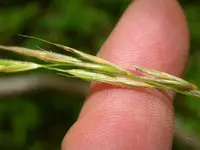
Its flowering heads bear slender, drooping spikelets with long, hair-like awns that give a distinctly fringed look, which is the source of its common name fringed brome.

Shade-tolerant colonizer

Unlike many grasses that require full sun, it tolerates partial to fairly deep shade and can quickly colonize disturbed, moist forest soils, supporting early-successional understory communities.

FAQs about fringed brome

This grass spreads moderately by seed and short rhizomes, forming loose clumps rather than dense, smothering mats. In gardens or restoration sites it usually coexists well with other natives and is not considered aggressively spreading under normal conditions.

Grow Healthy Plants with Botan Care

Keep your plants happy and healthy with plant identification, disease detection, and easy care guidance.

Botan plant care app — identify plants on mobile

Explore More Plants