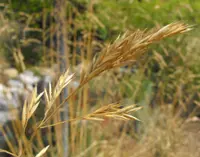
rough bluegrass Care (Poa trivialis)

Also known as: Rough Meadow-grass, Scribner's Bluegrass, Bird Grass, Rough Stalk Blue Grass
rough bluegrass

About rough bluegrass

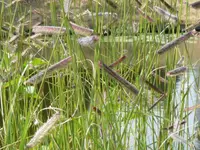
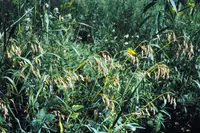
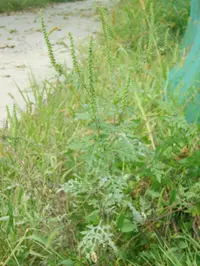
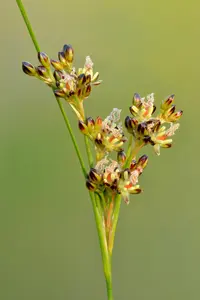
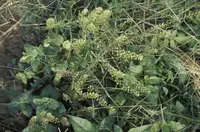
Rough bluegrass, Poa trivialis, is a cool-season turf grass commonly found in moist, shaded lawns, pastures, and disturbed ground. It forms loose, patchy clumps with fine, soft blades and a light green color that often contrasts with surrounding turf.

This species spreads by above-ground stems called stolons, which allows it to colonize new areas quickly but also makes it prone to forming uneven patches. It naturally occurs in Europe and western Asia but is now widely naturalized in North America.

It prefers cool temperatures, consistent moisture, and fertile, somewhat heavy soils, so its performance drops in hot, dry conditions. Many lawn owners focus on how to care for rough bluegrass mainly to manage or control its spread rather than to encourage it.

Main Plant Requirements

Care Difficulty

Moderate Care

Light Preference

Partial Shade

Water Requirements

Regular Water

Temperature Preference

Cool Climate

Hardiness Zone

3–7

Soil Texture

Loamy, Silty, Organic-rich

Soil pH

Acidic (5.5–6.5), Slightly acidic (6.5–7.0)

Soil Drainage

Moist but well-drained

Fertilization

Minimal (feed rarely)

Get Personalized Care Plan

Scan your plant to receive care tips personalized for your specific plant

Available on iOS and Android

How to Care for the rough bluegrass

This cool-season grass prefers cooler, softer light rather than intense direct sun.

  • Provide 2–4 hours of gentle morning sun with bright open shade or dappled light the rest of the day for Poa trivialis lawns.
  • Tolerates high, shifting shade under trees or on the north side of buildings, but dense shade all day thins turf and encourages disease.
  • Avoid strong afternoon sun in summer, which can scorch blades; in winter, allow more open exposure to maximize low-angle light.

This species prefers consistently moist soil but suffers if left saturated for long periods.

  • Aim for soil that stays evenly moist to 5–8 cm depth; water when the surface 1–2 cm starts to lose sheen and feel slightly dry.
  • Increase watering frequency during hot, windy periods when blades fold, turn bluish, or footprints remain visible, all signs of moisture stress.
  • Ensure soil drains freely; standing water, foul smell, or yellowing, limp leaves indicate overwatering and possible root decline in Poa trivialis turf.

This cool-season grass performs best in mild conditions and struggles in sustained heat.

  • Optimal active growth occurs around 55–75°F (13–24°C), with strongest performance in cool spring and fall weather.
  • Tolerates down to about 20°F (-6°C) once established, going semi-dormant in colder spells but recovering when temperatures rise.
  • Struggles above 80–85°F (27–29°C); prolonged heat can cause thinning, so provide irrigation and avoid heavy traffic during hot periods.

This cool-season grass prefers moderate ambient humidity but adapts well to most outdoor conditions.

  • Target 40–60% humidity; typical outdoor air in temperate regions is adequate for rough bluegrass.
  • Dry air is rarely a problem outdoors, but prolonged hot, dry winds can cause leaf tip browning and slower regrowth.
  • If stress appears, reduce heat and wind exposure with light shade or windbreaks rather than misting, which can favor fungal disease.

Poa trivialis performs best in consistently moist, fine-textured soil with moderate fertility.

  • Use a loamy soil with high silt or fine sand content plus 10–20% compost to support dense, shallow roots.
  • Aim for slightly acidic to neutral pH (6.0–7.0) and avoid saline or strongly alkaline sites that restrict nutrient uptake.
  • Choose soil that drains slowly but does not stay waterlogged; standing water increases risk of root rot and moss invasion.
  • To improve heavy clay, incorporate sharp sand and organic matter to increase aeration while still retaining uniform surface moisture.

This grass can be grown in containers, mainly for temporary turf trials or small patches rather than long-term display.

  • Use a wide, shallow container to match its shallow root system and encourage even surface coverage without deep, unused substrate.
  • Fill the pot with a fine-textured, peat-free turf substrate that holds uniform moisture but does not stay saturated after irrigation.
  • Choose a heavier pot material or add weight at the base to prevent tipping as the dense sward creates a top-heavy, wind-sensitive surface.

Poa trivialis benefits from modest, well-timed feeding to support dense, healthy turf without excessive thatch.

  • Apply a balanced slow-release NPK fertilizer in early spring at half the lawn label rate to avoid soft, disease-prone growth.
  • If growth fades mid-season, repeat with a light application or thin layer of sifted compost to supply gentle nutrients.
  • During hot summer dormancy or winter, reduce feeding to none or a very minimal dose to prevent stress.
  • Water in fertilizers deeply after application and avoid spreading on drought-stressed or frozen turf when caring for rough bluegrass.

Pruning for Poa trivialis is mainly achieved through mowing, which shapes the stand and maintains turf health.

  • Mow during active growth in cool seasons, avoiding removal of more than 1/3 of leaf height in a single cut.
  • Use a sharp mower blade or hand shears to prevent tearing leaves, which increases disease entry points.
  • Remove dead, diseased, or excessively crowded patches by scalping and overseeding with desired grasses if thinning is needed.
  • Collect and remove heavy clippings in dense, wet areas to limit thatch buildup and fungal problems around the crowns.

This grass is rarely repotted, but Poa trivialis can be transplanted when used in turf repair or small container trials.

  • Transplant in early spring or early fall when temperatures are cool and soil moisture is stable.
  • Move clumps when growth is weak, roots are tightly matted in plugs, or drainage is poor in the current site.
  • Lift small sod sections with a spade, keeping roots and attached soil intact to minimize shock.
  • Replant at the same depth, firm the soil gently, then water thoroughly and keep evenly moist for 2–3 weeks.

Poa trivialis is commonly propagated for turf through seed and, less often, by division of existing patches.

  • Sow seed in early fall or early spring on a fine, firm seedbed with good surface moisture and drainage.
  • Lightly rake seed into the top 0.3–0.6 cm of soil, then keep consistently moist until germination and early establishment.
  • For small patches, divide sod sections with a sharp spade, replanting pieces promptly at the same depth.
  • Provide 50–70% soil moisture, gentle irrigation, and reduced foot traffic while new seedlings or divisions root.

Poa trivialis is a cool-season grass with good frost tolerance and usually requires minimal winter care in the ground.

  • In cold climates, allow growth to harden off in fall by reducing high-nitrogen feeding and avoiding late heavy mowing.
  • Apply a light mulch of clean straw or leaves only in exposed, shallow-rooted patches, keeping crowns uncovered.
  • For container plantings, move pots to a sheltered, unheated area and water sparingly to keep soil just barely moist.

Care Tips

Overseed Weak Patches

Lightly scalp thin or yellowing areas with a mower, then overseed with fresh seed and keep the surface evenly moist for 10–14 days to help the stand thicken and outcompete weeds.

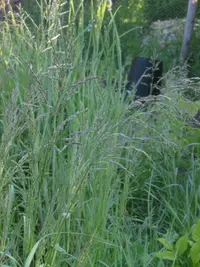
Manage Summer Stress

Before hot weather arrives, gradually raise mowing height by 0.5–1 in and reduce traffic on the turf to limit stress and discourage rapid decline in warm conditions.

Control Thatch Build‑Up

Check for thatch thicker than about 1.25 cm and, if present, use a dethatching rake or power rake in early spring or fall so water, air, and nutrients can reach the fine root system more effectively.

Use Targeted Herbicides

In mixed turf where this grass is undesirable, apply selective herbicides labeled for Poa species during active growth, then follow the label with precise timing and overseeding plans to re-establish preferred grasses.

Improve Drainage Zones

In persistently wet or shaded spots, lightly topdress with sand or a sand–soil blend and consider shallow surface grading or slit drainage to create conditions more suitable for long-term stability when growing rough bluegrass.

Common Pests and Diseases

Gray snow mold

This disease develops under long-lasting snow cover on moist turf and creates circular, matted patches of bleached or grayish grass. Symptoms include water-soaked leaves with gray mycelium and sometimes tiny dark fruiting bodies on affected blades.

Solution

Mow and remove thick leaf debris before winter, avoid heavy late-fall nitrogen, and improve drainage to reduce prolonged snow cover on the turf. In high-risk, shaded, wet sites, preventive fungicide labeled for snow mold can be applied in late fall, and lightly rake matted areas in spring to encourage recovery.

Leaf spot and melting out

This disease complex causes dark purple to brown spots on leaves that can expand and lead to thinning or bare patches in cool, wet weather. Symptoms include weakened turf that declines quickly during stress periods in late spring or early summer.

Solution

Reduce evening irrigation, improve air movement, and avoid high nitrogen during cool, wet periods to limit disease pressure. Mow at the recommended height, remove excessive thatch, and if damage is recurring, use a labeled foliar fungicide during early symptom development.

Dollar spot

This disease produces small, straw-colored spots that merge into irregular patches, especially in closely mowed, nutrient-poor turf. Symptoms include bleached leaf blades with characteristic hourglass-shaped lesions and a fine white mycelium visible in early morning.

Solution

Maintain balanced fertility with light, regular nitrogen and avoid moisture stress to increase turf vigor. Improve morning drying with proper mowing and airflow, and in persistent cases use a rotating program of labeled fungicides applied when conditions turn warm and humid.

Rust

This disease appears as yellow to orange powdery pustules on leaf blades, often in shaded or low-vigor turf during late summer to fall. Symptoms include discolored patches and orange dust that rubs off on shoes or equipment.

Solution

Increase mowing frequency to remove infected tissue and dispose of clippings from heavily affected areas. Improve fertility and light exposure where possible, reduce leaf wetness by adjusting irrigation timing, and use a labeled systemic fungicide if rust remains severe despite cultural corrections.

Billbugs

These insects damage rough bluegrass crowns and stems, causing irregular, wilted, or dead patches that pull up easily and show sawdust-like frass. This pest often weakens Poa trivialis in sunny edges and transition areas near other cool-season grasses.

Solution

Monitor for adult activity with visual inspection and simple soap flush tests in late spring, then time treatments when young larvae are present in stems. Improve turf vigor with proper irrigation and mowing, overseed with more tolerant species in chronically damaged spots, and if needed apply a targeted, labeled insecticide to areas with confirmed billbug populations as part of Poa trivialis care instructions.

Interesting Facts

Cool-season shade specialist

This species is a cool-season grass that thrives in moist, shaded sites where many typical lawn grasses struggle, which is why it often appears as softer, lighter green patches in otherwise uniform turf.

Creeping stolon growth

Poa trivialis spreads using above-ground stems called stolons, allowing it to form a dense, mat-like network that can quickly colonize wet, compacted, or disturbed soil.

Moisture-loving lawn invader

In many temperate lawns and sports fields, it is considered a contaminant because its preference for cool, damp conditions makes it turn patchy and decline when exposed to summer heat and drought, contrasting sharply with more heat-tolerant turf species.

Botan icon

Did you know?

Poa trivialis likely originated in Eurasia but has become naturalized and sometimes invasive across large parts of North America, where it now occurs in habitats ranging from irrigated golf courses and athletic fields to wet meadows, stream banks, and roadside ditches.

FAQs about rough bluegrass

This species spreads quickly through stolons, forming dense patches that can overtake weaker turf, especially in cool, moist, shaded sites. Regular monitoring, mowing, and, if needed, targeted removal help keep it from dominating mixed lawns.

Grow Healthy Plants with Botan Care

Keep your plants happy and healthy with plant identification, disease detection, and easy care guidance.

Botan plant care app — identify plants on mobile

Explore More Plants