
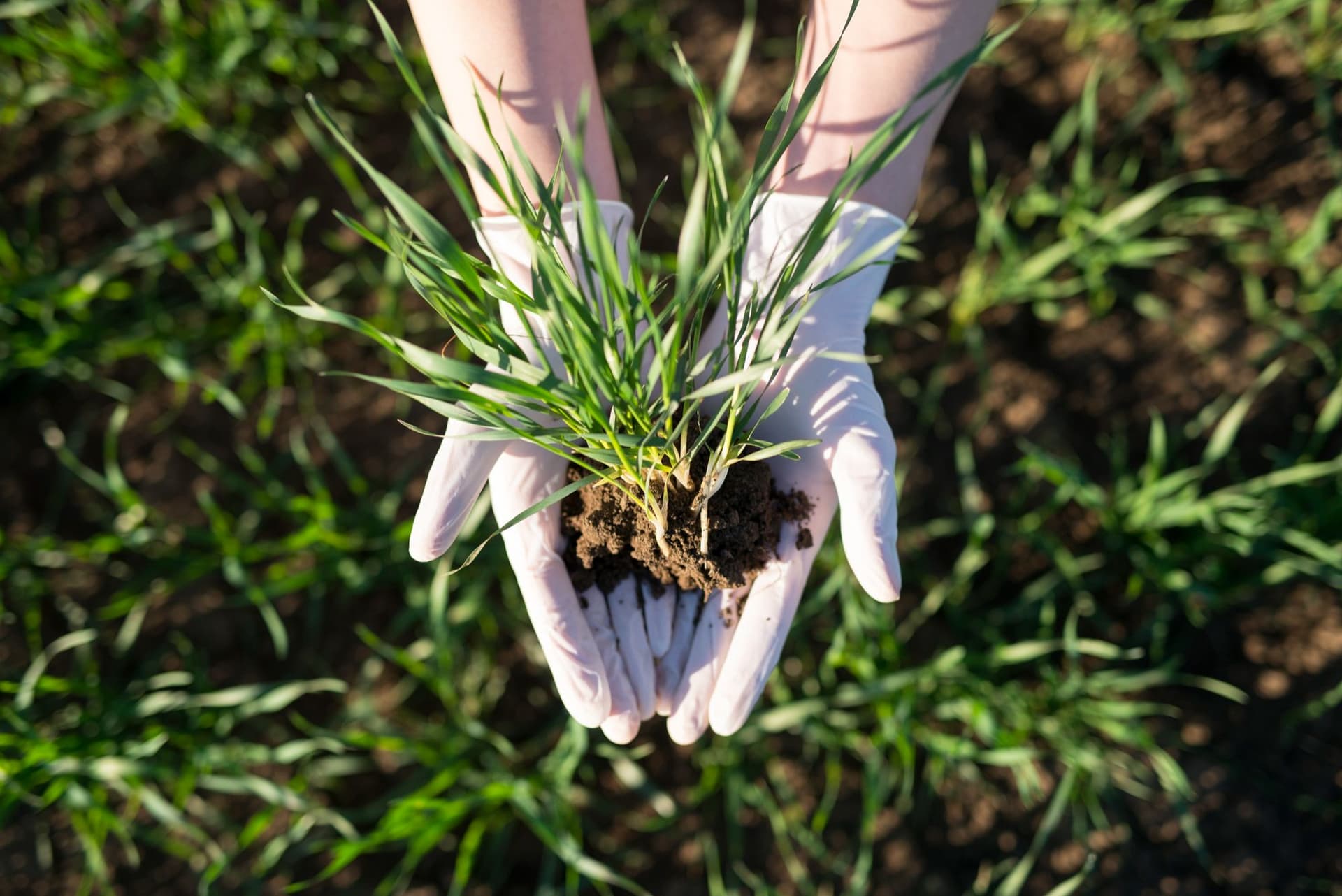
rough bluegrass Identification (Poa trivialis)

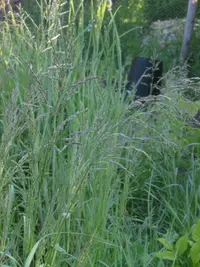
Recognize rough bluegrass by its spreading, stolon-forming growth, soft flat leaves with a distinct boat-shaped tip, and loose open panicles of many small spikelets held above the foliage.

Plants form low patches rather than clumps, with flowering stems often 1 to 2 feet tall (30 to 60 cm).

Poa trivialis Identification

Identify Your Plant with Botan

Not sure about your plant ID? Upload a photo and check it with Botan.

Clear images work best. Avoid photos taken too close or too far away

Check Poa trivialis for a low, spreading grass form with soft, flattened leaves.

  • Plants often creep and form loose patches, with stems that bend and root at lower joints.
  • Leaf blades are flat, smooth, and narrow, usually about 2-6 inches (5-15 cm) long.
  • Leaf tips are boat-shaped, with the tip folded like a tiny prow.
  • The flowering head is an open, airy panicle with many fine, spreading branches.

Rooting joints and boat-shaped leaf tips are especially useful visual clues.

Poa trivialis shows clear visual shifts from low shoots to open, flowering turf.

  • Seedling: Seedlings appear as fine, narrow blades arising singly, with a small, low tuft and no obvious spreading stems or open canopy yet.
  • Young plant: Young plants form soft, light green patches as short creeping stems begin rooting at nodes, creating a flatter, more spreading habit.
  • Mature plant: Mature plants show broader, drooping leaf tips and distinct aboveground runners, forming loose mats and upright flowering stems about 1-3 feet (30-90 cm) tall.
  • Flowering stage: At flowering, the plant carries airy, branched panicles above the leaves, making the clump look more open and visibly taller than nonflowering shoots.

In spring, Poa trivialis often stands out as a brighter, lighter green patch than surrounding turf. Its soft leaves stay noticeable in cool, wet periods. By late spring to early summer, open, airy flower panicles rise above the leaves and make the plant easier to spot. In hot summer weather, patches may thin or fade, especially in warmer regions.

A few cool-season lawn grasses are often mistaken for Poa trivialis.

annual bluegrass(Poa annua)

Both can form light green patches in turf. Annual bluegrass is usually lower and tufted, often with many small open seedheads close to mowing height. rough bluegrass spreads by stolons, aboveground runners that root at the nodes.

Kentucky bluegrass(Poa pratensis)

Both are bluegrasses with boat-shaped leaf tips. Kentucky bluegrass is darker blue-green and spreads by rhizomes, underground stems. It lacks the shiny leaf undersides and creeping stolons that help separate rough bluegrass.

Poa trivialis is native to Europe, western Asia, and North Africa. It is typically found in damp, fertile places such as moist meadows, woodland edges, streambanks, ditches, and other shaded or partly shaded lowland sites. That habitat can help with identification. In North America, this grass often turns up in cool, moist lawns, floodplains, and shaded turf rather than dry, open ground, which helps separate it from many other common lawn grasses.

Confirm the Species with Botan

Upload a photo to get help identifying the plant or confirming your ID before you label it or compare similar species.

FAQ

Yes. The blades feel soft but distinctly rough to the touch, especially along the upper surface. In what does rough bluegrass look like, this texture is one of the clearest quick checks.

More Plant Identification Guides

Know What Plant You Have

Identify it from a photo with Botan, then get plant details, care information, and common problems for that species.

Botan app identifying a plant from a photo
What Plants Don't Like Epsom Salt?

11 min read · 29 Jul 2026

What Plants Don't Like Epsom Salt?

Learn which plants can be seriously damaged by Epsom salt and which will thrive on it. We’ll explain when and how to use it properly, provide tips for indoor & outdoor plants — read on and enjoy a healthy garden.

Plant Care
What Plants Don't Like Epsom Salt?
Best Water for Plants – How to Choose the Right Type

7 min read · 13 Aug 2026

Best Water for Plants – How to Choose the Right Type

Rainwater, filtered, distilled, and tap water affect plants differently. Learn which types support healthy growth and which cause slow damage. Match each to your plants and discover how to easily improve tap water quality.

Plant Care
Best Water for Plants – How to Choose the Right Type
How to Use a Moisture Meter for Plants

5 min read · 4 Sept 2026

How to Use a Moisture Meter for Plants

Watering by feel kills plenty of houseplants. A moisture meter checks the soil for you, and takes the guesswork out of it. This guide will show you how to use it correctly, from the first touch to the final reading.

Beginner Guides
How to Use a Moisture Meter for Plants