


Wind-smart placement
Site plants where buildings, fences, or evergreen hedges break strong prevailing winds, since constant wind stress dries foliage and can cause leaf scorch even when soil moisture is adequate.

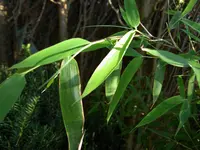
Umbrella bamboo, Fargesia murielae, is a clump-forming, cold-hardy bamboo valued for its fine, arching canes and dense, fountain-like foliage. It stays as a neat clump instead of running, which makes it suitable for smaller gardens and screening in containers or borders.
This species comes from cool, mountainous regions of China and is adapted to cooler summers and cold winters. It usually prefers partial shade, consistent moisture, and well-drained, humus-rich soil. With the right site and steady watering, it is considered one of the easier bamboos for temperate climates and suits gardeners learning how to care for umbrella bamboo.

Care Difficulty
Easy Care

Light Preference
Partial Shade

Water Requirements
Keep Soil Moist

Temperature Preference
Cold Hardy

Hardiness Zone
5–9

Soil Texture
Loamy, Silty, Organic-rich

Soil pH
Acidic (5.5–6.5), Slightly acidic (6.5–7.0)

Soil Drainage
Moist but well-drained

Fertilization
Minimal (feed rarely)
Scan your plant to receive care tips personalized for your specific plant
Available on iOS and Android
This clump-forming bamboo prefers cool, bright conditions with protection from strong midday sun.
This species prefers consistently moist but not waterlogged soil, especially during active growth.
This cold-hardy bamboo grows best in cool to mild climates with moderate summer temperatures.
This clumping bamboo prefers moderately moist air but usually adapts to typical home humidity.
This species grows best in consistently moist, loose, organic-rich soil with reliable drainage.
This bamboo can be grown successfully in containers if given a stable, well-drained setup.
Fargesia murielae benefits from light, steady nutrition rather than heavy feeding.
Pruning Fargesia murielae is mainly about thinning and tidying, not constant reshaping.
Clumping bamboo such as Fargesia murielae is more often transplanted in the ground than shifted between pots.
Division is the standard and most reliable method of propagating Fargesia murielae for home growers.
This species is generally cold hardy but benefits from some winter care in harsher climates.

Plant Health Check
Not sure what's wrong with your plant? Check your plant's health inside the app.
Unlike running bamboos, this species forms tight clumps with short rhizomes, so it does not spread aggressively in gardens and rarely requires physical root barriers in temperate climates.
This bamboo is adapted to cool, highland habitats in central China and is reliably hardy in much of Europe and North America, tolerating winter conditions that damage many other bamboo species.
The narrow leaves roll in on themselves during cold, dry, or very sunny periods, a reversible response that reduces water loss and limits frost and sun damage to the foliage.

This species is one of several bamboos known to flower gregariously on long, synchronized cycles; many plants of the same lineage can bloom and then decline or die over a relatively short period, even when growing in different locations and climates.
Yellowing leaves usually result from stress: waterlogged soil, drought, sudden temperature swings, or nutrient deficiency. Check drainage first, then watering habits. Older inner leaves can yellow naturally as part of normal aging and are less concerning.
Keep your plants happy and healthy with plant identification, disease detection, and easy care guidance.

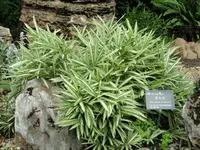
Pleioblastus fortunei
Pleioblastus argenteostriatus
hedge bamboo
Bambusa multiplex
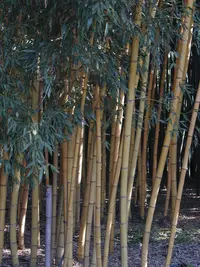
sulphur bamboo
Phyllostachys sulphurea
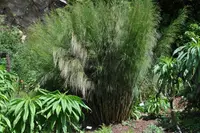
Branch Broomreed
Cannomois virgata
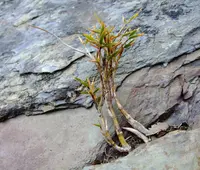
Yushania niitakayamensis
Yushania niitakayamensis
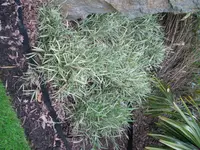
Dwarf White Stripe Bamboo
Pleioblastus variegatus
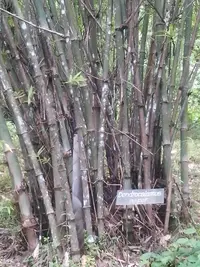
giant bamboo
Dendrocalamus asper

tortoise shell bamboo
Phyllostachys edulis