Control Running Rhizomes
Install a 60–75 cm deep rhizome barrier made of HDPE or similar material, angled slightly outward and checked each spring, to prevent this running bamboo from spreading into lawns or neighboring beds.

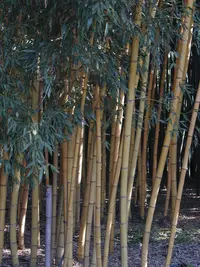
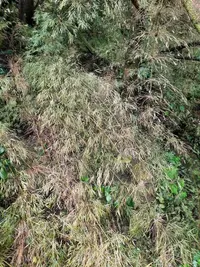
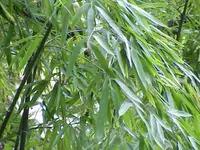
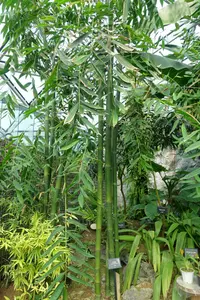
Sulphur bamboo, Phyllostachys sulphurea, is a hardy, clumping to running bamboo known for its upright yellow-green canes and fine, narrow leaves. It forms dense groves that give strong vertical structure in gardens and screens.
This species is native to East Asia and is often grown in temperate regions for ornamental use and windbreaks. It is generally vigorous and fast-growing, so space management and containment are important when planning how to care for sulphur bamboo.
The plant prefers sun to light shade, consistent moisture, and fertile, well-drained soil to grow at its best. Under suitable conditions it is considered relatively easy to maintain for most outdoor landscapes.

Care Difficulty
Moderate Care

Light Preference
Full Sun

Water Requirements
Regular Water

Temperature Preference
Cold Hardy

Hardiness Zone
6–10

Soil Texture
Sandy, Loamy, Clay

Soil pH
Acidic (5.5–6.5), Slightly acidic (6.5–7.0)

Soil Drainage
Moist but well-drained

Fertilization
Minimal (feed rarely)
Scan your plant to receive care tips personalized for your specific plant
Available on iOS and Android
This species prefers bright outdoor conditions with protection from harsh afternoon sun.
Phyllostachys sulphurea performs best in consistently moist but well-drained soil.
This bamboo is a hardy, outdoor species that tolerates a wide temperature range with proper siting.
This species tolerates a wide humidity range but grows best with moderately moist air.
Phyllostachys sulphurea prefers deep, loose, well-drained but consistently moist soil.
This bamboo can be grown in containers if the pot is large, stable, and drains efficiently.
Phyllostachys sulphurea responds well to moderate feeding during its active growing season.
Phyllostachys sulphurea benefits from light structural pruning to maintain an open, healthy grove.
This running bamboo is more often transplanted in-ground than maintained long term in containers.
Phyllostachys sulphurea is most reliably propagated by division of established clumps rather than by seed.
Mature Phyllostachys sulphurea is generally cold hardy in much of the US but benefits from simple winter precautions in harsher climates.

Plant Health Check
Not sure what's wrong with your plant? Check your plant's health inside the app.
This species is known for its bright yellow to yellow-green culms that can show subtle green striping, making it visually distinct from many other green Phyllostachys bamboos.
Its culms are relatively straight, dense, and tough, so in its native range it has been traditionally used for construction, poles, and durable everyday tools where rigidity is needed.
Unlike many tropical bamboos, it tolerates moderate frost and can handle cool temperate climates, which has led to its cultivation in parts of Europe and North America as an ornamental and structural bamboo.

Historical records from China describe this species among the bamboos used for early paper-making experiments, where finely processed culm fibers contributed to some of the first durable bamboo-based papers.
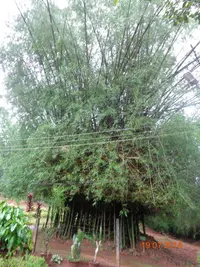
This species has running rhizomes that spread quickly underground and can form large groves. In gardens, install deep root barriers and regularly remove unwanted shoots to prevent it from invading lawns, beds, or neighboring properties.
Keep your plants happy and healthy with plant identification, disease detection, and easy care guidance.