Chilean bamboo Care (Chusquea culeou)

Also known as: caña coligüe, colihue
Chilean bamboo

About Chilean bamboo

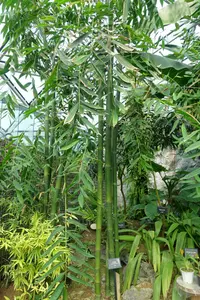
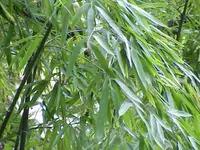
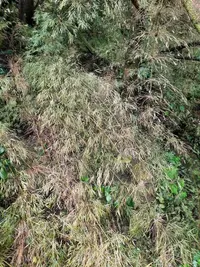
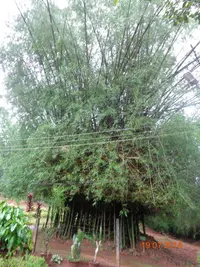
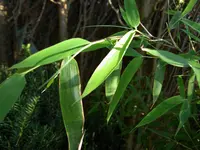
Chilean bamboo (Chusquea culeou) is an evergreen, clumping bamboo from the temperate forests of Chile and Argentina. It forms tight, upright thickets with many slender, solid culms and fine, narrow leaves.

This species is used as an ornamental screening plant and for stabilizing slopes, as its dense root system holds soil well. Once established, it is relatively hardy but dislikes extreme heat and very dry air, so site choice is important.

It prefers cool to mild conditions, consistent moisture, and well-drained soil, which shapes how to care for Chilean bamboo in gardens or larger containers.

Main Plant Requirements

Care Difficulty

Moderate Care

Light Preference

Full Sun

Water Requirements

Regular Water

Temperature Preference

Cold Hardy

Hardiness Zone

7–9

Soil Texture

Loamy, Clay, Organic-rich

Soil pH

Acidic (5.5–6.5), Slightly acidic (6.5–7.0)

Soil Drainage

Moist but well-drained

Fertilization

Minimal (feed rarely)

Get Personalized Care Plan

Scan your plant to receive care tips personalized for your specific plant

Available on iOS and Android

How to Care for the Chilean bamboo

This clumping bamboo prefers bright, cool conditions with protection from harsh afternoon sun.

  • Provide 4–6 hours of direct morning sun with light or dappled shade after midday for healthy, upright growth in Chilean bamboo.
  • Tolerates partial shade, but in less than 3–4 hours of direct or bright filtered light, culms may grow thinner and foliage becomes sparser.
  • In hot summers, shield from strong afternoon sun to prevent leaf tip scorch; in cooler climates, a more open position improves light levels in winter.

This species prefers consistently moist but not waterlogged soil around its dense root system.

  • Water when the top 3–5 cm of soil feels slightly dry, aiming for evenly damp soil, especially during the first 2–3 growing seasons.
  • Use deep, slow watering so moisture penetrates the full root zone, and ensure soil drains freely to prevent sour, muddy conditions and root rot.
  • In hot, windy periods, expect faster drying and more frequent watering; drooping or curling leaves suggest thirst, while yellowing lower leaves can indicate excess moisture.

This cold-hardy bamboo handles a wide temperature range but grows best in cool, mild conditions.

  • Optimal growth occurs around 55–75°F (13–24°C), with steady growth in cool summers and good shoot production in spring.
  • Established plants tolerate drops to about 0°F (−18°C), and short freezes below this may burn foliage but usually spare mature culms and underground rhizomes.
  • In hot climates, prolonged heat above 90°F (32°C) can stress plants, so provide mulch and wind protection to reduce soil temperature swings and moisture loss.

This clump-forming bamboo prefers moderately moist air but adapts to typical outdoor humidity.

  • Aim for 40–60% humidity, especially in hotter, exposed sites or when grown in a sheltered courtyard or patio.
  • It tolerates brief drier air but prolonged hot, dry winds can cause leaf-tip browning and rolling.
  • Increase humidity by deep mulching the root zone, grouping plants, and providing occasional overhead rinsing during very dry periods when caring for Chilean bamboo.

This species grows best in loose, moist, well-drained, organic-rich ground.

  • Use a loamy mix with plenty of organic matter, such as garden soil blended with compost and leaf mold, to retain moisture without becoming sticky.
  • Ensure drainage is steady by avoiding heavy clay; lighten dense ground with coarse sand or fine bark to improve aeration around the roots.
  • Aim for slightly acidic to neutral pH, roughly 6.0–7.0, which supports balanced nutrient availability for Chusquea culeou.
  • Avoid compacted, waterlogged, or very shallow soils, which restrict rhizome spread and increase the risk of root rot and weak growth.

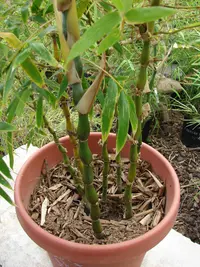
This bamboo can be grown in containers, though it performs better long-term in the ground.

  • Choose a tall, heavy container to counteract the upright, clumping growth that can make the plant top-heavy in wind.
  • Select thick-walled terracotta or concrete if outdoor conditions are hot, as these materials buffer root temperature and slow water loss slightly.
  • Use a deep, free-draining mix and elevate the pot on feet so excess water clears quickly and does not pool under the base.

Nutrient needs for Chusquea culeou are moderate, especially in containers or poor soils.

  • Apply a balanced slow-release fertilizer (around 10-10-10) in early spring at label rates for woody ornamentals.
  • In mid to late summer, top-dress with a thin layer of mature compost to support steady growth.
  • Use half-strength liquid balanced feed every 4–6 weeks in the growing season for potted plants only.
  • Stop feeding in late summer to early fall so shoots harden before winter and avoid winter fertilization.

Pruning Chusquea culeou is mainly corrective, aimed at maintaining a healthy, open clump.

  • Best time is late winter to early spring before strong new growth begins.
  • Cut out dead, damaged, or crossing culms at ground level using clean, sharp bypass pruners or loppers.
  • Thin the oldest, most crowded stems to improve air flow and keep the clump upright and tidy.
  • Avoid cutting the tips of healthy culms, which can reduce the plant’s natural arching form.

Chusquea culeou is most often grown in the ground, but containers and young plants may need occasional transplanting.

  • Transplant or shift to a larger pot in early spring when roots circle the container, drainage slows, or growth declines.
  • Expect container plants to need a larger pot every 2–3 years, choosing only 1–2 in wider than the old one.
  • Water thoroughly the day before moving, handle the root ball gently, and keep roots shaded while out of the soil.
  • Replant at the same depth, firm soil carefully, water in well, and provide 1–2 weeks of wind protection to reduce stress.

Chusquea culeou plant care propagation relies mainly on division, as seed is slow and variable.

  • Divide established clumps in early spring when new shoots just emerge and soil is workable.
  • Lift and split the root mass into sections, each with several culms and healthy rhizomes, using a sharp spade or saw.
  • Replant divisions promptly into moist, well-drained soil, keeping original planting depth and watering thoroughly.
  • Provide bright, indirect light, consistent moisture, and shelter from strong wind until divisions re-establish.

This species is relatively cold hardy but benefits from some winter preparation in colder regions.

  • Mature plants tolerate light to moderate frost, but young clumps are more sensitive to prolonged freezes.
  • Apply a 5–8 cm layer of organic mulch around the root zone in late fall, keeping it away from culm bases.
  • In very cold areas, wrap the lower clump with breathable horticultural fleece to limit stem damage.
  • Move container-grown Chilean bamboo to a sheltered, frost-free or slightly heated space during severe cold snaps.

Care Tips

Wind-firm planting

In windy sites, plant clumps slightly deeper and angle young culms away from prevailing winds, then firm soil carefully around the base to reduce rocking and root loosening as the plant establishes.

Selective cane thinning

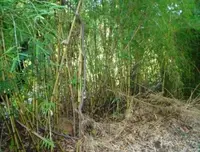
Every 1–2 years, remove a few of the oldest, thickest culms at ground level with sharp loppers to open the clump, improve air flow, and encourage production of fresh, straighter canes.

Snow load management

In snowy climates, loosely tie groups of culms together with soft garden tape before heavy snow is forecast to prevent splaying and breakage under the weight.

Mulch ring maintenance

Maintain a 5–8 cm deep organic mulch ring out to the drip line, but keep a mulch-free collar of 5–8 cm around the culms to protect shallow roots while reducing stem rot risk.

Controlled clump expansion

If space is limited, install a vertical root barrier 40–50 cm deep in a semicircle on the side where spread is not desired, allowing you to grow Chusquea culeou in smaller gardens without overcrowding paths or neighboring plants.

Common Pests and Diseases

Bamboo mites

This pest lives on the undersides of leaves and causes fine yellow stippling, bronzing, and a dry, dull appearance on the foliage. Symptoms include very fine webbing between leaf veins, especially in warm, dry conditions.

Solution

Rinse leaf undersides thoroughly with a strong but gentle stream of water and repeat weekly to reduce populations, then apply horticultural oil or insecticidal soap targeted to mites, ensuring full coverage of the lower leaf surfaces. Improve humidity slightly and avoid prolonged drought stress, as healthier, evenly watered plants are less prone to heavy mite buildup and this supports long-term Chusquea culeou care.

Bamboo aphids

These insects cluster on young culms and leaf bases, sucking sap and causing curling, distortion, and sticky honeydew that can lead to sooty mold. New growth may appear weak and stunted when populations are high.

Solution

Prune and dispose of heavily infested shoots, then wash remaining stems and leaves with water to remove aphids and honeydew. Follow with insecticidal soap or a light horticultural oil, repeating every 7–10 days until new growth emerges clean, and encourage natural predators such as lady beetles where possible in outdoor plantings.

Scale insects

This pest appears as small, fixed bumps on culms and leaf sheaths, often brown, gray, or tan. Symptoms include sticky exudate, sooty mold on the surface, and gradual decline in vigor if colonies are large.

Solution

Manually scrape or rub off individual scales with a soft cloth or cotton swab dipped in alcohol, then treat remaining stems and leaf bases with horticultural oil to smother unseen juveniles. Monitor new growth every few weeks and repeat targeted treatments before colonies become dense, paying close attention to sheltered nodes and branch junctions.

Sooty mold

This disease is a black, powdery fungal growth that develops on honeydew left by sap-sucking insects such as aphids or scale. Symptoms include darkened, dirty-looking leaves that may photosynthesize less efficiently but usually remain structurally sound.

Solution

Control the underlying insect problem first, then gently wipe or wash affected leaves with lukewarm water and a soft cloth to remove the fungal film. Improve air circulation through careful thinning of dense culms and avoid overhead watering late in the day so foliage dries more quickly.

Leaf spot

This disease causes small tan, brown, or dark purple lesions on leaves, sometimes with a yellow halo, which can merge into larger patches under prolonged wet conditions. Symptoms include premature leaf drop on heavily affected culms, especially in shaded, humid sites.

Solution

Remove and discard affected leaves and any fallen foliage around the plant to reduce fungal spores, then adjust watering to keep leaves as dry as possible, watering at soil level rather than overhead. Increase spacing and prune congested canes to improve airflow, and in recurrent cases consider a labeled copper or chlorothalonil fungicide applied according to local regulations and label directions.

Interesting Facts

Solid woody culms

Unlike many bamboos with hollow stems, this species develops almost completely solid, woody culms that make it unusually strong and resistant to breakage under snow and wind.

Cold-hardy South American bamboo

Native to the temperate Andes and coastal ranges of Chile and Argentina, it tolerates frost and snowfall far better than most bamboos, surviving in regions with regular winter freezes.

Dense thicket formation

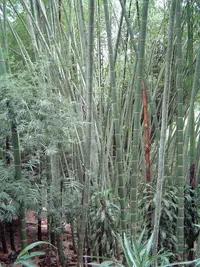
Its stiff, upright culms and many side branches form very tight thickets that provide shelter for birds and small mammals in its native forests, where it often acts as an important understory structural plant.

Botan icon

Did you know?

This species is one of the classic examples of mast flowering in temperate bamboos, with whole populations in a region sometimes flowering synchronously after many decades, producing abundant seeds and then often dying back almost completely.

FAQs about Chilean bamboo

This species forms tight clumps with solid, non-running culms, so it does not spread aggressively like many bamboos. Clumps enlarge slowly over time, usually remaining manageable with occasional division or edge trimming in gardens.

Grow Healthy Plants with Botan Care

Keep your plants happy and healthy with plant identification, disease detection, and easy care guidance.

Botan plant care app — identify plants on mobile

Explore More Plants