Rhizome containment
Install a 30–45 cm deep root barrier or use a bottomless stock tank sunk into the ground to keep rhizomes from spreading into paths, lawns, or neighboring beds while still allowing good drainage.

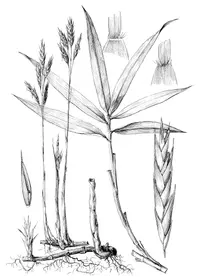
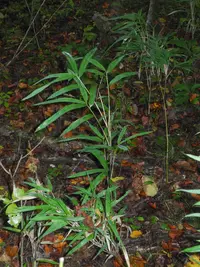
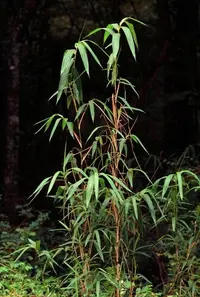
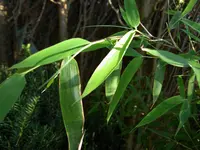
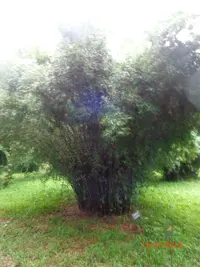
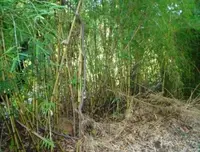
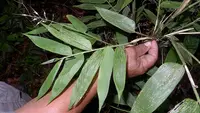
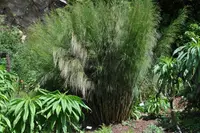
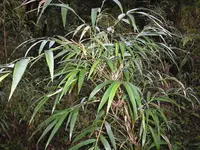
Switch cane, Arundinaria tecta, is a hardy, clumping bamboo native to the southeastern United States. It typically forms dense thickets with slender, upright canes and narrow green leaves.
In the wild, it grows in moist forests, stream banks, and wet bottomlands, helping stabilize soil and provide wildlife cover. The plant spreads by rhizomes, which makes it effective for natural screens but requires space and some control in gardens.
It is generally considered easy to grow when given consistent moisture, partial sun, and organic, well-drained soil. Understanding how to care for switch cane starts with matching its natural, damp woodland conditions as closely as possible.

Care Difficulty
Easy Care

Light Preference
Partial Shade

Water Requirements
Keep Soil Moist

Temperature Preference
Cold Hardy

Hardiness Zone
6–10

Soil Texture
Sandy, Loamy, Silty

Soil pH
Acidic (5.5–6.5), Slightly acidic (6.5–7.0)

Soil Drainage
Waterlogged tolerant

Fertilization
Minimal (feed rarely)
Scan your plant to receive care tips personalized for your specific plant
Available on iOS and Android
This native understory bamboo prefers bright, gentle light rather than intense, all‑day sun.
This species is adapted to moist habitats and performs best in consistently damp soils.
This temperate bamboo handles a wide range of outdoor conditions when established.
This species tolerates a wide humidity range but remains healthiest in moderately moist air.
This wetland bamboo prefers consistently moist, organic-rich soil with structure that retains water yet still allows air to the roots.
This species can grow in containers but needs careful management of root space and moisture stability.
Arundinaria tecta benefits from light, steady nutrition but overfeeding should be avoided.
Pruning helps maintain healthy, manageable Arundinaria tecta stands in landscapes or naturalized plantings.
Switch cane is usually grown in the ground, so care focuses on dividing and transplanting clumps rather than frequent repotting.
Arundinaria tecta is most reliably propagated by division of rhizomes rather than by seed.
This bamboo is fairly cold hardy in much of its native range and usually needs only modest winter care outdoors.

Plant Health Check
Not sure what's wrong with your plant? Check your plant's health inside the app.
This species is one of only three true bamboos native to the United States and forms extensive canebrakes in the coastal plain of the Southeast, especially in wet pine flats and pocosins.
Its creeping rhizomes tolerate periodic flooding and poorly drained, acidic soils, allowing dense colonies to persist in swamps and wet savannas where many other grasses decline.
Dense stands provide important cover and nesting substrate for several southeastern birds and small mammals, including habitats historically used by the now critically endangered Bachman’s warbler.
Genetic and morphological studies indicate that this species, together with the other North American canes, represents an ancient bamboo lineage that diverged early from most Asian and African bamboos, making it an important group for understanding bamboo evolution in temperate regions.
This species spreads by rhizomes, forming colonies over time, but usually not as aggressively as running bamboos from Asia. In moist, contained areas it is manageable; in large, wet sites it can gradually form dense thickets.
Keep your plants happy and healthy with plant identification, disease detection, and easy care guidance.