Contain rhizome spread
Install a 30–45 cm deep root barrier or plant in a large, bottomless container sunk into the ground to keep the running rhizomes from invading nearby beds and lawns.

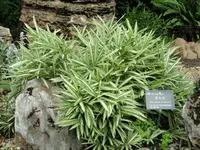
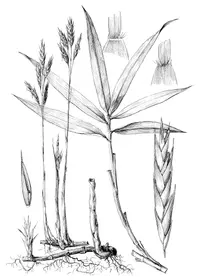
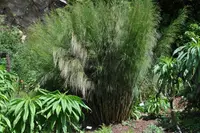
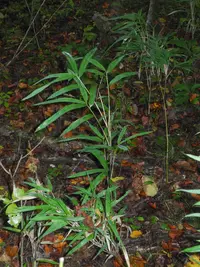
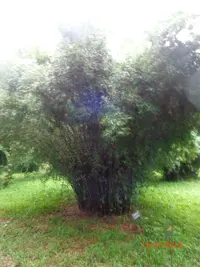
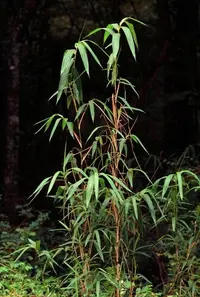
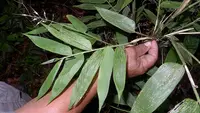
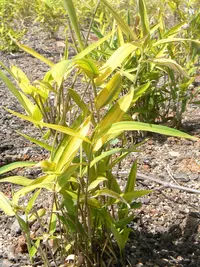
Pleioblastus fortunei (also known as Pleioblastus argenteostriatus) is a compact, running bamboo grown mainly for its striking foliage. It forms dense clumps of slender green canes with narrow leaves boldly striped in creamy white, giving a bright, variegated effect.
This species is native to Japan and is often used as a groundcover, low hedge, or container plant in temperate gardens. Its vigorous spread makes it durable but means it may need root control in open soil.
It tolerates a range of conditions, which makes it relatively easy to grow for most gardeners. Light shade, consistent moisture, and well-drained soil generally support good results and help clarify how to care for Pleioblastus fortunei.

Care Difficulty
Moderate Care

Light Preference
Partial Shade

Water Requirements
Regular Water

Temperature Preference
Cold Hardy

Hardiness Zone
6–9

Soil Texture
Loamy, Sandy, Organic-rich

Soil pH
Acidic (5.5–6.5), Slightly acidic (6.5–7.0)

Soil Drainage
Moist but well-drained

Fertilization
Light (every 4–6 weeks)
Scan your plant to receive care tips personalized for your specific plant
Available on iOS and Android
This compact bamboo prefers bright, gentle light to maintain strong variegation and dense growth.
Pleioblastus argenteostriatus prefers evenly moist, well-drained soil rather than strict watering schedules.
This hardy bamboo handles a broad temperature range but grows best in moderate conditions.
This bamboo tolerates a wide humidity range but grows best with moderately moist air.
This bamboo prefers moist, well-aerated soil that does not stay waterlogged.
This species is suitable for container growing and often managed this way to limit spreading rhizomes.
This bamboo responds well to modest, consistent feeding during the growing season.
Pleioblastus argenteostriatus benefits from periodic pruning to maintain a neat, dense clump.
This bamboo spreads by rhizomes and usually needs containment or periodic transplanting rather than frequent repotting.
Pleioblastus argenteostriatus is most commonly increased by division of its running rhizomes.
This bamboo is fairly cold hardy but benefits from simple winter care in colder regions.

Plant Health Check
Not sure what's wrong with your plant? Check your plant's health inside the app.
The pale yellow striping on the leaves is genetically stable in cultivated forms of this species, so new shoots reliably emerge with similar variegation rather than reverting to plain green foliage in typical garden conditions.
Although it has a subtropical origin in East Asia, this species tolerates winter cold well enough to be grown outdoors in much of the temperate US, where its rhizomes survive freezing temperatures and resprout in spring.
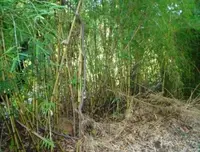
It spreads by leptomorphic rhizomes, which are long, running underground stems, and can quickly form dense colonies, so many horticulturists recommend containment methods such as root barriers when growing Pleioblastus argenteostriatus in open soil.
In some Japanese gardens this bamboo has traditionally been used as a living groundcover under taller shrubs and trees, where its short, finely striped culms create a bright contrast to darker foliage and help emphasize layered planting designs.
This dwarf bamboo spreads by underground rhizomes and can become aggressive if not contained. Use root barriers, deep edging, or large containers, and remove unwanted shoots regularly to prevent it from overtaking nearby planting areas.
Keep your plants happy and healthy with plant identification, disease detection, and easy care guidance.