Kuril Bamboo Care (Sasa kurilensis)

Kuril Bamboo

About Kuril Bamboo

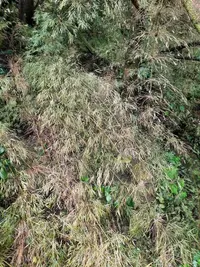
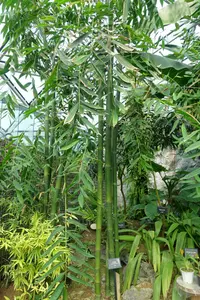
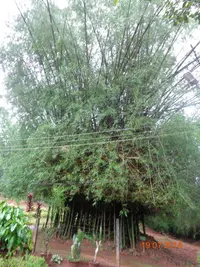
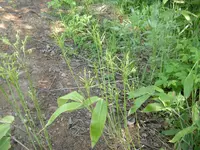
Kuril bamboo, Sasa kurilensis, is a compact, running bamboo native to northern Japan and nearby regions with cool, humid climates. It forms dense, low thickets with narrow, medium-green leaves that stay attractive through much of the year in mild conditions. This species is often used as a groundcover or understory plant, creating a lush, woodland look. It spreads steadily by rhizomes but is usually manageable with edging or root barriers in gardens. It prefers cool summers, consistent moisture, and fertile, well-drained soil, and does best in partial shade. Understanding how to care for Kuril Bamboo helps keep it healthy and prevent unwanted spreading.

Main Plant Requirements

Care Difficulty

Moderate Care

Light Preference

Partial Shade

Water Requirements

Regular Water

Temperature Preference

Cold Hardy

Hardiness Zone

4–8

Soil Texture

Loamy, Silty, Organic-rich

Soil pH

Acidic (5.5–6.5), Slightly acidic (6.5–7.0)

Soil Drainage

Moist but well-drained

Fertilization

Minimal (feed rarely)

Get Personalized Care Plan

Scan your plant to receive care tips personalized for your specific plant

Available on iOS and Android

How to Care for the Kuril Bamboo

This clumping bamboo prefers cool, bright sites with protection from harsh midday sun.

  • Provide 3–5 hours of morning sun with light afternoon shade, or bright dappled shade under open trees for Kuril Bamboo.
  • In hot summers, avoid strong sun from 11 a.m.–4 p.m. to reduce leaf scorch, curling, and brown edges.
  • In cooler climates, choose a spot with more direct morning or late-afternoon sun, as deep shade can cause weak, sparse canes.

This species prefers consistently moist but not waterlogged soil, especially in the growing season.

  • Water when the top 3–5 cm of soil feels slightly dry, aiming for evenly moist soil down to root depth.
  • Use well-drained, humus-rich soil so excess water can escape; soggy ground leads to yellowing leaves and weak rhizomes in Sasa kurilensis.
  • Increase watering during hot, dry spells when leaves roll or droop, and reduce in cool, rainy or winter periods to prevent root rot.

This cold-hardy bamboo tolerates a wide temperature range but grows best in cool to mild conditions.

  • Optimal growth occurs around 60–75°F (16–24°C), with steady moisture and protection from hot, drying winds.
  • Mature plants tolerate down to about -10°F (-23°C) with snow cover, though exposed foliage may burn and die back in severe cold.
  • In hot regions, prolonged periods above 86°F (30°C) can stress plants; provide shade, mulch, and extra moisture during heat waves.

This species prefers moderately moist air but usually adapts to typical household humidity.

  • Aim for 40–60% humidity to reduce leaf edge browning on Kuril Bamboo.
  • In very dry air, watch for crisp leaf tips and rolling or curling leaves as humidity stress signs.
  • Increase humidity by grouping plants together or placing the pot on a pebble tray with water kept below the pot base.

Sasa kurilensis grows best in loose, humus-rich soil that holds moisture yet drains freely.

  • Use a loamy mix of roughly 50% high-organic compost, 30% garden soil, and 20% coarse material such as perlite or sharp sand.
  • Soil should drain within a few minutes after watering, with no standing water or persistent surface sheen.
  • Target a slightly acidic to neutral pH around 6.0–7.0 for optimal nutrient availability and root function.
  • Improve aeration and prevent compaction by incorporating bark fines or leaf mold, especially in heavier native soils.

This bamboo handles container growing well when given a stable, spacious pot.

  • Choose a wide, heavy container to counter lateral spreading and prevent wind tip-over.
  • Select thick-walled clay or concrete pots outdoors to moderate root temperature and slow moisture swings.
  • Elevate the container slightly on risers so drainage holes stay clear and rhizomes do not sit in trapped runoff.

This bamboo responds well to modest feeding but grows acceptably even in lean soil.

  • Use a balanced slow-release fertilizer (for example 10-10-10) or a thin layer of compost in early spring.
  • Feed Kuril Bamboo 1–2 times during the growing season, spacing applications by at least 6–8 weeks.
  • Apply at half the label rate for container plants to avoid salt buildup and root burn.
  • Stop feeding in late summer so new growth hardens before winter dormancy.

Pruning supports dense, healthy growth and keeps Sasa kurilensis within its allotted space.

  • Plan main pruning for late winter or early spring before strong new growth starts.
  • Cut out dead, damaged, or crossing canes at ground level using sharp bypass pruners or loppers.
  • Thin crowded clumps by removing entire older culms to admit light and air, not by hedge-shearing.
  • Trim wayward edges lightly during summer to maintain height and outline without scalping foliage.

This species is more often transplanted in the garden than grown long term in containers.

  • Look for roots circling the pot drainage holes, soil drying very fast, or stunted shoots as signs a container plant needs more space.
  • Move or divide clumps in early spring or early fall, when temperatures are mild and soil is moist.
  • Transplant garden plants every few years only if they outgrow their area or need division to control spread.
  • Lift with a generous root ball, replant at the same depth, water thoroughly, and shade for 1–2 weeks to limit root stress.

Division is the standard method for increasing Sasa kurilensis plants.

  • Divide established clumps in early spring as new shoots emerge, or in early fall while soil is still warm.
  • Use a sharp spade or saw to cut sections with several culms and a solid rhizome and root mass.
  • Replant divisions promptly at the same depth in moist, well-drained soil, firming soil around rhizomes.
  • Keep divisions evenly moist and lightly shaded until new leaves and shoots show successful establishment.

This bamboo is cold hardy but benefits from basic winter preparation in exposed sites.

  • Most established plants tolerate moderate frost and snow without major damage.
  • Apply a 5–8 cm layer of organic mulch over the root zone in late fall, keeping it off the culms.
  • In windy or very cold areas, use windbreaks or burlap screens to reduce leaf scorch and desiccation.
  • Move container plants to a sheltered, unheated but frost-sheltered area and keep soil just slightly moist.

Care Tips

Rhizome containment

Install a 30–40 cm deep root barrier or plant into large, bottomless containers sunk in the ground to keep spreading rhizomes from invading nearby beds and lawns when growing Kuril Bamboo.

Snow load management

In snowy climates, gently shake or brush heavy snow from the foliage after storms to prevent stems from bending and forming a permanently flattened, patchy clump.

Spring thinning

Each spring, cut out the oldest, winter-damaged canes at ground level to improve air flow, light penetration, and encourage stronger new shoots from the rhizomes.

Edging and mowing

Where plants meet a lawn, use a sharp edging spade or run a mower along the border several times a season to cut off creeping rhizomes and maintain a clean margin.

Mulch ring maintenance

Maintain a 5–8 cm deep ring of organic mulch around the clump, keeping it 3–5 cm away from stems, to suppress weeds, protect shallow rhizomes, and stabilize soil moisture for more reliable Sasa kurilensis care.

Common Pests and Diseases

Bamboo mites

This pest feeds on the undersides of leaves, causing fine yellow stippling that can progress to bronzing and premature leaf drop, especially in dry or sheltered plantings.

Solution

Spray leaf undersides forcefully with water to dislodge mites, then maintain higher ambient humidity and avoid drought stress; in persistent cases, use a targeted miticide or insecticidal soap labeled for mites, repeating applications as directed while improving airflow around the clump.

Bamboo aphids

These insects cluster on young shoots and leaf bases, sucking sap and causing curling, distortion, and sticky honeydew that can lead to sooty mold growth.

Solution

Prune and discard heavily infested shoots, then wash remaining stems and foliage with a strong water spray; if populations stay high, use insecticidal soap or a horticultural oil on all affected surfaces, applied in cool periods to avoid leaf scorch and repeated as needed.

Leaf rust

This disease produces scattered yellow to orange-brown pustules on leaves, which can coalesce and lead to early leaf drop in dense, moist plantings of Kuril bamboo.

Solution

Remove and dispose of affected leaves and any heavy leaf litter around the clump, then thin crowded culms to improve air movement; in sites with recurring rust, consider applying a preventative fungicide labeled for rust on ornamental grasses during humid periods and avoid overhead watering whenever possible.

Leaf spot

Symptoms include small water-soaked or tan lesions on leaves that may darken and merge, giving foliage a scorched or tattered appearance under prolonged wet or shaded conditions.

Solution

Cut off and discard the worst-affected leaves, reduce overhead irrigation, and thin the stand to improve light and airflow; in severe or repeating cases, use a broad-spectrum fungicide for ornamental grasses and maintain good sanitation by removing dead foliage at the end of the season to support long-term Sasa kurilensis care.

Interesting Facts

Snow-buried survival

This species naturally grows in regions with heavy snowfall and is adapted to spend much of the winter buried under snow, then rapidly resumes growth once the snowpack melts.

Dense understory carpets

In its native range, it often forms extensive, near-monoculture thickets under coniferous forests, creating a low, continuous bamboo layer that strongly influences light, soil moisture, and seedling establishment of other plants.

Clonal spread strategy

Sasa kurilensis expands mainly through underground rhizomes, so what appears to be a large patch of many plants is often a single genetic individual spreading laterally over time.

Botan icon

Did you know?

In parts of northern Japan, large stands of this bamboo are periodically cut back to encourage fresh, tender spring shoots, which are then harvested and eaten as a traditional seasonal wild vegetable after proper boiling to remove bitterness.

FAQs about Kuril Bamboo

This species spreads by shallow running rhizomes and can form dense thickets over time. In gardens it is considered vigorous and potentially invasive. Use root barriers, edging, or containers where spread must be controlled.

Grow Healthy Plants with Botan Care

Keep your plants happy and healthy with plant identification, disease detection, and easy care guidance.


Botan plant care app — identify plants on mobile

Explore More Plants