broadleaf bamboo Care (Sasa palmata)

Also known as: Broad-leaved Bamboo
broadleaf bamboo

About broadleaf bamboo

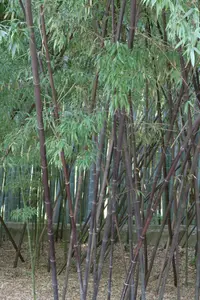
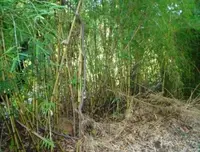
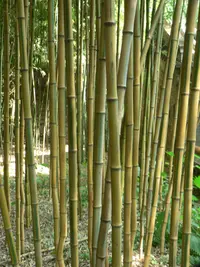
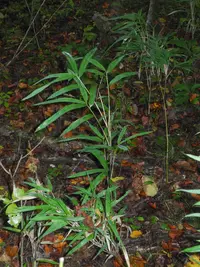
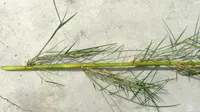
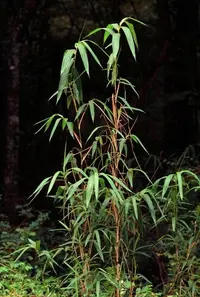
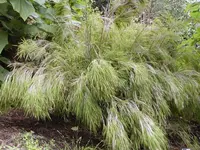
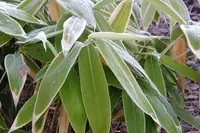
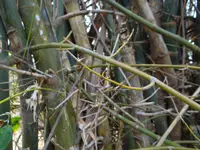
Broadleaf bamboo (Sasa palmata) is a low-growing, running bamboo known for its large, paddle-shaped leaves and dense, spreading clumps. It forms a lush, ground-covering thicket rather than tall canes.

This species is native to Japan, where it grows in woodland edges and understories, often in cool, humid conditions. It is valued in gardens for bold foliage and strong visual impact.

Sasa palmata is vigorous and can be invasive if not contained, which is the main factor that influences how easy it is to manage. To care for broadleaf bamboo, provide consistent moisture, partial shade, and well-drained soil that does not stay waterlogged.

Main Plant Requirements

Care Difficulty

Moderate Care

Light Preference

Partial Shade

Water Requirements

Regular Water

Temperature Preference

Cold Hardy

Hardiness Zone

6–9

Soil Texture

Loamy, Silty, Organic-rich

Soil pH

Acidic (5.5–6.5), Slightly acidic (6.5–7.0)

Soil Drainage

Moist but well-drained

Fertilization

Minimal (feed rarely)

Get Personalized Care Plan

Scan your plant to receive care tips personalized for your specific plant

Available on iOS and Android

How to Care for the broadleaf bamboo

Sasa palmata prefers bright, indirect light that mimics dappled woodland shade.

  • Provide 3–5 hours of gentle morning sun with filtered or bright shade the rest of the day; avoid harsh afternoon sun.
  • Plant broadleaf bamboo where it receives light through high tree canopy or shade cloth to prevent leaf scorch and bleaching.
  • In hot summers, shift exposure toward more shade; in cooler climates, allow a bit more direct morning sun to maintain dense foliage.

Sasa palmata prefers consistently moist but not waterlogged soil.

  • Water when the top 3–5 cm of soil feel slightly dry, then soak the root zone deeply so moisture reaches 15–20 cm down.
  • Use soil with good drainage; persistent puddling, sour smell, or yellowing, limp leaves indicate overwatering and poor aeration.
  • In hot, dry periods increase checks for dryness; in cool or rainy seasons reduce watering if leaves stay firm and soil remains slightly moist.

This bamboo is cold hardy yet grows best in moderate temperatures.

  • Optimal growth occurs around 60–77°F (16–25°C), with strongest shoot production in mild spring and early summer conditions.
  • Mature plants tolerate drops to about 0°F (−18°C); foliage may burn, but underground rhizomes usually survive and resprout.
  • In heat above 86°F (30°C), supply shade and mulch to cool roots; protect young plants from sudden hard frosts and drying winter winds.

Humidity matters for Sasa palmata, especially in heated or air-conditioned homes.

  • Aim for 50–70% humidity to keep leaves lush and reduce edge browning in broadleaf bamboo.
  • It tolerates short spells of drier air, but prolonged humidity below 40% often causes crispy tips and rolling leaves.
  • Increase humidity with a pebble tray, grouping plants, or a nearby humidifier rather than frequent misting.

Sasa palmata prefers loose, moisture-retentive but well-drained soil.

  • Use a loamy mix of roughly 50% all-purpose potting mix, 30–40% compost, and 10–20% perlite or fine bark for structure and aeration.
  • Ensure drainage is fast enough that water does not sit in the pot or bed longer than a few hours after watering.
  • Keep pH slightly acidic to neutral (pH 6.0–7.0), avoiding strongly alkaline or salty soils that restrict nutrient uptake.
  • Improve heavy clay by incorporating coarse sand and bark fines, avoiding planting where water pools after rain.

This species is suitable for container growing when its spreading habit is contained and root space is managed.

  • Choose a wide, heavy container to counteract its sideways spreading rhizomes and prevent tipping in wind or on balconies.
  • Select thick-walled terracotta or concrete if extra evaporation is needed in wet climates, or plastic/fiberglass where moisture retention is a concern.
  • Place containers on pot feet or bricks so drainage holes stay clear and rhizomes do not root into the ground through the base.

Sasa palmata benefits from modest feeding to support dense foliage, especially in containers.

  • Use a balanced slow-release fertilizer (for example 10-10-10 NPK) or a thin layer of well-rotted compost in spring.
  • Feed every 6–8 weeks during the growing season, focusing on April–August for broadleaf bamboo.
  • Apply at 1/2–3/4 the label rate to avoid salt buildup and weak, lush growth.
  • Stop feeding in late summer and do not fertilize during winter dormancy.

Sasa palmata pruning focuses on thinning, not heavy cutting, to maintain a healthy, tidy clump.

  • Best time is late winter to early spring before strong new growth begins.
  • Remove dead, damaged, or winter-burned culms at ground level with clean, sharp pruners.
  • Thin crowded, older canes to open the clump and encourage vigorous new shoots.
  • Trim wayward outer shoots lightly to define edges without cutting deeply into the clump.

This bamboo spreads by rhizomes, so transplanting and containment are more important than frequent repotting.

  • Plan to divide or move clumps in early spring or early fall when temperatures are mild.
  • Signs a container plant needs attention include roots circling, soil drying very fast, and stunted new shoots.
  • For containers, shift to a pot 5–8 cm wider, loosening outer roots and trimming any circling rhizomes.
  • Water thoroughly after transplanting, keep soil evenly moist for 2–3 weeks, and provide light shade to reduce stress.

Sasa palmata is most commonly propagated by division of established clumps rather than by seed.

  • Divide in early spring just as new shoots emerge and soil is workable.
  • Use a sharp spade or saw to cut sections with several canes and a solid rhizome mass.
  • Replant divisions at the same depth in moist, well-drained soil and firm gently.
  • Keep newly divided plants consistently moist and shaded from hot sun until new growth appears.

This bamboo is generally cold hardy but benefits from simple winter care, especially in exposed or container situations.

  • In colder regions, apply a 5–8 cm mulch layer over the root zone after soil cools.
  • Leave most foliage in place over winter since it helps insulate lower buds and rhizomes.
  • For containers, move pots into a sheltered, unheated area or group them against a wall and insulate the pot.

Care Tips

Rhizome Containment

Install a solid root barrier 30–45 cm deep around the planting area before the plant matures to keep spreading rhizomes confined and make long‑term bed management easier.

Controlled Thinning

Remove the oldest, weakest, or most winter-damaged culms at ground level each spring to keep the clump dense, improve air flow, and direct energy into younger, stronger shoots.

Leaf Edge Protection

In windy or exposed sites, use low windbreaks such as lattice panels or evergreen shrubs on the windward side to reduce leaf edge scorching and winter tatter.

Mulch for Winter

Apply a 5–8 cm layer of loose organic mulch around, but not over, the culm bases in late fall to protect shallow rhizomes from freeze–thaw cycles and to buffer soil moisture.

Division for Renewal

Every 3–5 years, lift and divide crowded sections in early spring, replanting only vigorous, well-rooted pieces to control spread, refresh foliage quality, and support growing broadleaf bamboo in limited spaces.

Common Pests and Diseases

Bamboo mites

This pest feeds on the undersides of leaves, causing fine yellow stippling that can merge into bronzed or bleached patches, especially in warm, dry conditions. Symptoms include very fine webbing and a dull, dusty appearance on foliage.

Solution

Rinse leaf undersides thoroughly with a strong but controlled stream of water and remove heavily damaged leaves. Increase humidity around the plant, avoid water stress, and if populations persist, use a horticultural oil or insecticidal soap labeled for mites, repeating applications as directed while ensuring good coverage of the leaf undersides.

Bamboo aphids

These insects cluster on young shoots and leaf bases, sucking sap and causing curling, distortion, and sticky honeydew that can lead to sooty mold on leaves and nearby surfaces. New growth may appear stunted or deformed.

Solution

Prune off heavily infested shoots and wash remaining stems and leaves with water to remove aphids and honeydew. For ongoing infestations, apply insecticidal soap or a light horticultural oil to all aboveground parts, repeating at intervals and encouraging natural predators such as lady beetles by avoiding broad-spectrum insecticides.

Bamboo scale

This pest appears as small, dome-shaped or flat bumps on culms and leaf sheaths, where it feeds on sap and weakens the plant over time. Symptoms include yellowing foliage, poor vigor, and sticky honeydew that can attract sooty mold.

Solution

Manually scrape or wipe off individual scales with a soft brush or cloth, and prune out heavily infested canes. Follow with applications of horticultural oil, focusing on stems and leaf bases, and repeat treatments over several weeks to target any newly emerged crawlers while maintaining plant health through proper watering and fertilization.

Bamboo leaf rust

This disease produces yellow to brown spots on leaves that later develop powdery orange-brown pustules on the underside. In severe cases, leaves yellow, dry, and fall prematurely, reducing the plant’s vigor.

Solution

Remove and discard affected leaves as soon as symptoms appear and keep the area around the plant free of fallen foliage to reduce spore buildup. Improve air circulation, avoid overhead watering, and if rust recurs or is severe, use a fungicide labeled for rust diseases on ornamental grasses, following label intervals and coverage instructions.

Leaf blight

This disease causes irregular brown lesions on leaves that may have dark margins and pale centers, often starting at tips or edges and spreading inward. Symptoms include premature leaf dieback and a tattered, scorched appearance on clumps, particularly in dense, humid plantings.

Solution

Cut out and discard affected leaves and thin crowded clumps to improve airflow and reduce humidity around foliage. Water at soil level rather than over the top, and in persistent or severe cases consider a preventive fungicide registered for foliar blights on ornamental bamboos, applied according to label directions as part of broader Sasa palmata care instructions.

Interesting Facts

Snow-flattening leaf mats

This species forms dense, ground-hugging thickets with broad leaves that often bend and lie flat under winter snow, helping protect its own rhizomes and nearby plants from temperature extremes and physical damage.

Edge-of-forest specialist

In its native range in Japan and parts of East Asia, this bamboo commonly dominates the understory at forest margins, where it tolerates partial shade yet rapidly exploits gaps in the canopy to expand by rhizomes.

Strong rhizome network

Sasa palmata spreads through a shallow but extensive network of running rhizomes that stabilize soil on slopes and forest edges, reducing erosion while allowing the plant to recover quickly after cutting or browsing.

Botan icon

Did you know?

In parts of Japan, large stands of Sasa palmata have been reported to suppress tree seedling establishment so effectively that they can delay or alter natural forest regeneration patterns, making this species an important factor in long-term forest dynamics.

FAQs about broadleaf bamboo

Browning leaves usually result from low humidity, underwatering, excess fertilizer salts, or wind scorch. Check soil moisture, flush the pot to remove salts, protect from harsh wind, and trim dead tips to reduce stress.

Grow Healthy Plants with Botan Care

Keep your plants happy and healthy with plant identification, disease detection, and easy care guidance.

Botan plant care app — identify plants on mobile

Explore More Plants