Windbreak planning
Establish a permanent windbreak or plant along existing structures to shield tall culms from strong prevailing winds, which reduces snapping and leaning in exposed sites.

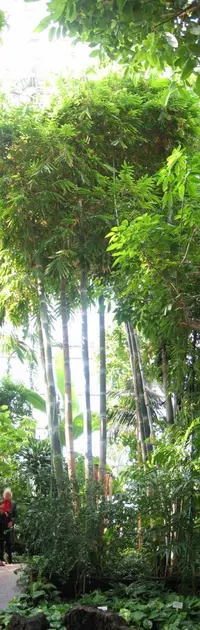
Giant bamboo, Dendrocalamus giganteus, is a very large clumping bamboo native to Southeast Asia, especially India, Myanmar, Thailand, and surrounding regions. It is typically grown outdoors in warm climates for its fast growth and tall, thick culms.
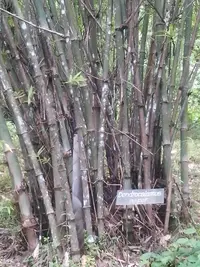
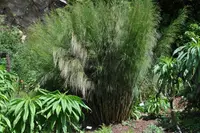
Mature plants form dense clumps with upright, smooth green culms and slender, arching leaves, creating a strong vertical accent or living screen. Its rapid growth and large size demand space, regular moisture, and fertile, well-drained soil.
This species is considered relatively robust but is not suited to cold or very dry sites, which makes location choice important when planning how to care for Giant Bamboo.

Care Difficulty
Hard Care

Light Preference
Full Sun

Water Requirements
Regular Water

Temperature Preference
Tropical / Frost Sensitive

Hardiness Zone
10–11

Soil Texture
Loamy, Sandy, Organic-rich

Soil pH
Acidic (5.5–6.5), Slightly acidic (6.5–7.0)

Soil Drainage
Moist but well-drained

Fertilization
Moderate (every 2–4 weeks)
Scan your plant to receive care tips personalized for your specific plant
Available on iOS and Android
This large tropical bamboo needs strong, consistent light outdoors to reach full height and culm thickness.
This species prefers evenly moist, well-drained soil and reacts quickly to both drought and saturation.
This tropical bamboo thrives in warm, frost-free conditions and suffers damage in prolonged cold.
This species prefers moderately humid air but usually adapts to typical outdoor levels in warm climates.
Dendrocalamus giganteus thrives in deep, moist, well-aerated ground that never stays waterlogged.
This species can be grown in large containers only as a short- to medium-term solution due to its massive eventual size.
Nutrient-rich soil supports strong, tall growth in Dendrocalamus giganteus.
Pruning Dendrocalamus giganteus focuses on safety, access, and air flow rather than shaping the culms.
This species is usually grown in-ground, so guidance focuses on transplanting clumps or large divisions rather than routine repotting.
Dendrocalamus giganteus is mainly propagated vegetatively, since seed is rarely available and often short-lived.
In tropical or frost-free climates, Dendrocalamus giganteus needs minimal winter care, but protection becomes important in cooler regions.

Plant Health Check
Not sure what's wrong with your plant? Check your plant's health inside the app.
This species forms tight clumps instead of running aggressively, so its massive culms arise from a relatively compact root mass compared with many spreading bamboos.
The culm walls of this species are notably thick and strong, which makes the stems suitable for structural uses such as scaffolding and heavy construction in its native and cultivated regions.
In favorable tropical conditions, young culms elongate quickly during their main growth flush, allowing the plant to reach tree-like height in only a few growing seasons when growing Giant Bamboo outdoors.

In traditional construction in parts of South and Southeast Asia, this species has been used to build large bridges and multi-story scaffolding, taking advantage of its exceptional combination of culm thickness, straightness, and strength-to-weight ratio.
In warm, frost-free climates and deep, moist soil, this species can extend new culms by 30–90 cm per day during peak season. Overall, clumps can reach many meters tall within 5–7 years.
Keep your plants happy and healthy with plant identification, disease detection, and easy care guidance.