Staggered Bulb Planting
Plant corms in small batches 7–10 days apart so flowering is spread over a longer period rather than all blooms opening at once.

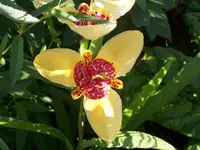
Peacock flower, Tigridia pavonia, is a summer-flowering bulb from Mexico and Central America, grown for its striking, short-lived blooms. Each flower typically opens for just one day, but multiple buds on each stem keep the display going.
Plants grow from small bulbs (corms) and form upright, sword-like foliage that resembles small gladiolus leaves. Flowers show bold, contrasting colors with spotted centers that stand out in borders or containers.
This species suits gardeners who enjoy seasonal bulbs rather than permanent evergreen structure. It prefers sun, free-draining soil, and even moisture during active growth.
Understanding how to care for Peacock Flower starts with protecting the bulbs from waterlogging and cold, since they are not hardy in colder climates.

Care Difficulty
Moderate Care

Light Preference
Full Sun

Water Requirements
Moderate Water

Temperature Preference
Tropical / Frost Sensitive

Hardiness Zone
8–10

Soil Texture
Sandy, Loamy, Organic-rich

Soil pH
Acidic (5.5–6.5), Slightly acidic (6.5–7.0)

Soil Drainage
Well-drained

Fertilization
Light (every 4–6 weeks)
Scan your plant to receive care tips personalized for your specific plant
Available on iOS and Android
This bulb prefers strong sun to produce large, colorful blooms.
This plant needs steadily moist but not waterlogged soil during active growth.
This summer-blooming bulb prefers warm conditions with no frost exposure.
This bulb-forming species handles typical home humidity but benefits from slightly moist air in hot weather.
Tigridia pavonia needs sharply drained, light soil that keeps the bulbs moist but never waterlogged.
This species is well suited to container growing when the pot setup prevents standing water around the bulbs.
Tigridia pavonia benefits from light, targeted feeding during its active growing season to support flowering from small corms.
Tigridia pavonia needs only light, seasonal pruning focused on spent blooms and declining foliage.
Tigridia pavonia is usually grown from corms in borders or pots and benefits from lifting and replanting every few years.
Tigridia pavonia is commonly propagated by separating corm offsets and, less frequently, from seed.
Tigridia pavonia has limited frost tolerance and often needs corm protection in regions with cold winters.

Plant Health Check
Not sure what's wrong with your plant? Check your plant's health inside the app.
Each flower of this species opens at dawn and withers by late afternoon of the same day, yet the plant produces many buds so new flowers appear in succession over several weeks.
The large, leopard-spotted central cup and contrasting petal colors help guide pollinators such as bees to the nectar and pollen, an example of visual signaling that has evolved to increase pollination efficiency.
In its native Mexican habitats, the underground corms are adapted to a distinct seasonal cycle, resting during dry or cool periods and resprouting when conditions become warm and moist again.

Archaeological evidence from pre-Columbian sites in Mexico shows that the underground corms of this species were used as a traditional food source, valued for their starchy, chestnut-like taste.
Each bloom lasts only 1 day, but new buds open daily during its flowering season. Plant several bulbs close together, stagger planting dates, and keep foliage healthy so corms store enough energy for repeat displays.
Keep your plants happy and healthy with plant identification, disease detection, and easy care guidance.