Mark Dormant Clumps
Flag planting spots with unobtrusive markers before the foliage dies back so you avoid disturbing the small, shallow rhizomes during later weeding or replanting work.

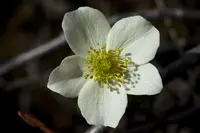
Smallflowered anemone (Anemone parviflora) is a compact, herbaceous perennial from cool northern regions of North America and Eurasia. It often grows in moist meadows, tundra edges, and open woodland clearings.
Plants form low clumps with fine, divided leaves and slender stems topped by small, white, open-faced flowers. The overall look is delicate, but the species is naturally cold-hardy and adapted to short growing seasons.
In cultivation, it prefers cool conditions, consistent moisture, and well-drained, humus-rich soil. Gardeners who understand how to care for smallflowered anemone usually find it moderate in difficulty, mainly due to its dislike of heat and drought.

Care Difficulty
Moderate Care

Light Preference
Partial Sun

Water Requirements
Moderate Water

Temperature Preference
Cold Hardy

Hardiness Zone
2–7

Soil Texture
Sandy, Loamy, Organic-rich

Soil pH
Acidic (5.5–6.5), Slightly acidic (6.5–7.0)

Soil Drainage
Moist but well-drained

Fertilization
Minimal (feed rarely)
Scan your plant to receive care tips personalized for your specific plant
Available on iOS and Android
This species prefers cool, bright sites with gentle sun rather than intense midday exposure.
This plant prefers consistently moist but not waterlogged soil, especially during active spring growth.
This cold-hardy species thrives in cool to mild conditions and tolerates significant frost.
Humidity is not a major factor for Anemone parviflora, which prefers cool, fresh air.
Soil for Anemone parviflora should be light, moist, and sharply draining to mimic cool alpine or tundra conditions.
This species can be grown in containers if the pot mimics cool, sharply drained alpine conditions.
This alpine wildflower needs only light feeding, as it is adapted to lean soils.
Pruning needs for Anemone parviflora are minimal and focus on tidiness and plant health.
This species is usually grown in the ground, so transplanting is more relevant than repotting.
Anemone parviflora is most often propagated by division or seed under cool, moist conditions.
This cold-hardy species usually overwinters well in-ground with minimal intervention.

Plant Health Check
Not sure what's wrong with your plant? Check your plant's health inside the app.
This species has a strongly circumpolar distribution, occurring naturally in Arctic and subarctic regions of North America and Eurasia on cold, often windswept tundra and alpine habitats.
It is frequently associated with calcareous substrates such as limestone or shell-rich soils, where the relatively high calcium content and good drainage support its growth in harsh climates.
In its native range it often flowers soon after snowmelt during the short growing season, taking advantage of brief periods of higher light and reduced competition before taller vegetation develops.

Unlike many showier ornamental anemones, this species typically bears just a single small white flower on each stem, an adaptation thought to reflect energy conservation in its short, resource-limited Arctic growing season.
This species spreads by short rhizomes and gentle self-seeding, forming loose clumps rather than dense mats. In typical garden settings it is not aggressive and is unlikely to outcompete well-established neighboring plants.
Keep your plants happy and healthy with plant identification, disease detection, and easy care guidance.