Self-seeding management
If you want to limit self-seeding, cut spent flower stalks as soon as the first seed pods begin to dry, but leave a few pods on selected plants if you want a natural reseeding patch for the following year.

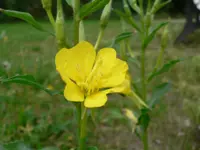
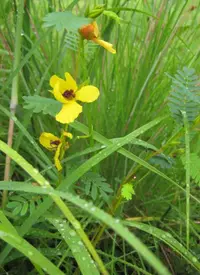
Evening primrose (Oenothera biennis) is a hardy, fast-growing biennial wildflower, often found in meadows, roadsides, and disturbed ground. It is native to North America but has naturalized widely in other temperate regions.
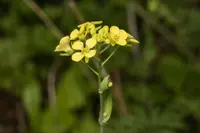
Plants form a low rosette in the first year, then send up tall, upright stems with narrow leaves and bright yellow, bowl-shaped flowers that open at dusk in the second year. The flowers attract night-flying pollinators such as moths.
This species adapts well to poor, sandy, or gravelly soils and tolerates drought once established, which makes it relatively easy to manage. Gardeners who want to care for evening primrose should note its tendency to self-seed and spread in open, sunny spaces.

Care Difficulty
Easy Care

Light Preference
Full Sun

Water Requirements
Low Water

Temperature Preference
Cold Hardy

Hardiness Zone
3–9

Soil Texture
Sandy, Loamy, Rocky

Soil pH
Acidic (5.5–6.5), Slightly acidic (6.5–7.0)

Soil Drainage
Well-drained

Fertilization
Minimal (feed rarely)
Scan your plant to receive care tips personalized for your specific plant
Available on iOS and Android
This species prefers open, bright conditions to support strong flowering and compact growth.
This drought-tolerant biennial prefers infrequent, deep watering once established.
This hardy biennial tolerates a wide temperature range once established in the ground.
Humidity is not a significant factor for Oenothera biennis in typical indoor or outdoor conditions.
This species prefers light, well-drained soil that mimics open, sandy field conditions.
This species can be grown in containers, but only if the pot is prepared to support its deep taproot and upright stems.
This hardy biennial usually needs minimal feeding in average garden soil.
Pruning Oenothera biennis is mainly about tidiness and managing self-seeding.
This species is usually grown in the ground, with transplanting focused on young plants.
Most Oenothera biennis plants are propagated from seed rather than vegetative methods.
This biennial is generally cold hardy and needs little winter attention in most temperate climates.

Plant Health Check
Not sure what's wrong with your plant? Check your plant's health inside the app.
The yellow flowers open rapidly at dusk, often within minutes, and are mainly pollinated by nocturnal moths that can detect their strong evening scent.
This species usually spends its first year as a low leaf rosette storing resources, then sends up a tall flowering stem in the second year, sets seed, and dies after reproduction.
Its seeds can remain dormant but viable in the soil for many years, allowing populations to reappear after disturbance such as soil scraping or construction.
The plant was historically introduced from North America into Europe as an ornamental in the 17th century, escaped cultivation, and is now a naturalized component of many disturbed and coastal habitats across large parts of Europe and Asia.
Lack of flowers usually comes from too much shade, overly rich or wet soil, or plants that are still in their first year. Ensure full sun, well-drained soil, and avoid high-nitrogen fertilizer to support blooming.
Keep your plants happy and healthy with plant identification, disease detection, and easy care guidance.