Encourage Self-Seeding
Leave a portion of mature seed pods on the plant to dry and drop naturally if you want a self-renewing patch, and only deadhead the rest to control spread and maintain a tidy look.

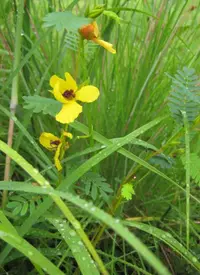
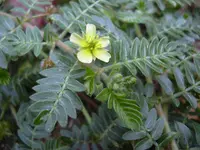
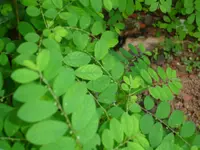
Partridge pea, Chamaecrista fasciculata, is an annual legume native to prairies, open woods, and roadsides across much of eastern and central North America. It often forms low, bushy clumps with fine, pinnate leaves and bright yellow, pea-like flowers followed by slender seed pods.
This species is valued in wildflower plantings, pollinator gardens, and habitat restoration because it fixes nitrogen, supports bees and butterflies, and provides seed for birds. It is generally easy to care for partridge pea in sunny, well-drained sites with moderate to dry soil moisture.
Once established, it tolerates poor soils and seasonal drought, but it does not adapt well to deep shade or consistently wet, heavy ground.

Care Difficulty
Easy Care

Light Preference
Full Sun

Water Requirements
Moderate Water

Temperature Preference
Warm Climate

Hardiness Zone
3–9

Soil Texture
Sandy, Loamy, Rocky

Soil pH
Acidic (5.5–6.5), Slightly acidic (6.5–7.0)

Soil Drainage
Well-drained

Fertilization
Minimal (feed rarely)
Scan your plant to receive care tips personalized for your specific plant
Available on iOS and Android
This annual legume thrives in open, bright sites with long hours of sun.
This species prefers dry to moderately moist soil and handles short droughts once established.
This warm-season annual performs best in typical summer temperatures of its native range.
This species is adapted to outdoor conditions and does not have special humidity requirements in typical US climates.
This annual legume prefers light, fast-draining soils that mimic open prairie or sandy field conditions.
This species can be grown in containers, though it performs best when containers closely mimic open, well-drained ground.
This North American annual legume usually needs little to no supplemental fertilizer in average garden soil.
Pruning Chamaecrista fasciculata is minimal and mainly focuses on keeping plants tidy and healthy.
This species is usually grown outdoors from seed, so transplanting practices matter more than repotting.
Propagation relies almost entirely on seed production and natural reseeding rather than vegetative methods.
Chamaecrista fasciculata is an annual and generally does not require active winter care once seed is set.

Plant Health Check
Not sure what's wrong with your plant? Check your plant's health inside the app.
Partridge pea is an annual legume native to North America that completes its entire life cycle in a single growing season while still forming root nodules that host nitrogen-fixing bacteria, enriching sandy and poor soils for following plants.
The plant produces small nectar-secreting glands, called extrafloral nectaries, on its leaf stalks that attract ants, which in turn help defend the foliage against some herbivorous insects.
Its yellow flowers provide pollen but almost no nectar, so they are mainly visited by bumble bees and other native bees that use vibration (buzz pollination) to shake loose the pollen from the anthers.

The finely divided leaves of partridge pea are touch-sensitive and can partially fold or droop in response to disturbance, a movement controlled by changes in water pressure within specialized cells at the leaf joints, similar in principle to the reaction seen in sensitive plant Mimosa pudica, though typically less dramatic.
This species is an annual. Each plant completes its life cycle in 1 growing season, then dies after setting seed. New plants usually appear the following year from self-sown seeds if conditions are suitable.
Keep your plants happy and healthy with plant identification, disease detection, and easy care guidance.