Broom Care (Cytisus scoparius)

Also known as: Common Broom, Scotch Broom, Scots broom, English broom, Scottish broom, Green Broom
Broom

About Broom

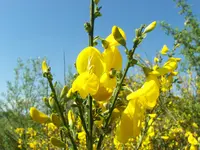
Cytisus scoparius, commonly called common broom or Scotch broom, is a woody shrub known for its dense green stems and bright yellow pea-like flowers. It forms a bushy, upright shape and often looks almost leafless in summer heat.

This species is native to western and central Europe but is now widely grown and sometimes invasive in parts of North America. It prefers full sun and dry, sandy or poor soils, which makes it suitable for low-maintenance landscapes once established.

Understanding how to care for Broom starts with recognizing its need for strong light, good drainage, and minimal watering after it has rooted well.

Main Plant Requirements

Care Difficulty

Moderate Care

Light Preference

Full Sun

Water Requirements

Low Water

Temperature Preference

Cold Hardy

Hardiness Zone

5–8

Soil Texture

Sandy, Loamy, Rocky

Soil pH

Acidic (5.5–6.5), Slightly acidic (6.5–7.0)

Soil Drainage

Well-drained

Fertilization

Minimal (feed rarely)

Get Personalized Care Plan

Scan your plant to receive care tips personalized for your specific plant

Available on iOS and Android

How to Care for the Broom

Cytisus scoparius needs bright, open conditions to flower well and stay compact.

  • Provide full sun for 6–8 hours/day; it performs best in exposed positions with unfiltered light.
  • Tolerates light partial shade, especially in hot climates, but flowering decreases if it receives less than 4–5 hours of direct sun.
  • In very hot summers, protect Broom from intense late-afternoon sun with slight shade to reduce stress and leaf scorch risk.

Cytisus scoparius prefers dry to moderately dry soil and is sensitive to excess moisture.

  • After establishment, water only when the top 5–7 cm of soil are completely dry, focusing on long, deep soakings rather than frequent light splashes.
  • In spring and early summer, monitor more closely during flowering; in winter, water rarely unless there is prolonged drought and unfrozen ground.
  • Watch for yellowing, soft stems as a sign of overwatering, while crisp leaves and stem dieback suggest prolonged drought beyond its normal tolerance.

This shrub is adapted to temperate climates and copes well with cool, exposed sites.

  • Optimal growth occurs around 55–75°F (13–24°C), with good flowering in mild springs and early summers.
  • Mature plants commonly tolerate down to about 0–5°F (-18 to -15°C) once established, but young plants benefit from shelter from severe frost and drying winter winds.
  • Handles dry summer heat up to about 90°F (32°C) if soil is not waterlogged, but prolonged extremes above this can reduce flowering and weaken new growth.

Humidity is rarely a concern for Cytisus scoparius, which is adapted to dry, open sites.

  • Aim for 30–50% humidity, similar to typical indoor air in heated homes.
  • Plant tolerates dry air very well and does not require misting or humidifiers.
  • Watch for leaf yellowing or crisping tips mainly as watering or light issues, not humidity stress.

Cytisus scoparius prefers lean, very free-draining soil that mimics sandy banks or poor slopes.

  • Use a sandy or gritty loam with low organic matter to prevent excessive moisture retention around the roots.
  • Aim for slightly acidic to neutral pH, roughly 6.0–7.0, which supports balanced nutrient availability without encouraging lush, weak growth.
  • Blend coarse sand or grit with standard peat-free mix to improve aeration and create rapid drainage through the root zone.
  • Avoid heavy clay, waterlogged spots, or mixes loaded with compost or manure, which increase root rot risk.

This shrub is only moderately suitable for containers and does best in large, very free-draining pots outdoors.

  • Choose a wide, heavy container to counter the plant’s top-heavy, twiggy growth and reduce tipping in wind.
  • Select unglazed terracotta or similar porous material so excess moisture can evaporate through the pot walls.
  • Raise the pot on feet or bricks so drainage holes stay clear and water can exit quickly after rain or irrigation.

This shrub is adapted to poor soils and usually needs minimal feeding for healthy growth.

  • Use a light application of balanced slow-release fertilizer (around 10-10-10) in early spring only if growth is weak or flowering reduced.
  • Avoid rich compost or frequent feeding, which encourages soft, floppy shoots and fewer flowers.
  • If fertilizing, apply at 1/2 strength to sandy, well-drained soil and water in thoroughly.
  • Stop all feeding of Broom by late summer to allow wood to harden before winter.

Pruning maintains shape and flowering performance in Cytisus scoparius without encouraging coarse regrowth.

  • Cut back flowering shoots immediately after bloom, trimming only the soft green growth and never into old, brown wood.
  • Remove dead, damaged, or crossing stems with clean bypass pruners to keep the framework open.
  • Lightly shape the plant to a rounded form, which supports even flowering and reduces snow or wind damage.
  • Refrain from hard renovation pruning, since old stems rarely reshoot and may die back.

This species is better transplanted young and dislikes frequent disturbance once established.

  • Look for roots circling the pot drainage holes, dry-out between waterings, or stalled growth as signs a container plant needs more space.
  • Transplant or up-pot in early spring before active growth, handling the brittle root ball gently.
  • Choose a slightly larger container or planting hole with very free-draining, sandy soil to limit root stress.
  • Water thoroughly once after moving, then allow soil to drain well; avoid heavy watering or fertilizing while roots re-establish.

New plants are most often raised from seeds or semi-ripe cuttings taken from healthy stock.

  • Collect ripe seed pods in late summer, then sow seeds in autumn or early spring in a gritty, well-drained mix.
  • Scarify or lightly nick hard seed coats to improve germination, then keep at 60–70°F with moderate moisture.
  • Take semi-ripe stem cuttings in mid to late summer, using non-flowering shoots 7–10 cm long.
  • Insert cuttings into a sharp-draining medium, provide bright shade, and maintain high humidity until rooted.

Established plants are fairly cold hardy and often need only modest winter care in most temperate climates.

  • Mature shrubs usually tolerate light to moderate frost but may suffer in exposed, windy sites.
  • Apply a 5–8 cm mulch around the root zone in late fall, keeping material away from the main stems.
  • In very cold regions, wrap young plants with breathable fabric to limit freeze–thaw stress on stems.
  • Move container-grown shrubs into a sheltered, unheated area where soil stays cool but does not freeze solid.

Care Tips

Encourage Bushy Shape

Pinch or lightly trim soft new shoots immediately after flowering to encourage dense, bushy growth instead of tall, open stems.

Protect Branch Architecture

Install low, discreet plant rings or soft twine supports around young plants in windy sites so flexible stems set in a balanced, open framework rather than snapping or leaning.

Manage Self-Seeding

Deadhead spent seed pods before they dry and pop if you want to prevent unwanted seedlings, collecting them carefully since pods can eject seed several feet.

Refresh Aging Plants

Plan to replace older plants every 8–12 years in ornamental plantings, since broom often declines with age and is usually healthier and more attractive when renewed from young stock.

Control Naturalized Spread

In regions where growing Broom can become invasive, cut and remove seed-bearing stems before pods mature and dispose of them in green waste rather than home compost.

Everything About Broom

Common Pests and Diseases

Broom twig blight

This disease causes dieback of young shoots, with blackened or brown twigs and sparse foliage, often giving the plant a scorched appearance. Symptoms include small dark lesions on stems that expand and girdle the twig.

Solution

Prune out and destroy affected shoots well back into healthy wood, disinfecting pruning tools between cuts. Improve air circulation, avoid overhead watering, and keep the plant on the dry side to reduce humidity around stems, as part of general Cytisus scoparius care.

Phomopsis stem canker

This disease produces sunken, dark cankers on stems, leading to wilting and dieback of branches above the affected area. Symptoms include cracked bark and a sharp boundary between healthy and dead tissue.

Solution

Cut out and dispose of infected stems in dry weather, cutting 10–15 cm below visible damage and cleaning tools after each cut. Maintain plant vigor with full sun, well-drained soil, and avoid mechanical injury to stems that can serve as entry points for the fungus.

Broom psyllid

This pest feeds on young shoots, causing leaf curling, yellowing, and distorted growth, often accompanied by tiny white cast skins on stems. This pest can weaken plants over time and make them more prone to dieback.

Solution

Prune out heavily infested shoot tips and dispose of them. For light infestations, wash foliage thoroughly with a strong but controlled stream of water; for persistent problems, use a horticultural oil or insecticidal soap, ensuring full coverage of shoot tips and the undersides of leaves.

Broom seed beetle

These insects develop inside seed pods, where larvae feed on seeds, and adults may be seen on pods and nearby foliage. This pest mainly reduces seed viability but can contribute to volunteer seedlings and spread of the plant.

Solution

Collect and destroy seed pods before they fully mature and split to interrupt the beetle life cycle. If seed production is not desired, deadhead after flowering to reduce both beetle populations and unwanted self-seeding.

Leaf spot

This disease causes small brown or tan spots on leaves that may merge, leading to premature leaf drop and a generally thin canopy. Symptoms include irregular lesions that often have darker margins than the surrounding tissue.

Solution

Remove and discard fallen leaves and heavily spotted shoots to reduce sources of infection. Provide good spacing and airflow, water at the base rather than over foliage, and if needed apply a labeled ornamental shrub fungicide early in the season according to product directions.

Interesting Facts

Nitrogen-fixing shrub

This species forms root nodules with symbiotic bacteria that convert atmospheric nitrogen into plant-usable forms, allowing it to thrive in very poor, sandy, or disturbed soils where many other shrubs struggle.

Flammable essential oils

The bright yellow flowers and green stems contain volatile oils that make the plant highly flammable when dry, which can increase fire intensity in invaded landscapes, especially in dry, coastal, or open habitats.

Explosive seed dispersal

Its dark seed pods dry and twist as they mature, then split with an audible pop that catapults seeds away from the parent plant, aiding rapid spread along roadsides and open ground.

Botan icon

Did you know?

Scotch broom was widely planted in the 19th and early 20th centuries as an ornamental and for erosion control, and in some regions later became a major invasive species that can form dense monocultures and displace native grassland and shrub communities.

FAQs about Broom

Lack of flowers is often due to pruning at the wrong time, too much shade, or overly rich soil. This species blooms on older wood. Avoid heavy pruning after midsummer and do not overfertilize with high-nitrogen products.

Grow Healthy Plants with Botan Care

Keep your plants happy and healthy with plant identification, disease detection, and easy care guidance.

Botan plant care app — identify plants on mobile

Explore More Plants