Encourage Dense Clumps
Lift and gently divide congested rosettes every 3–4 years in early spring, replanting divisions 20–30 cm apart to maintain vigorous, dense groundcover.

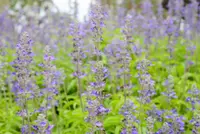
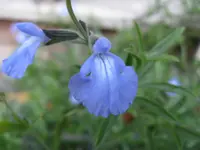
Lyreleaf sage, Salvia lyrata, is a low-growing perennial herb in the mint family, valued mainly as a groundcover and for its pollinator-friendly flowers. It forms loose rosettes of lobed, sometimes reddish-tinged leaves and sends up slender stems topped with pale blue to lavender blooms.
This species is native to eastern North America, where it grows in open woods, meadows, and roadsides. It adapts well to average garden conditions, which makes it relatively simple to care for lyreleaf sage.
The plant tolerates a range of soils and light levels, from sun to light shade, as long as drainage is reasonable. Its resilience and self-seeding habit make it easy to establish but sometimes moderately spreading in garden beds.

Care Difficulty
Easy Care

Light Preference
Full Sun

Water Requirements
Moderate Water

Temperature Preference
Cold Hardy

Hardiness Zone
5–9

Soil Texture
Sandy, Loamy, Clay

Soil pH
Acidic (5.5–6.5), Slightly acidic (6.5–7.0)

Soil Drainage
Moist but well-drained

Fertilization
Minimal (feed rarely)
Scan your plant to receive care tips personalized for your specific plant
Available on iOS and Android
This North American perennial thrives in full sun but also adapts to light shade.
This species prefers evenly moist, well-drained soil and tolerates short dry spells once established.
This hardy perennial tolerates a wide temperature range but grows best in mild conditions.
This species handles typical outdoor humidity well and rarely needs special adjustment.
Salvia lyrata prefers loose, well-drained ground that stays slightly moist but never waterlogged.
This species can be grown in containers if the potting setup manages moisture and root space carefully.
This adaptable native usually needs minimal feeding, especially in fertile garden soil.
Pruning Salvia lyrata is straightforward and mainly supports neat appearance and flowering.
This species is more often transplanted in beds than repotted, since it is commonly used as a groundcover.
Salvia lyrata is commonly propagated by seed and division, making it simple to increase plantings.
This hardy perennial needs little winter attention in most temperate climates.

Plant Health Check
Not sure what's wrong with your plant? Check your plant's health inside the app.
This species forms a flat basal rosette of leaves that hug the ground, allowing it to survive mowing in lawns and to outcompete many shorter lawn weeds for light without growing tall.
Leaf coloration in this species is highly variable, ranging from plain green to strongly purple-tinged, and individual plants often show more purple pigment in colder or higher-light conditions due to increased anthocyanin production.
The tubular flowers are adapted for pollination by long-tongued bees and small butterflies, providing a spring nectar source that supports native pollinator communities in eastern North American grasslands and open woods.

Lyreleaf sage readily hybridizes with certain other native North American salvias in the wild, which has made it useful in plant breeding programs aimed at developing hardy, ornamental groundcovers with improved flower color and lawn tolerance.
This species spreads steadily by self-seeding and short stolons, forming patches over time. It is usually manageable in gardens. Deadhead spent flower spikes and pull unwanted seedlings if you need to limit its spread.
Keep your plants happy and healthy with plant identification, disease detection, and easy care guidance.