Encourage Bushy Shape
Pinch back soft shoot tips in late spring to promote branching and a denser, more compact plant that flowers more evenly across the stems.

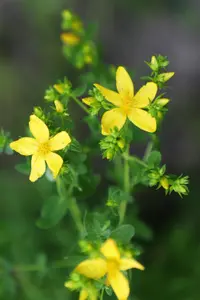
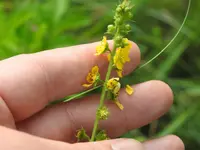
St. John's wort (Hypericum perforatum) is a hardy herbaceous perennial best known for its bright yellow, star-shaped flowers and fine, bushy foliage. It typically forms low, spreading clumps or loose mounds.
This species is native to Europe and parts of Asia but has naturalized widely in North America, often growing along roadsides, in meadows, and on disturbed soils. It tolerates poor, dry ground and can spread quickly in suitable conditions.
Its resilience, drought tolerance, and ability to handle full sun make it relatively easy to maintain in many temperate gardens. Understanding how to care for St. John's wort mainly involves controlling its spread and providing reasonably well-drained soil.

Care Difficulty
Easy Care

Light Preference
Full Sun

Water Requirements
Low Water

Temperature Preference
Cold Hardy

Hardiness Zone
4–8

Soil Texture
Sandy, Loamy, Rocky

Soil pH
Slightly acidic (6.5–7.0), Neutral (7.0)

Soil Drainage
Well-drained

Fertilization
Minimal (feed rarely)
Scan your plant to receive care tips personalized for your specific plant
Available on iOS and Android
This sun-loving perennial thrives in bright conditions but can adapt to slightly less intense light in hot climates.
This hardy species prefers slightly dry conditions over consistently wet soil.
This cold-hardy perennial tolerates a wide temperature range, from freezing winters to warm summers.
Humidity is rarely critical for Hypericum perforatum, which handles a broad range of indoor and outdoor air conditions.
Hypericum perforatum prefers moderately fertile, well-drained mineral soils that never stay waterlogged.
This species is suitable for container growing outdoors when provided with stable, well-drained conditions.
This hardy herb generally needs minimal feeding, especially in fertile garden soil.
Pruning helps keep Hypericum perforatum compact and encourages fresh flowering growth.
This species is more often transplanted in the garden than repotted long-term in containers.
Hypericum perforatum is commonly propagated from seed and by softwood cuttings.
Established plants are quite cold hardy and usually need little winter attention in most temperate climates.

Plant Health Check
Not sure what's wrong with your plant? Check your plant's health inside the app.
The plant contains hypericin, a red pigment located mainly in leaf glands, which can cause photosensitivity in grazing livestock exposed to strong sunlight after ingestion.
Leaves appear dotted or perforated when held to the light because they contain numerous translucent oil glands scattered through the leaf tissue.
In several temperate regions, especially parts of North America and Australia, this species is considered an invasive weed that forms dense stands and reduces pasture quality.

In modern phytochemistry, Hypericum perforatum is one of the most extensively analyzed wild herb species, with hundreds of identified secondary metabolites such as naphthodianthrones, phloroglucinols, flavonoids, and phenolic acids, which has made it a model organism for studying the chemical defenses of flowering plants.
Poor flowering usually comes from too much shade, heavy or waterlogged soil, or aggressive pruning at the wrong time. Ensure good light, avoid high‑nitrogen fertiliser, and prune lightly right after flowering to protect next year’s buds.
Keep your plants happy and healthy with plant identification, disease detection, and easy care guidance.