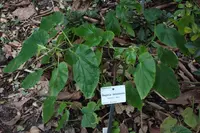
golden alexanders Care (Zizia aurea)

Also known as: golden zizia
golden alexanders

About golden alexanders

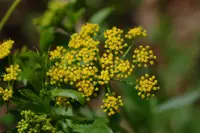
Golden alexanders (Zizia aurea) is a hardy, clump-forming perennial in the carrot family, native to moist meadows, prairies, and open woodlands in eastern North America. It typically grows in upright clumps with divided, green leaves and flat clusters of small, bright yellow flowers held above the foliage in late spring to early summer.

The flowers provide an important early nectar source for pollinators, including native bees and beneficial insects. This species spreads modestly by seed and short rhizomes, forming loose colonies without becoming aggressively invasive.

Zizia aurea is generally considered easy to grow, as it tolerates a range of soils and light conditions, especially in consistently moist sites. Understanding how to care for golden alexanders starts with providing sun to light shade and avoiding very dry, compacted ground.

Main Plant Requirements

Care Difficulty

Easy Care

Light Preference

Full Sun

Water Requirements

Regular Water

Temperature Preference

Cold Hardy

Hardiness Zone

3–8

Soil Texture

Sandy, Loamy, Clay

Soil pH

Acidic (5.5–6.5), Slightly acidic (6.5–7.0)

Soil Drainage

Moist but well-drained

Fertilization

Minimal (feed rarely)

Get Personalized Care Plan

Scan your plant to receive care tips personalized for your specific plant

Available on iOS and Android

How to Care for the golden alexanders

Zizia aurea grows best in conditions that balance direct sun with some daily shade.

  • Aim for 4–6 hours of direct morning sun, plus bright open shade or filtered light in the afternoon to reduce stress.
  • Plant golden alexanders where it receives light dappled shade under open trees or near taller perennials, especially in hotter regions.
  • Too much harsh afternoon sun can scorch foliage, while deep shade leads to lanky stems and fewer flowers; adjust placement seasonally if growth weakens.

This plant prefers steadily moist soil but not waterlogged conditions.

  • In the ground, let the top 2–3 cm of soil start to dry, then water deeply so moisture reaches at least 15–20 cm.
  • In spring and summer, increase watering during hot, dry spells and reduce it in cool, rainy periods or in fall dormancy.
  • Signs of overwatering include yellowing, soft stems, and a sour smell; dry, curling leaves and slow growth suggest Zizia aurea needs more moisture.

This hardy perennial handles a wide temperature range when grown outdoors in its native climate.

  • Active growth is strongest around 60–80°F (16–27°C), with flowering and foliage development most reliable in this range.
  • Established plants tolerate winter lows near 0°F (−18°C) in the ground, dying back above soil while roots survive freezing.
  • Short heat waves up to about 90°F (32°C) are tolerated if soil stays evenly moist; extended extreme heat or drying winds increase stress and wilting risk.

This species is adapted to outdoor conditions and does not have special humidity requirements in typical US climates.

This species prefers moist, fertile soil that stays evenly damp without becoming stagnant.

  • Use a deep, loamy soil rich in organic matter to mimic its natural meadow and wet prairie habitats.
  • Aim for soil that drains slowly but does not hold standing water; slightly acidic to neutral pH (6.0–7.0) is ideal.
  • Blend garden loam with 30–40% compost and a small amount of coarse sand to improve structure and root penetration.
  • For Zizia aurea in heavier soils, incorporate shredded leaf mold or fine bark to increase aeration and reduce compaction.

This species can be grown in containers, but it performs best when the pot setup mimics deep, consistently moist garden soil.

  • Choose a tall, deep container to allow the taproot to extend downward without circling tightly.
  • Use a heavier, stable pot material if placing on windy patios, as the mature foliage can make the container top-heavy.
  • Line the bottom with a thin layer of coarse gravel above the drainage holes to keep the soil column moist yet not waterlogged.

Zizia aurea benefits from modest feeding when grown in garden beds or containers with poor soil.

  • Apply a light layer of compost or well-rotted manure around plants in early spring to boost organic matter.
  • Use a balanced, slow-release fertilizer (around 10-10-10) once in spring at half the label rate.
  • Avoid further feeding after midsummer so growth hardens before winter dormancy.
  • Skip fertilization in winter; focus on maintaining evenly moist, not waterlogged, soil.

Pruning needs for Zizia aurea are low and focus mainly on cleanup and seed control.

  • Cut back spent flower stems after blooming to reduce self-seeding and keep clumps tidy.
  • Remove dead, damaged, or weak stems at ground level in late fall or very early spring.
  • Thin crowded shoots lightly to improve air flow and maintain a more upright habit.
  • Use clean, sharp hand pruners to make smooth cuts and limit disease entry points.

Golden alexanders are usually grown in the ground and respond best to careful, infrequent transplanting.

  • Transplant in early spring or early fall when temperatures are mild and soil is moist.
  • Move clumps only every few years, when overcrowded or declining, to limit root disturbance.
  • Dig a wide root ball, replant at the same depth, and water thoroughly to settle soil around roots.
  • Provide shade and consistent moisture for 1–2 weeks after transplanting to reduce transplant shock.

This species is most often propagated by seed, with division as a secondary method for established clumps.

  • Sow fresh seed outdoors in fall so natural winter cold stratifies and improves germination.
  • For stored seed, provide 60–90 days of moist chilling at 35–40°F before spring sowing.
  • Sow thinly in a well-drained seedbed or pots, just covering seed, and keep evenly moist.
  • Divide larger clumps in early spring, replant divisions promptly, and water well to re-establish.

This cold-hardy perennial generally needs minimal winter care in most temperate climates.

  • Tolerates typical freezes in USDA zones where it is native, with crowns surviving under snow.
  • Apply a thin 3–5 cm layer of mulch after the ground cools to buffer freeze–thaw cycles.
  • Container plants in very cold regions benefit from moving to a sheltered, unheated but frost-free spot.

Care Tips

Manage Self-Seeding

Mark desirable clumps and cut seed heads only from unwanted plants in late summer so the patch does not spread into paths or shorter meadow species.

Support Pollinators

Avoid insecticides within 20–30 ft of the plants and stagger mowing of nearby turf so flowers remain available to the native bees and wasps that use this host.

Companion Placement

Plant alongside other moisture-tolerant natives of similar height, such as bee balm or blue flag iris, to prevent taller, aggressive species from shading it out over time.

Streambank Stabilization

Use dense groupings of 5–9 plants on gentle slopes or swales where their fibrous roots can help bind soil and reduce small-scale erosion.

Spring Division Timing

Divide mature clumps in very early spring, just as new growth appears, then water deeply once and mulch lightly so divisions establish quickly and support long-term growing golden alexanders.

Common Pests and Diseases

Leaf beetles

This pest often feeds on the foliage, leaving irregular holes and notches in leaves of plants in the carrot family. Symptoms include thinning leaf tissue and a ragged appearance on older leaves.

Solution

Hand-pick adults and larvae into soapy water where practical, and encourage birds and predatory insects by maintaining diverse native plantings nearby. If damage is heavy, use a targeted spinosad or neem-based spray in the evening, coating leaf surfaces while avoiding open flowers to reduce risk to pollinators when caring for golden alexanders.

Carrot rust fly larvae

These insects attack the root zone, where larvae tunnel into fine roots and lower stems, causing stunting, yellowing, and sometimes plant collapse in moist, rich soils. Symptoms include poor growth despite adequate water and nutrients.

Solution

Use crop rotation and avoid planting near cultivated carrots or other Apiaceae crops that keep populations high. Where infestations recur, install fine insect netting over young plants and maintain a light mulch at the soil surface to discourage adults from laying eggs near the crown.

Powdery mildew

This disease can appear on foliage as white to gray powdery patches, often during warm days with cool, humid nights. Symptoms include dull, distorted leaves and premature yellowing or drop on lower foliage.

Solution

Increase air movement by thinning crowded stems and nearby vegetation, and avoid overhead watering late in the day. Remove and discard heavily infected leaves, and if needed use a potassium bicarbonate or sulfur-based fungicide labeled for ornamentals, applying according to label directions during dry weather.

Leaf spot

This disease causes small brown, purple, or black spots on leaves that may merge into larger blotches in wet seasons. Symptoms include cosmetic damage, some yellowing, and occasional early leaf drop, especially on lower leaves in dense stands.

Solution

Remove and dispose of spotted, fallen leaves to reduce the source of infection and water early in the day so foliage dries quickly. In sites that stay wet, improve drainage and spacing; in severe, recurrent cases, apply a labeled copper or chlorothalonil fungicide early in the season to protect new foliage.

Interesting Facts

Specialist bee host

Golden alexanders serves as a critical pollen and nectar source for several early-season, specialist mining bees that rely on members of the carrot family (Apiaceae), making it an important component of native pollinator networks in eastern North America.

Larval food for swallowtails

The foliage is a documented larval host for the black swallowtail butterfly (Papilio polyxenes), which uses the leaves as the primary food source for its caterpillars in many meadow and prairie habitats.

Adapted to moist prairies

This species is naturally common in moist prairies, open woodlands, and stream margins, showing a strong tolerance for seasonally wet soils that many other meadow perennials cannot handle.

Botan icon

Did you know?

In several US states, golden alexanders is used in prairie and wetland restoration projects because its early-season flowering fills a phenological gap, providing one of the first reliable native nectar resources after winter for a wide range of insects.

FAQs about golden alexanders

The flowers produce abundant nectar and pollen that strongly attract many native bees, small wasps, hoverflies, and several butterfly species, including black swallowtails, which also use the foliage as a larval food source.

Grow Healthy Plants with Botan Care

Keep your plants happy and healthy with plant identification, disease detection, and easy care guidance.

Botan plant care app — identify plants on mobile

Explore More Plants