Regular tip pruning
Pinch or clip back soft shoot tips by 1–2 in in late winter and mid-summer to encourage a denser, hedge-like structure and reduce the risk of branches becoming leggy and wind-prone.

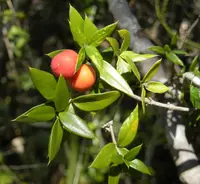
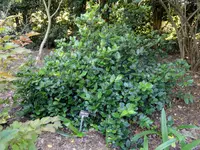
Chain fruit (Alyxia ruscifolia) is an evergreen shrub known for its dense, glossy foliage and clusters of fragrant white star-shaped flowers. It often forms a compact, upright to bushy shape that suits hedges, screening, or structured garden planting.
This species is native to coastal and rainforest edges in eastern Australia, where it experiences mild, relatively humid conditions. Its tolerance of clipping, wind, and a range of soils makes it a practical landscape choice.
Gardeners generally find it moderate in difficulty, as it dislikes extreme dryness and poorly drained sites. Understanding how to care for Chain Fruit starts with providing bright light, protection from harsh extremes, and consistently moist but not waterlogged soil.

Care Difficulty
Moderate Care

Light Preference
Partial Shade

Water Requirements
Moderate Water

Temperature Preference
Warm Climate

Hardiness Zone
9–11

Soil Texture
Sandy, Loamy, Organic-rich

Soil pH
Acidic (5.5–6.5), Slightly acidic (6.5–7.0)

Soil Drainage
Well-drained

Fertilization
Minimal (feed rarely)
Scan your plant to receive care tips personalized for your specific plant
Available on iOS and Android
Alyxia ruscifolia prefers bright, indirect light similar to light woodland edges.
This shrub prefers evenly moist, well-drained soil rather than cycles of extreme dryness or saturation.
This species grows best in mild, frost-free climates with moderate seasonal variation.
This species prefers moderate humidity but adapts to many home conditions.
Alyxia ruscifolia prefers freely draining, moderately fertile soil that does not stay wet.
This species is suitable for container growing when given a stable, well-drained setup.
Alyxia ruscifolia benefits from modest, controlled feeding, especially when grown as Chain Fruit in containers or lean soils.
Pruning Alyxia ruscifolia helps maintain a dense, tidy shrub and supports healthy flowering.
This shrub is more often planted in the ground than grown in pots, so focus on careful transplanting and only occasional repotting.
Alyxia ruscifolia is most often propagated from semi-hardwood cuttings, with seeds used less commonly due to slow, uneven germination.
This shrub is moderately frost tolerant in mild climates but benefits from some winter protection in colder areas.

Plant Health Check
Not sure what's wrong with your plant? Check your plant's health inside the app.
This species is naturally distributed along eastern Australia from Queensland to New South Wales, where it grows in coastal heath, dry sclerophyll forest, and on exposed sandstone ridges that experience salt-laden winds.
After flowering, it develops small spherical drupes that are arranged along the stem in a beaded chain, a distinctive fruiting pattern that gives rise to the common name chain fruit.
The plant produces small white to cream tubular flowers with a star-shaped opening, which are lightly fragrant and attract a range of insect pollinators in their native habitats.

This species is used in ecological restoration plantings along parts of Australia’s east coast because its dense, tough foliage helps stabilize sandy or rocky soils and provides structural habitat for small birds and invertebrates in windswept coastal environments.
Lack of flowers usually results from insufficient light intensity, heavy pruning at the wrong time, or nutrient imbalance with too much nitrogen. Ensure strong light, avoid cutting new growth tips, and use a balanced, low-nitrogen fertilizer in spring.
Keep your plants happy and healthy with plant identification, disease detection, and easy care guidance.