Provide light support
Install a low mesh, pea netting, or small trellis early in the season so stems can lean and weave through it, which reduces wind damage and keeps flower stems straighter for cutting.

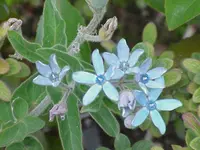
Tweedia, Oxypetalum coeruleum, is a twining perennial vine in the milkweed family, valued for its distinctive star-shaped blue flowers. It typically grows with slender, twining stems, soft grey-green leaves, and clusters of waxy blooms that attract butterflies. Native to South America, mainly Brazil and Uruguay, it prefers warm conditions and performs best in mild to hot climates. The plant is moderately easy to grow if given enough sun, shelter from strong winds, and well-drained soil. Understanding how to care for Tweedia mostly involves providing consistent light, moderate moisture, and support for its climbing habit.

Care Difficulty
Moderate Care

Light Preference
Full Sun

Water Requirements
Moderate Water

Temperature Preference
Tropical / Frost Sensitive

Hardiness Zone
9–11

Soil Texture
Sandy, Loamy, Organic-rich

Soil pH
Acidic (5.5–6.5), Slightly acidic (6.5–7.0)

Soil Drainage
Well-drained

Fertilization
Light (every 4–6 weeks)
Scan your plant to receive care tips personalized for your specific plant
Available on iOS and Android
This plant prefers bright light with some protection from intense midday sun.
This species prefers moderate moisture with brief dry periods between waterings.
This plant grows best in warm, frost-free conditions with mild summers.
This species prefers moderate humidity but usually adapts to typical indoor air.
This plant prefers a light, well-aerated, fast-draining substrate.
This species grows reliably in containers when its root zone and stems are properly supported.
This plant benefits from light, consistent feeding during its active growing season.
Thoughtful pruning keeps Oxypetalum coeruleum compact and encourages more flowering stems.
Moving this plant at the right time reduces stress and maintains steady flowering.
This species is commonly propagated from seeds and softwood cuttings under warm, bright conditions.
This plant is frost sensitive and needs protection in regions with freezing winters.

Plant Health Check
Not sure what's wrong with your plant? Check your plant's health inside the app.
The flowers owe their sky-blue color to specific flavonoid pigments that are relatively rare among milkweeds, which more often show white, pink, or orange tones.
As a member of the Apocynaceae (milkweed) family, it produces milky latex and cardiac glycosides that make its tissues distasteful to many herbivores, helping protect caterpillars and other insects that specialize on it.
Each bloom has a distinctive 5-pointed, star-like corolla with a raised central corona, an arrangement that guides visiting insects directly toward the reproductive structures for efficient pollination.

This species often changes flower color from bright sky blue to a more purplish or even whitish tone as the individual blooms age, so a single plant can display multiple flower colors at once on different stages of the same inflorescence.
Lack of flowers usually comes from insufficient light, low nutrients, or heavy pruning at the wrong time. Check that the plant receives enough sun, is not nitrogen-heavy, and avoid cutting off developing buds or flowering stems.
Keep your plants happy and healthy with plant identification, disease detection, and easy care guidance.