Easter lily vine Care (Beaumontia grandiflora)

Easter lily vine

About Easter lily vine

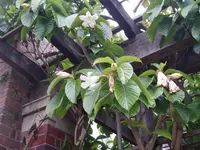
Easter lily vine, Beaumontia grandiflora, is a vigorous evergreen climber grown for its large white trumpet-shaped flowers and glossy green foliage. It can quickly cover pergolas, fences, or large trellises in mild climates. Native to the Himalayas and parts of Southeast Asia, it prefers warm, frost-free conditions and space to climb and spread. This plant offers impressive blooms but is not a low-maintenance choice for small spaces or cold regions. It responds best to bright light, evenly moist but well-drained soil, and support for its woody stems, which is important to understand when learning how to care for Easter lily vine.


Main Plant Requirements

Care Difficulty

Hard Care

Light Preference

Full Sun

Water Requirements

Regular Water

Temperature Preference

Tropical / Frost Sensitive

Hardiness Zone

10–11

Soil Texture

Loamy, Sandy, Organic-rich

Soil pH

Acidic (5.5–6.5), Slightly acidic (6.5–7.0)

Soil Drainage

Moist but well-drained

Fertilization

Moderate (every 2–4 weeks)

Get Personalized Care Plan

Scan your plant to receive care tips personalized for your specific plant

Available on iOS and Android

How to Care for the Easter lily vine

This vigorous climber needs strong light to bloom well and stay dense.

  • Provide 4–6 hours of direct morning sun plus bright filtered light the rest of the day; avoid harsh west-facing afternoon sun in hot climates.
  • Tolerates light partial shade, but Easter lily vine will flower less and produce lanky growth if it receives under 3–4 hours of direct or high-intensity light.
  • In summer, monitor for leaf scorch on exposed south or west walls; in winter, ensure it is not shaded all day by buildings or trees.

This vine prefers evenly moist, well-drained soil and reacts quickly to extremes in watering.

  • Water when the top 3–5 cm of soil has dried, soaking the root zone deeply so moisture penetrates 20–30 cm, then allow excess to drain away.
  • Use loose, well-draining soil to prevent waterlogging; yellowing leaves, soft stems, or a sour smell indicate overwatering or poor drainage around Beaumontia grandiflora roots.
  • In hot, active growth periods, drying will occur faster; in cool or rainy seasons, extend the interval between waterings and watch for dull, drooping foliage as a sign of underwatering.

This tropical climber thrives in warm, frost-free conditions with only moderate temperature swings.

  • Ideal growth occurs around 65–85°F (18–29°C); sustained temperatures within this range promote strong vines and reliable flowering.
  • It tolerates short spikes up to about 95°F (35°C) if soil moisture is stable, but prolonged extreme heat with dry soil can cause leaf scorch and bud drop.
  • Frost is damaging; protect the plant when temperatures approach 32°F (0°C), and expect dieback or death if exposed for long below 28°F (−2°C).

This vigorous climber prefers moderate humidity but adapts if air is not too dry.

  • Aim for 40–60% humidity to keep foliage of Easter lily vine lush and reduce leaf edge browning.
  • Dry indoor air causes crisp leaf tips and dull, drooping foliage, especially near heating or strong sun.
  • Increase humidity by grouping plants, placing the pot on a pebble tray with water below the base, or using a small humidifier nearby.

This vine performs best in deep, well‑structured soil that drains freely yet retains some moisture.

  • Use a loose loam with high organic matter, such as 2 parts composted bark or garden loam, 1 part compost, and 1 part coarse sand or perlite.
  • Ensure fast drainage so Beaumontia grandiflora roots never sit in water, which predisposes them to rot and poor vigor.
  • Maintain soil pH around 6.0–7.0; slightly acidic to neutral conditions support nutrient uptake and steady growth.
  • Avoid heavy, compacted clay or low spots where water accumulates; improve aeration by incorporating coarse grit, perlite, or chunky bark.

This species can be grown in large, sturdy containers when ample root space and support are provided.

  • Choose a deep, wide pot so the vigorous root system can anchor the heavy vine without tipping.
  • Use a weighty container material or add bricks in the base to improve stability for tall trellises or arches.
  • Select a mix that drains quickly in the lower half of the pot and is slightly more moisture retentive near the top to balance rapid growth with root health.

This vigorous climber benefits from moderate feeding during its main growing season.

  • Use a balanced NPK fertilizer (around 10-10-10) or a slow-release granular product for Easter lily vine in spring.
  • Apply every 4–6 weeks during active growth, or once per season if using slow-release pellets.
  • Dilute liquid feeds to 1/2 strength to prevent root burn, especially in containers.
  • Stop or greatly reduce feeding in late fall and winter when growth slows.

Pruning helps keep Beaumontia grandiflora manageable and flowering well.

  • Carry out main pruning in late winter or just after flowering, depending on climate.
  • Remove dead, damaged, or crossing stems first to improve airflow and reduce disease risk.
  • Shorten overly long or vigorous shoots to control size and encourage branching.
  • Use clean, sharp bypass pruners and make angled cuts just above healthy buds or side shoots.

This large vine is usually grown in the ground, so focus on careful transplanting rather than frequent repotting.

  • Transplant in spring when frost risk has passed and new growth is starting.
  • Move plants if roots circle the pot, growth stalls, or watering frequency increases sharply.
  • Choose a larger, deep container or in-ground site with rich, well-drained soil and a strong support structure.
  • Water thoroughly before and after moving, keep roots shaded, and maintain even moisture for several weeks to reduce stress.

This vine is most commonly propagated from semi-ripe cuttings under warm, humid conditions.

  • Take 10–15 cm semi-ripe stem cuttings in late spring or summer from non-flowering shoots.
  • Remove lower leaves, dip the cut end in rooting hormone, and insert into a free-draining mix of perlite and peat or coco coir.
  • Maintain 70–80°F, high humidity, and bright, indirect light until roots form.
  • Seed propagation is possible but slow; sow fresh seed in warm conditions and keep the medium just moist.

In cooler regions this tropical vine needs careful winter management, especially when young or container-grown.

  • Beaumontia grandiflora is frost-sensitive and performs best in climates with mild winters, roughly USDA zones 10–11.
  • Mulch the root zone with 5–8 cm of organic material in fall to buffer soil temperature and moisture.
  • For container plants in colder zones, move indoors to a bright, cool, frost-free space before temperatures drop near freezing.
  • In marginal climates, allow light top dieback, then cut back dead stems in late winter once severe cold has passed.

Care Tips

Strong structural support

Install a permanent, load-bearing support such as a steel pergola, masonry wall trellis, or heavy-duty wire system before the vine reaches 2–3 m, since mature stems become woody and very heavy and are difficult to reposition later.

Directing new shoots

While stems are still flexible, tie young shoots loosely and horizontally along wires or rails using soft garden ties, which encourages more flowering spurs along the length of the vine instead of a single tall, bare trunk.

Root zone management

Keep the root zone cool and stable by mulching 5–8 cm deep with composted bark or leaf mold, but leave a small gap around the main stem to reduce the risk of rot and collar diseases.

Seasonal hardening outdoors

In cooler regions, gradually acclimate container-grown plants outdoors over 10–14 days each spring, increasing light and wind exposure slowly so foliage does not scorch or drop after sudden environmental changes when growing Easter lily vine.
Preventing wind damage

In windy sites, secure the main framework stems at several points along the support and trim out very long, whippy side shoots before storms, which reduces leverage on the plant and helps prevent stems from snapping at the base.

Common Pests and Diseases

Mealybugs

This pest feeds on young shoots and leaf undersides, sucking sap and causing leaf yellowing, distortion, and sticky honeydew. Symptoms include cottony white clusters along stems, leaf nodes, and flower stalks.

Solution

Isolate the vine, then wipe or dab visible clusters with cotton swabs dipped in 70% isopropyl alcohol and rinse foliage with a strong, lukewarm water spray. For heavier infestations, repeat washing weekly and use a horticultural soap or neem oil spray, ensuring good coverage of leaf undersides while improving air movement around the plant.

Scale insects

These insects attach tightly to stems and leaf veins as small brown or tan bumps, drawing sap and weakening the vine over time. Symptoms include sticky honeydew, sooty mold growth, leaf drop, and general decline in vigor.

Solution

Manually scrape or rub off scale from stems and petioles with a soft cloth or toothbrush, then wash the plant thoroughly with water. Follow up with 2–3 applications of horticultural oil at 7–10 day intervals, targeting stems and leaf midribs and avoiding application during very hot or very sunny periods to reduce leaf burn.

Spider mites

This pest thrives in hot, dry conditions and feeds on the undersides of leaves, causing fine stippling, bronzing, and eventual leaf drop. Symptoms include delicate webbing between leaves and stems and a generally dusty, dull appearance of foliage.

Solution

Increase humidity around the plant and hose down the foliage, focusing on leaf undersides to physically remove mites. For persistent problems, apply insecticidal soap or neem oil every 5–7 days for several cycles and keep the vine well watered and out of hot, dry drafts to reduce stress.

Leaf spot

This disease causes irregular brown or black spots on leaves, sometimes with yellow halos, which can merge and lead to premature leaf drop in humid or poorly ventilated conditions. Symptoms include more severe spotting on older, shaded leaves and in the interior of dense vines.

Solution

Prune out and discard heavily spotted leaves and thin the vine to improve airflow and light penetration. Avoid wetting foliage, water at soil level, and if the problem continues, use a labeled copper or chlorothalonil fungicide, applying according to the product directions during prolonged humid periods.

Powdery mildew

This disease appears as white, powdery patches on leaf surfaces, young stems, and sometimes flower buds, reducing photosynthesis and overall vigor. Symptoms include distorted new growth and leaves that yellow and drop prematurely when coverage is heavy.

Solution

Increase sun exposure to bright, indirect light, improve air circulation, and avoid overhead watering to reduce leaf wetness. Remove the most affected leaves and treat remaining foliage with a sulfur-based fungicide or potassium bicarbonate spray at intervals recommended on the label, starting at the first sign of infection to support effective Beaumontia grandiflora plant care.

Interesting Facts

Night-scented blooms

The large white flowers open mostly at night and release a strong sweet fragrance after dusk, which helps attract nocturnal moth pollinators in its native Himalayan and Southeast Asian habitats.

Climber with latex

This species is a vigorous woody climber that can form long, liana-like stems, and its broken stems or leaves exude a white, milky latex typical of the dogbane family Apocynaceae.

Star-shaped corolla tube

Each trumpet-shaped flower has a narrow tube that opens into 5 broad lobes, and the throat is often marked with pale yellowish lines that guide pollinators toward the nectar source.

Botan icon

Did you know?

In some traditional temple and garden plantings in parts of India and Southeast Asia, this species has been prized mainly for its spectacular, intensely fragrant flower displays near entrances and pathways, leading to its common name Easter lily vine in horticulture.

FAQs about Easter lily vine

This species is considered fast-growing, often extending 1–2 m per year in warm climates once established. Growth slows in cool weather or containers and increases with strong support, regular moisture, and balanced fertilization to sustain vigorous vines.

Grow Healthy Plants with Botan Care

Keep your plants happy and healthy with plant identification, disease detection, and easy care guidance.

Botan plant care app — identify plants on mobile

Explore More Plants