mist flower Care (Ageratina riparia)

Also known as: spreading snakeroot, Creeping Crofton Weed
mist flower

About mist flower

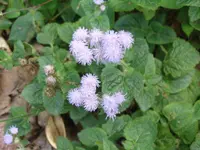
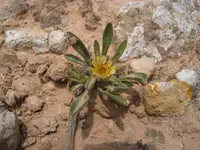
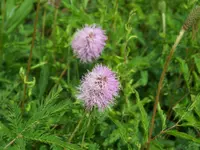
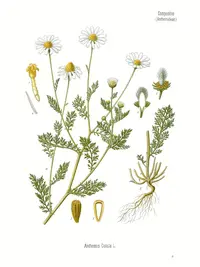
Mist flower, Ageratina riparia, is a perennial herb in the daisy family known for its clusters of small, fluffy white or pale lilac blooms. It typically forms low, spreading mounds or thickets with soft, serrated leaves.

This species is native to Central and South America but has naturalized widely in tropical and subtropical regions, where it can become invasive. It grows fast and self-seeds easily, which makes it simple to establish but harder to control in warm, frost-free climates.

In garden settings, it prefers consistent moisture, mild temperatures, and fertile, well-drained soil. Those who want to care for mist flower should monitor its spread and remove unwanted seedlings regularly.

Main Plant Requirements

Care Difficulty

Moderate Care

Light Preference

Partial Shade

Water Requirements

Regular Water

Temperature Preference

Tropical / Frost Sensitive

Hardiness Zone

10–11

Soil Texture

Loamy, Silty, Organic-rich

Soil pH

Slightly acidic (6.5–7.0), Neutral (7.0)

Soil Drainage

Moist but well-drained

Fertilization

Minimal (feed rarely)

Get Personalized Care Plan

Scan your plant to receive care tips personalized for your specific plant

Available on iOS and Android

How to Care for the mist flower

This species prefers bright conditions with gentle sun and protection from harsh midday exposure.

  • Provide 4–6 hours of sun daily, favoring morning sun with light afternoon shade; open eastern exposure suits mist flower well.
  • Plant in a spot with partial shade or high, filtered light, such as under sparse tree canopies or beside taller perennials.
  • In hot summers, shield from strong sun between 11 a.m. and 3 p.m. to prevent leaf scorch; in cooler seasons, allow a bit more direct light.

This plant favors evenly moist but not saturated soil, with brief drying at the surface between waterings.

  • Water when the top 2–3 cm of soil feels dry, aiming for soil that is moist to the touch down in the root zone, not soggy.
  • Use well-drained soil or a sloped site to avoid standing water; yellowing, soft stems indicate overwatering, while limp, crisp leaves suggest drought stress.
  • In cooler or rainy seasons, extend the interval between waterings, but during hot, dry periods, check soil moisture more often for Ageratina riparia.

This plant grows best in mild, frost-free climates with stable, moderate temperatures.

  • Aim for daytime temperatures of 65–80°F (18–27°C) for strongest growth, with slightly cooler nights but not large swings.
  • Protect from frost; growth slows below 50°F (10°C), and foliage can be damaged near 32°F (0°C), especially during sudden cold snaps.
  • In hotter regions, brief highs up to 90°F (32°C) are tolerated if soil moisture is steady and the site has light afternoon shade to limit heat stress.

This species prefers moderately humid air but adapts to many outdoor conditions.

  • Target 50–70% humidity in sheltered plantings, especially in warm regions.
  • It tolerates short dry spells but prolonged air below 40% can cause leaf edge browning and slower growth.
  • Increase humidity by grouping plants, mulching soil to reduce evaporation, or placing containers near other dense plantings when caring for mist flower.

This species thrives in moist, well-structured soil that stays aerated yet never waterlogged.

  • Use a loamy, organic-rich base with fine texture that still contains some larger particles for air spaces.
  • Aim for slightly acidic to neutral pH, roughly 6.0–7.0, which supports root activity and nutrient uptake.
  • For containers, mix roughly 2 parts compost or peat with 1 part perlite or coarse sand to improve drainage and prevent compaction.
  • Avoid heavy, poorly drained clay or constantly saturated spots, which promote root rot and weak growth in Ageratina riparia.

This species can be grown in containers if the pot supports its spreading, sometimes invasive habit.

  • Choose a wide, stable container to accommodate lateral root spread and prevent tipping as top growth becomes dense.
  • Use a slightly heavier pot material, such as ceramic, to keep vigorous stems from shifting the container in wind or rain.
  • Position the container where excess runoff will not drain into beds, to limit unwanted rooting and spreading from escaping stems.

Ageratina riparia benefits from light, consistent feeding rather than heavy fertilization.

  • Use a balanced liquid fertilizer (such as 10-10-10) at 1/2 strength every 4–6 weeks during the warm growing season.
  • Alternatively, apply a thin layer of compost or a low-dose slow-release fertilizer at the start of spring.
  • Skip feeding in winter or any dormant period to avoid weak, elongated growth.
  • Always water before and after feeding to limit root burn and ensure even nutrient uptake.

Targeted pruning keeps Ageratina riparia dense, manageable, and flowering well.

  • Use clean hand pruners to remove dead, diseased, or storm-damaged stems whenever noticed.
  • In late winter or early spring, thin crowded shoots to improve air flow and reduce fungal issues.
  • Lightly shorten tall or straggly stems after flowering to maintain a compact, bushy shape.
  • Dispose of all cut material to avoid unwanted spread or re-rooting of stem pieces.

This species is usually grown in the ground, so focus on careful transplanting rather than frequent repotting.

  • Transplant when roots fill the planting hole area, growth slows, or plants crowd each other.
  • Aim for early spring or early autumn, avoiding extreme heat or active flowering for lower stress.
  • Lift plants with as much root ball as possible, keeping roots shaded and moist during the move.
  • Replant into well-drained soil, water deeply, then keep evenly moist for 1–2 weeks while roots re-establish.

Ageratina riparia is commonly multiplied by stem cuttings, division, and sometimes seed.

  • Take 8–10 cm softwood or semi-ripe cuttings in late spring or summer and root in moist, sterile mix.
  • Provide bright, indirect light and high humidity (cover with a vented dome or bag) until roots form.
  • Divide established clumps in early spring, replanting divisions promptly at the same depth.
  • Sow fresh seed on the surface of a fine seed mix, keep lightly moist, and maintain warm, bright conditions.

In mild climates this plant needs minimal winter care, but extra measures help in colder areas.

  • Ageratina riparia is frost-tender; growth can be damaged below about 32°F, especially in exposed sites.
  • Apply a 5–8 cm mulch layer around the root zone in late autumn, keeping mulch off the stems.
  • In colder regions, grow in containers and move plants indoors to a bright, cool, frost-free space over winter.
  • Reduce watering in winter, keeping soil just barely moist to prevent root rot in cool conditions.

Care Tips

Contain Aggressive Spread

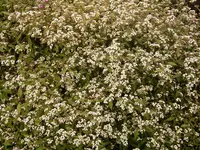
Regularly edge around planting beds and remove outer runners every 4–6 weeks to keep this species from spreading into nearby plantings or natural areas.

Use Physical Barriers

In invasive-prone regions, install 20–30 cm deep root barriers or grow it in large, bottomed containers sunk into the ground to prevent underground rhizomes from escaping.

Timed Cutbacks

Shear or cut back plants hard just before seed set, then collect and dispose of all flowering stems in sealed bags to reduce self-seeding and limit weediness.

Monitor For Rust

Inspect foliage every 1–2 weeks for yellow spotting or pustules, and promptly remove and bin affected leaves to slow spread of rust and other foliar diseases without relying only on fungicides.

Habitat Buffer Zones

Avoid planting near waterways, drains, or natural bushland, and maintain a mown or mulched buffer strip so caring for mist flower in gardens does not contribute to its escape into the wild.

Common Pests and Diseases

Leaf spot

Symptoms include small brown to dark purple spots on leaves that may merge into larger patches, sometimes with a yellow halo. This disease often appears in warm, humid conditions where foliage stays wet for long periods.

Solution

Remove and discard heavily spotted leaves and any fallen debris around the plant to reduce inoculum. Improve air circulation, avoid overhead watering, and if the problem persists, use a copper-based or chlorothalonil fungicide labeled for ornamental asters, following local regulations and label directions.

Powdery mildew

This disease produces a white to gray powdery coating on upper leaf surfaces, which can cause leaf distortion and reduced vigor in dense Ageratina riparia stands. It tends to develop in warm days with cooler, humid nights and crowded growth.

Solution

Thin and prune stems to open the canopy, increase sun exposure, and improve airflow, and avoid overhead irrigation in the evening. If needed, apply a sulfur or potassium bicarbonate fungicide labeled for ornamental composites, starting at first signs and repeating as directed.

Rust

Symptoms include small orange to brown pustules on the undersides of leaves, sometimes causing yellowing or premature leaf drop. This disease is favored by moist foliage and poor air movement in dense plantings or along watercourses.

Solution

Remove and destroy infected leaves and any heavily affected stems, and keep the planting area free of plant debris. Reduce moisture on leaves by watering at soil level, and in persistent cases use a myclobutanil or propiconazole fungicide suitable for ornamental plants, rotating products to limit resistance.

Stem canker

This disease causes dark, sunken lesions on lower stems that can girdle shoots, leading to wilting and dieback, especially in older or stressed clumps. Infection often enters through mechanical injury or prolonged moisture at the stem base.

Solution

Cut out and dispose of cankered stems well below visible damage, sterilizing tools between cuts with alcohol or a 10% bleach solution. Improve drainage and reduce crowding at the base of plants, and avoid injuring stems during maintenance to prevent new infection sites.

Leaf-chewing caterpillars

These insects feed on foliage, leaving irregular holes or ragged edges and can defoliate young Ageratina riparia plants when populations are high. Damage is more noticeable on the upper parts of the plant and along field or path edges.

Solution

Hand-pick caterpillars from accessible plants and remove heavily damaged leaves to reduce feeding sites. For larger infestations, apply Bacillus thuringiensis (Bt) or spinosad in the evening, targeting young larvae and following label directions for ornamental use while conserving beneficial insects; this approach supports Ageratina riparia plant care in unmanaged or invasive stands where selective control is needed.

Interesting Facts

Not a true mist

Despite its airy flower clusters, this species is not a true mist flower of the genus Conoclinium but was moved to the genus Ageratina after taxonomic revision based on floral morphology and other traits.

Extremely prolific seed

Each flower head can release many tiny wind-dispersed seeds with a pappus, allowing it to spread rapidly along roadsides, riverbanks, and disturbed slopes in tropical highland climates.

Major pasture invader

In regions such as Hawaii and parts of East Africa, dense thickets of this plant reduce pasture quality, hinder livestock movement, and alter natural fire regimes by changing how fine fuels accumulate.

Botan icon

Did you know?

A rust fungus, Aecidium sp., has been used as a classical biological control agent against Ageratina riparia in Hawaii and other regions, significantly reducing its density by infecting leaves and stems and lowering its overall vigor without relying on herbicides.

FAQs about mist flower

Lack of flowering usually comes from too much shade, heavy or dry soil, or nutrient imbalance. Improve light exposure, keep soil consistently moist but not soggy, and avoid high‑nitrogen fertilizer, which encourages foliage instead of buds.

Grow Healthy Plants with Botan Care

Keep your plants happy and healthy with plant identification, disease detection, and easy care guidance.

Botan plant care app — identify plants on mobile

Explore More Plants