Coral Bells Care (Heuchera 'Frosted Violet')

About Coral Bells

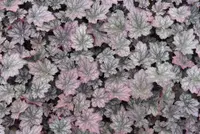
Coral bells Heuchera 'Frosted Violet' is a compact, clump-forming perennial grown mainly for its colorful foliage rather than its flowers. It typically forms neat mounds of ruffled, violet-purple leaves with a silvery sheen, sending up slender stems with small, airy blooms.

This cultivar traces its heritage to North American woodland and rocky habitats, so it adapts well to garden beds, borders, and containers. It is considered relatively easy to grow, provided it has well-drained soil, moderate moisture, and partial shade. Gardeners who learn how to care for Coral Bells usually find this plant reliable and long-lived in suitable conditions.

Main Plant Requirements

Care Difficulty

Moderate Care

Light Preference

Partial Shade

Water Requirements

Moderate Water

Temperature Preference

Cold Hardy

Hardiness Zone

4–9

Soil Texture

Loamy, Sandy, Organic-rich

Soil pH

Acidic (5.5–6.5), Slightly acidic (6.5–7.0)

Soil Drainage

Moist but well-drained

Fertilization

Light (every 4–6 weeks)

Get Personalized Care Plan

Scan your plant to receive care tips personalized for your specific plant

Available on iOS and Android

How to Care for the Coral Bells

This cultivar prefers bright conditions with gentle sun to maintain leaf color and avoid scorch.

  • Provide 3–5 hours of morning sun with light or dappled shade the rest of the day; avoid strong afternoon sun in hot summers.
  • In cooler climates, Coral Bells tolerates more direct light, but in zones with intense sun, use filtered light under trees or shade cloth.
  • Watch foliage for signs: fading, crispy edges, or bleached patches indicate too much sun; large, weak, or dull leaves suggest insufficient light.

Heuchera 'Frosted Violet' prefers consistently moist but not saturated soil, especially in the first growing season.

  • Water when the top 2–4 cm of soil feels dry, applying enough water to moisten the root zone, then let excess drain away fully.
  • In spring and fall, soil may stay moist longer; in hot, dry summers, expect more frequent watering, especially in sandy or sloped beds.
  • Yellowing, limp leaves and a sour soil smell indicate overwatering, while crisp, browning leaf edges and wilting in cool soil suggest underwatering.

This perennial tolerates a wide temperature range but grows best in moderate conditions.

  • Active growth occurs around 60–75°F (16–24°C), with foliage color often strongest in the cooler end of this range.
  • Heuchera 'Frosted Violet' generally survives winter down to about -20°F (-29°C) when planted in the ground with good drainage and mulch.
  • In summer, plants handle short periods up to 85–90°F (29–32°C), but extended heat and warm nights increase stress, so provide shade and mulch to cool roots.

This cultivar handles a broad humidity range and usually does not need special humidity management outdoors.

  • Ideal humidity is around 30–60% when grown near buildings or on patios.
  • Coral Bells tolerate relatively dry air if soil moisture is kept consistent and roots do not dry out completely.
  • Humidity stress shows as crisp leaf edges and slowed growth; group containers or place near other plants to slightly raise local humidity if this occurs.

Heuchera 'Frosted Violet' prefers loose, moist, well-drained soil with ample organic matter.

  • Use a loamy mix enriched with compost to provide both moisture retention and air spaces around the roots.
  • Aim for slightly acidic to neutral pH, roughly 6.0–7.0, which supports nutrient availability and root health.
  • Improve drainage and aeration by blending mineral components such as perlite or coarse sand into heavy or compacted garden soil.
  • Avoid dense clay, waterlogged spots, or pure sand, which either suffocate roots or dry out too quickly between waterings.

This plant grows very well in containers when drainage and stability are managed carefully.

  • Choose a pot slightly wider than the root ball but not excessively deep, so the crown sits level with the rim and does not stay soggy.
  • Use a relatively heavy or weighted container in windy sites to prevent tall flower stalks from tipping the pot.
  • Select a moisture-retentive yet free-draining mix so the root zone stays evenly moist without pooling water at the base.

Heuchera 'Frosted Violet' benefits from modest, controlled feeding to maintain foliage color and steady growth.

  • Apply a balanced slow-release fertilizer (around 10-10-10) or light compost dressing once in early spring as new growth begins.
  • In richer soils, one additional light feeding in midsummer is enough for healthy Coral Bells foliage.
  • Use fertilizers at 1/2–3/4 label strength to avoid salt buildup and soft, weak growth.
  • Stop feeding in late summer to early fall so plants harden off before winter dormancy.

Heuchera 'Frosted Violet' responds well to light, periodic pruning to keep the clump dense and tidy.

  • Best timing is late winter to early spring, before strong new growth, and light grooming after flowering.
  • Remove dead, damaged, or winter-burned leaves at the base with clean, sharp scissors or hand pruners.
  • Cut spent flower stalks down to the foliage level to encourage a neater shape and potential rebloom.
  • Thin out congested or elongated stems to improve air flow and maintain a compact mound.

This heuchera is more often transplanted in the garden than repotted, but container plants still need occasional attention.

  • Plan transplanting or repotting for early spring or early fall, avoiding extreme heat or frost.
  • Look for roots circling the pot, slow growth, or the crown lifting above soil as signs it needs a new spot.
  • Refresh into a container just 2–5 cm wider with well-drained mix, keeping the crown at soil level.
  • Water thoroughly after moving and shade for a few days to limit transplant shock and root stress.

Heuchera 'Frosted Violet' is commonly propagated by division to maintain the exact cultivar traits.

  • Divide mature clumps in early spring or early fall when temperatures are mild.
  • Lift the plant, then separate the crown into several firm sections, each with healthy roots and buds.
  • Replant divisions at the same depth in well-drained soil, spacing 25–35 cm apart.
  • Water in gently, then keep soil lightly moist and shaded for 1–2 weeks to support new root growth.

This heuchera is generally cold hardy, but light winter care helps crowns survive freeze–thaw cycles.

  • In zones with freezing winters, apply a 5–8 cm mulch layer around the root zone after the ground cools.
  • Avoid covering the crown directly; keep mulch slightly away from the base to limit rot.
  • Leave most foliage in place over winter as natural insulation, trimming damaged leaves in early spring.
  • For container plants in very cold areas, move pots to a sheltered, unheated but frost-moderated spot.

Care Tips

Divide Aging Clumps

Every 3–4 years, lift and divide crowded crowns in early spring or early fall to maintain vigor, then replant divisions at the same depth with fresh, well-prepared soil to keep foliage dense and colorful.

Stabilize Heaving Crowns

In regions with freeze–thaw cycles, check plants in late winter for frost heave and gently press any lifted crowns back down, then top up with 2–3 cm of fine mulch to protect surface roots.

Rotate Color Exposure

If planting several cultivars together, place darker-leaved plants in slightly brighter positions and paler ones in slightly shadier spots, then adjust or swap positions over a season if foliage shows bleaching or dulling.

Monitor Leaf Spot

Inspect foliage regularly for brown or purple spotting, promptly remove affected leaves, and thin crowded plants slightly to improve air movement around the crowns and limit fungal spread.

Use Protective Snow Cover

In cold climates, allow natural snow cover to remain over the crowns as insulation and avoid shoveling compacted snow or ice directly onto the plants to reduce winter damage when growing Coral Bells.

Common Pests and Diseases

Black vine weevil

This pest chews irregular notches in leaf edges, while its larvae feed on roots and crowns, causing sudden wilting or collapse. Damage is often worse on container and shaded border plantings.

Solution

Inspect foliage at night with a flashlight and hand-pick adults, and use corrugated cardboard or boards as traps at the base of plants. Apply a beneficial nematode drench labeled for vine weevils to the soil in spring or late summer to target larvae, and replace heavily damaged plants after improving drainage and reducing dense groundcover where adults hide.

Heuchera rust

This disease causes orange to brown pustules on leaf undersides and yellow to pale spots on the upper surfaces, leading to gradual foliage decline. Symptoms include increased leaf drop and thinning clumps, especially in humid, crowded plantings.

Solution

Promptly remove and discard infected leaves, and thin or divide clumps to improve airflow and reduce leaf wetness duration. Water at soil level rather than overhead, avoid wetting foliage late in the day, and replace severely affected plants with rust-resistant cultivars in a new planting area with good air movement.

Foliar leaf spot

This disease produces small tan to brown spots that can merge into larger blotches, often with purple or dark borders on leaves. Symptoms include premature leaf yellowing and a generally tired appearance, especially in warm, damp conditions.

Solution

Prune and discard spotted leaves to reduce inoculum, and sanitize tools between plants. Provide good spacing, avoid overhead irrigation, keep mulch from touching the crowns, and in persistent cases use a labeled ornamental fungicide as a preventative spray during wet periods as part of broader Heuchera 'Frosted Violet' care instructions.

Crown and root weevils

These insects include several weevil species whose larvae tunnel in crowns and roots, causing stunting and plants that collapse despite apparently healthy tops. This pest is often present where older Heuchera clumps begin to fail without clear foliar disease.

Solution

Lift declining plants and inspect crowns for white, legless grubs; destroy infested plant material and heavily affected roots. Improve soil structure and drainage, reduce thick mulch where adults shelter, and use beneficial nematodes as a soil drench in spring and late summer to reduce larval populations around valuable clumps.

Powdery mildew

This disease appears as white or gray powdery patches on upper leaf surfaces, leading to distorted, dull foliage. Symptoms include reduced vigor and cosmetic damage during warm days with cool, humid nights.

Solution

Remove the worst-affected leaves to lower spore levels and keep plants spaced so air can move freely around foliage. Water soil rather than leaves, avoid excess nitrogen fertilizer that promotes lush soft growth, and consider a labeled ornamental fungicide or horticultural oil applied early in the outbreak if conditions stay favorable for mildew.

Interesting Facts

Cool-weather color shift

This cultivar’s foliage becomes more intensely purple and silvery as night temperatures drop in spring and fall, making its leaf color most striking in cooler seasons rather than peak summer heat.

Distinct leaf texture

Its leaves combine a ruffled margin with a matte, frosted surface that scatters light, so the plant reads as a soft, smoky violet from a distance rather than a flat, solid purple.

Long-blooming habit

Compared with many older Heuchera cultivars, it sends up numerous slender flower spikes that often continue blooming well into summer, providing an extended display of small, light-colored flowers above the dark foliage.

FAQs about Coral Bells

Brown leaves usually result from heat or sun scorch, drought stress, winter wind burn, or old foliage aging out. Remove damaged leaves, mulch the root zone lightly, and maintain steady moisture to support new, healthy growth.

Grow Healthy Plants with Botan Care

Keep your plants happy and healthy with plant identification, disease detection, and easy care guidance.


Botan plant care app — identify plants on mobile

Explore More Plants