jonquil Care (Narcissus jonquilla)

jonquil

About jonquil

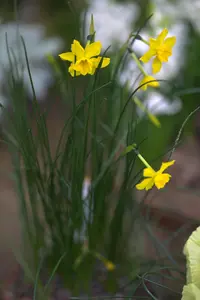
Jonquil, Narcissus jonquilla, is a small bulb-forming perennial in the daffodil group, valued for its fragrant, bright yellow spring flowers. It typically produces several slender, tubular blooms per stem above narrow, grass-like leaves, creating a neat clump in borders or containers.

This species is native to the Iberian Peninsula, where it grows in open, sunny meadows and light woodlands with well-drained soils. It is generally easy to grow in temperate climates, as long as the bulbs do not sit in waterlogged ground.

For most gardeners, how to care for jonquil focuses on providing full sun, moderately moist but free-draining soil, and a resting period after flowering so bulbs can recharge.

Main Plant Requirements

Care Difficulty

Easy Care

Light Preference

Full Sun

Water Requirements

Moderate Water

Temperature Preference

Cool Climate

Hardiness Zone

4–9

Soil Texture

Sandy, Loamy, Organic-rich

Soil pH

Acidic (5.5–6.5), Slightly acidic (6.5–7.0)

Soil Drainage

Well-drained

Fertilization

Minimal (feed rarely)

Get Personalized Care Plan

Scan your plant to receive care tips personalized for your specific plant

Available on iOS and Android

How to Care for the jonquil

This spring-blooming bulb prefers bright, direct light during its active growth period for strong flowering.

  • Provide 6–8 hours of direct sun daily, with morning sun and light afternoon shade ideal in warm regions for jonquil.
  • In hot summer climates, allow bulbs to go dormant and avoid intense late-afternoon sun that can overheat soil and stress foliage.
  • If grown in light partial shade (3–4 hours sun), expect fewer but still acceptable flowers; too much shade causes weak, floppy leaves.

This bulb prefers moderate, well-timed moisture rather than constantly wet soil.

  • From shoot emergence to 2–3 weeks after flowering, water when the top 3–5 cm of soil feel dry, then soak thoroughly and let excess drain away.
  • Use sharply drained soil or raised beds so water does not pool around Narcissus jonquilla bulbs, which are prone to rot in soggy conditions.
  • Reduce watering once foliage begins yellowing and allow soil to dry almost completely during summer dormancy, avoiding shriveled bulbs as a sign of severe underwatering.

This hardy bulb needs cool to mild conditions for proper rooting and flowering.

  • For active growth, aim for 50–65°F (10–18°C); flowers last longer and stems stay sturdier in this cooler range.
  • Bulbs need a cold period around 35–45°F (2–7°C) for 8–12 weeks to initiate flowering, and tolerate winter down to about 10–15°F (-12 to -9°C) in well-drained soil.
  • During hot summers, sustained temperatures above 85°F (29°C) can stress bulbs; provide mulch to moderate soil heat and avoid planting near heat-reflecting walls.

This species grows well in typical indoor humidity without special adjustments.

Narcissus jonquilla bulbs prefer loose, aerated soil that drains quickly yet holds moderate moisture.

  • Use a sandy or loamy mix with roughly 50–60% mineral content (garden loam and coarse sand) plus 40–50% composted organic matter.
  • Ensure sharply draining structure by adding coarse sand or small grit; avoid mixes that stay wet or compacted.
  • Aim for slightly acidic to neutral pH, around 6.0–7.0, which supports nutrient availability and healthy root growth.
  • Improve aeration by avoiding fine peat-heavy potting mixes alone, which can collapse around bulbs and promote rot.

This species is well suited to container growing outdoors for seasonal display.

  • Select a pot at least 20–25 cm deep to allow full bulb and root development without crowding or layering too tightly.
  • Choose a heavy, stable container material such as ceramic or clay so tall flower stems do not tip the pot in wind.
  • Raise the container slightly on pot feet or bricks to speed drainage from the base and prevent water collecting around the bulbs.

This bulb performs well in average garden soil but responds to light feeding during active growth.

  • Apply a balanced liquid fertilizer (around 10-10-10) at 1/2 strength every 2–3 weeks from shoot emergence until 4–6 weeks after flowering.
  • In richer soils, a thin layer of compost in early spring usually provides enough nutrients for jonquil bulbs.
  • Avoid high-nitrogen products, which push leafy growth at the expense of flowers and can weaken bulbs.
  • Stop feeding once foliage begins to yellow and the plant enters dormancy, and do not fertilize dry, dormant bulbs.

Narcissus jonquilla needs only simple post-flowering cleanup rather than true structural pruning.

  • Deadhead spent flower stems in spring by cutting them at the base with clean scissors or hand pruners.
  • Leave green foliage intact until it yellows naturally, so leaves can photosynthesize and recharge the bulbs for next year’s blooms.
  • Remove any damaged, diseased, or badly bent leaves at the base to improve air flow and reduce disease risk.
  • Avoid tying or braiding the foliage, as this restricts leaf surface and can weaken overall plant vigor.

This species is usually grown in the ground and is moved only when clumps become crowded or flowering declines.

  • Plan to lift and divide clumps every 4–6 years, or when flowering decreases and bulbs emerge at the soil surface.
  • Transplant Narcissus jonquilla in late summer to early fall, after foliage has died back and bulbs are dormant.
  • Gently lift bulbs with a fork, separate offsets by hand, and discard any soft or diseased bulbs to limit spread of rot.
  • Replant bulbs at 2–3 times their height, water lightly to settle soil, then keep evenly moist but not waterlogged to minimize root stress.

Propagation relies mainly on bulb division rather than seed, which is slow and less predictable.

  • Divide mature clumps in late summer or early fall when the bulbs are fully dormant and foliage has disappeared.
  • Lift the clump carefully, brush off loose soil, and separate offsets, ensuring each bulb is firm and has an intact basal plate.
  • Replant divisions at 2–3 times bulb height in well-drained soil, spacing 8–10 cm apart for good air movement and future expansion.
  • Seeds may be sown fresh in a well-drained, gritty mix, but seedlings take several years to reach flowering size.

Established Narcissus jonquilla bulbs are hardy in most temperate climates and usually need minimal winter care in the ground.

  • In cold regions (roughly to USDA zone 5), a 5–8 cm layer of mulch helps insulate the soil against repeated freeze–thaw cycles.
  • Avoid waterlogged winter soils, which increase bulb rot; improve drainage or plant on a slight slope or raised bed.
  • Move containers to a sheltered, unheated spot where soil remains cool but not deeply frozen, such as an attached garage or cold frame.

Care Tips

Post-bloom deadheading

After flowers fade, cut off the spent flower heads and seed pods only, leaving all green leaves intact so the bulbs redirect energy into next year’s growth instead of seed production.

Foliage tie-back timing

Wait until the foliage has yellowed and softened naturally, then gently fold and loosely tie the leaves in small bundles to keep beds tidy without stopping photosynthesis too early.

Bulb crowding check

Every 3–4 years, mark clumps that flower poorly, then lift and divide bulbs in late summer when the foliage is fully gone, replanting offsets at the recommended spacing to restore bloom quality.

Rodent and squirrel deterrence

In areas with heavy rodent or squirrel activity, plant bulbs through a sheet of galvanized hardware cloth and cover with the same mesh just under the soil surface to physically block digging and feeding.

Forcing in pots

For compact jonquil indoor care, pot bulbs close together in a shallow container, cold-chill them at 35–45°F for 10–12 weeks, then move to bright, cool light to obtain shorter, sturdier flowering stems.

Common Pests and Diseases

Narcissus bulb fly

This pest is a large fly whose larvae tunnel into jonquil bulbs, causing weak growth, yellowing foliage, and eventual collapse of affected bulbs. Symptoms include hollow or mushy bulbs when cut open.

Solution

Lift and inspect bulbs if plants emerge weakly or collapse, discarding any infested or hollow bulbs and never composting them. In areas with a known problem, cover bulb beds with fine mesh from late spring to midsummer to prevent egg-laying, plant bulbs slightly deeper where climate allows, and keep the planting area free of unused bulbs that can host larvae.

Basal rot

This disease is a fungal infection, often caused by Fusarium species, that starts at the base of the bulb and leads to brown, dry, and crumbly tissue, poor emergence, and stunted or distorted leaves. Symptoms include a pinkish or white fungal growth on cut bulb surfaces in advanced cases.

Solution

Remove and destroy all symptomatic bulbs and any obviously affected debris, and avoid replanting jonquils in the same spot for several years. Always plant only firm, healthy bulbs in well-drained soil, avoid mechanical damage when handling bulbs, and ensure good air circulation and moderate fertility to reduce stress and lower infection risk as part of Narcissus jonquilla care.

Narcissus eelworm

This pest is a microscopic nematode that invades bulbs and foliage, leading to twisted leaves, stunted growth, and brownish patches or streaks on leaves and bulb scales. Symptoms include bulbs that feel soft or spongy and show brown ring patterns when cut.

Solution

Rogue out and destroy all suspect plants and bulbs, including any from the same cluster, to reduce the nematode population. Do not replant narcissus in the affected soil for several years; instead, use fresh, certified nematode-free bulbs and practice strict hygiene by cleaning tools and trays between batches.

Narcissus smoulder

This disease is a Botrytis infection that attacks leaves, flower stalks, and sometimes bulbs, producing brown, water-soaked lesions that later show gray, dusty fungal growth. Symptoms include flower stalk collapse and premature withering of foliage in cool, damp weather.

Solution

Promptly remove and destroy infected leaves and spent flowers, and thin crowded clumps to improve airflow so foliage dries quickly after rain or watering. Avoid overhead watering, keep the soil surface relatively clean of plant debris, and in severe or recurring cases, use a labeled ornamental bulb fungicide as a preventative spray during prolonged cool, wet periods.

Bulb scale mite

This pest is a tiny mite that feeds within jonquil bulbs, causing slow decline, weak shoots, and poor flowering, often following previous injury or disease. Symptoms include dusty, brown scales inside the bulb and failure of offsets to develop properly.

Solution

Discard heavily infested bulbs and do not reuse stored material that shows internal browning and dust-like residue between scales. Store only clean, undamaged bulbs in cool, dry, well-ventilated conditions, and avoid overheating during storage, as high temperatures favor mite buildup; if needed, use a hot-water treatment or a labeled miticide dip on dormant bulbs according to product directions.

Interesting Facts

Naturally fragrant clusters

This species produces several small flowers per stem, each with a strong, sweet fragrance that is notably more intense than many other cultivated daffodil types.

Mediterranean wetland origin

It is native to the Iberian Peninsula and parts of southwestern Europe, where it grows in seasonally moist meadows and streamside habitats that dry out in summer.

Narrow rush-like leaves

Its foliage is unusually fine and threadlike compared with most daffodils, with cylindrical, rush-like leaves that inspired the species name jonquilla, meaning little rush.

Botan icon

Did you know?

Narcissus jonquilla played a key role in early daffodil breeding in Europe, contributing its strong fragrance and multi-flowered stems to many historic garden hybrids that are still grown today.

FAQs about jonquil

Lack of flowering often comes from insufficient chilling in winter, overcrowded or undivided bulbs, or depleted nutrients. Allow foliage to mature naturally after bloom, then divide congested clumps and follow consistent Narcissus jonquilla care for future seasons.

Grow Healthy Plants with Botan Care

Keep your plants happy and healthy with plant identification, disease detection, and easy care guidance.

Botan plant care app — identify plants on mobile

Explore More Plants