


Controlled pot crowding
Leave bulbs moderately crowded in a wide, shallow container and only divide clumps when flowering declines, as this plant often blooms better when several bulbs mature together.

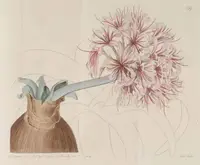
Ground lily (Ammocharis coranica) is a bulb-forming perennial from arid regions of southern Africa. It grows from a large, flattened bulb that often sits partly above the soil surface. Leaves appear in a broad, low rosette, followed by a rounded head of starry, fragrant flowers on a short stalk. The plant has a strong seasonal rhythm, with distinct growth and rest periods that influence how to care for Ground lily. It prefers bright light, very free-draining sandy soil, and dry conditions during dormancy, which makes it more suitable for patient growers who can avoid overwatering.

Care Difficulty
Moderate Care

Light Preference
Full Sun

Water Requirements
Low Water

Temperature Preference
Tropical / Frost Sensitive

Hardiness Zone
10–11

Soil Texture
Sandy, Loamy

Soil pH
Slightly acidic (6.5–7.0), Neutral (7.0)

Soil Drainage
Well-drained

Fertilization
Minimal (feed rarely)
Scan your plant to receive care tips personalized for your specific plant
Available on iOS and Android
Ammocharis coranica needs strong, dry-climate light that mimics its open habitat.
This bulb prefers a pronounced dry rest and is easily damaged by excess moisture.
This species is adapted to warm, dry climates with distinct cool, dry winters.
Ammocharis coranica handles low indoor humidity well and rarely needs special humidity management.
Ammocharis coranica prefers a very free-draining, sandy mix that dries quickly around the bulb.
This species is suitable for container growing when the bulb is kept high in a shallow, fast-draining pot.
Ammocharis coranica benefits from light, targeted feeding rather than heavy fertilization.
Pruning needs for Ammocharis coranica are minimal and mainly focused on hygiene.
This bulb prefers stability, so repotting or transplanting should be infrequent and deliberate.
Ammocharis coranica is usually propagated from offsets or seeds under warm, bright conditions.
This bulb is not fully frost hardy and needs protection in colder climates.

Plant Health Check
Not sure what's wrong with your plant? Check your plant's health inside the app.
This species naturally grows in deep Kalahari sands, with its large bulb often buried well below the surface while only the leaf rosette and inflorescence appear above ground.
Unlike many geophytes that leaf out in cooler seasons, it produces a flat, spreading rosette of strap-like leaves in the hot, wet summer and then goes completely dormant in the dry winter.
The plant produces spherical heads of pale pink, strongly scented flowers on a short stalk, with fragrance that is most noticeable in the evening and at night, which helps attract nocturnal pollinators.

In its native southern African range, old bulbs can become so large and deeply seated in the sand that only the flower head appears to emerge from bare ground, giving the impression of a ball of pink flowers arising directly from the soil with no visible leaves or stem.
Lack of flowers usually comes from insufficient summer warmth, too little light, or the bulb being buried too deep. This plant often needs several years of strong growth and a marked dry rest before flowering reliably.
Keep your plants happy and healthy with plant identification, disease detection, and easy care guidance.

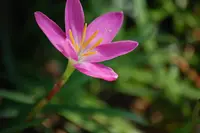
rosepink zephyr lily
Zephyranthes minuta
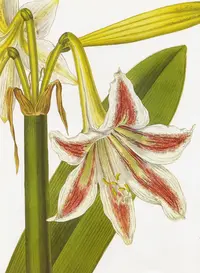
Hippeastrum vittatum
Hippeastrum vittatum
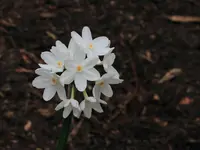
paperwhite narcissus
Narcissus papyraceus
sandbog deathcamas
Zigadenus glaberrimus
Brazilian gloxinia
Sinningia speciosa
cyclamen
Cyclamen purpurascens
Zephyranthes gracilifolia
Zephyranthes gracilifolia
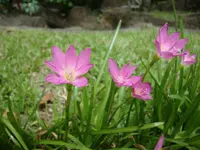
Cuban zephyrlily
Zephyranthes rosea