


Handle Toxic Bulbs
Use gloves when dividing or relocating clumps, label the planting area clearly, and keep all bulbs and seeds away from children, pets, and livestock due to this species’ high toxicity.

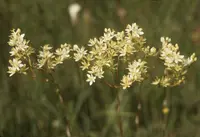
Sandbog deathcamas (Zigadenus glaberrimus) is a bulb-forming perennial wildflower known for its slender grass-like leaves and upright spikes of creamy white flowers. It typically grows in moist, open habitats such as coastal plains, wet pine savannas, and boggy sandhills in the southeastern United States.
This species has a delicate look but is naturally adapted to nutrient-poor, periodically wet, sandy or peaty soils. It can be challenging in cultivation because it resents disturbance and requires consistent moisture without long-term waterlogging. Anyone who wants to learn how to care for sandbog deathcamas should understand its specific native habitat first.
Toxic alkaloids throughout the plant make it highly poisonous to livestock, pets, and humans, which limits its use in home gardens and requires careful handling.

Care Difficulty
Hard Care

Light Preference
Full Sun

Water Requirements
Keep Soil Moist

Temperature Preference
Warm Climate

Hardiness Zone
7–9

Soil Texture
Sandy, Loamy, Organic-rich

Soil pH
Acidic (5.5–6.5)

Soil Drainage
Waterlogged tolerant

Fertilization
Minimal (feed rarely)
Scan your plant to receive care tips personalized for your specific plant
Available on iOS and Android
Zigadenus glaberrimus thrives in strong, open light similar to its native wet pine savannas.
This species prefers consistently moist conditions that never stay stagnant or waterlogged.
This wetland perennial is hardy to cool winters but grows best in mild to warm conditions.
Humidity is not a major factor for Zigadenus glaberrimus, which is adapted to open, often breezy habitats.
This species prefers open, sandy, moist but aerated soil that mimics wet pine flatwoods and bog margins.
This species can be grown in containers, but only when the pot is set up to mimic a consistently moist, sandy, bog-like substrate without standing water.
This native bulb usually needs little feeding, as sandbog deathcamas is adapted to low‑nutrient, acidic soils.
Zigadenus glaberrimus needs only minimal pruning, aimed at tidiness and safety.
Transplanting this bulb is done infrequently and mainly when clumps are overcrowded or a site change is needed.
Zigadenus glaberrimus is usually propagated by seed or careful bulb division, but handling requires caution due to toxicity.
This species is fairly cold hardy in much of its native range and usually needs limited winter attention.

Plant Health Check
Not sure what's wrong with your plant? Check your plant's health inside the app.
This species is a bulbous perennial in the bunchflower family (Melanthiaceae) and is highly poisonous to humans and livestock due to steroidal alkaloids concentrated in its bulbs and leaves.
It occurs naturally in wet pine flatwoods, wet savannas, and sand bogs of the southeastern United States, where it is adapted to acidic, nutrient-poor, seasonally saturated soils.
Unlike many spring-flowering bulbs, it typically flowers in late summer to early fall, producing tall stalks with greenish-white, star-shaped flowers when many other meadow species are already past peak bloom.

Grazing animals in its native range can suffer fatal poisoning after eating only small amounts of this plant, and in some areas local ranchers historically learned to move livestock before its flowering stems emerged to reduce the risk of accidental ingestion.
Yes. All parts contain potent alkaloids that affect the nervous system and heart. Ingestion can be fatal for livestock, pets, and humans. Never taste the bulbs or foliage, and keep animals from grazing areas where this species grows.
Keep your plants happy and healthy with plant identification, disease detection, and easy care guidance.

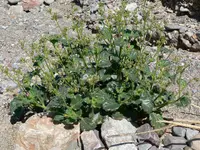
broad-leaf gilia
Aliciella latifolia
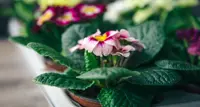
Brazilian gloxinia
Sinningia speciosa
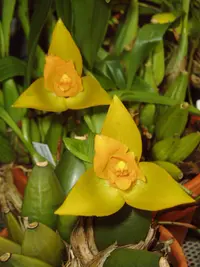
Sweet scented Lycaste
Lycaste aromatica
narrowleaf mountainmint
Pycnanthemum tenuifolium

spotted calla lily
Zantedeschia albomaculata
cyclamen
Cyclamen purpurascens
prickly rose
Rosa acicularis
 POPULAR
African False Hosta
Drimiopsis maculata