Bigleaf lupine Care (Lupinus polyphyllus)

Also known as: bigleaf lupine, large-leaved lupine, big-leaved lupine, many-leaved lupine, Russell lupin, Blue-Pod Lupine, Largeleaf lupine
Bigleaf lupine

About Bigleaf lupine

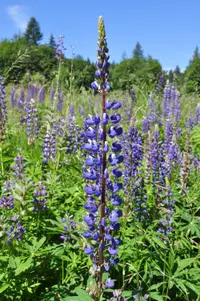
Bigleaf lupine (Lupinus polyphyllus) is a perennial flowering plant known for tall, colorful flower spikes and divided, palmlike leaves. It forms clumps that spread over time, giving strong vertical structure in borders and meadow-style plantings.

This species is native to western North America but is widely grown in temperate gardens and can naturalize in suitable climates. It prefers cool conditions, sun to light shade, and moist, well-drained, slightly acidic soil.

The plant is relatively easy to grow if given consistent moisture and not exposed to extreme heat or very poor drainage. Understanding how to care for Bigleaf lupine starts with matching its need for cool roots, adequate water, and stable soil conditions.

Main Plant Requirements

Care Difficulty

Moderate Care

Light Preference

Full Sun

Water Requirements

Moderate Water

Temperature Preference

Cold Hardy

Hardiness Zone

4–8

Soil Texture

Sandy, Loamy, Organic-rich

Soil pH

Acidic (5.5–6.5), Slightly acidic (6.5–7.0)

Soil Drainage

Well-drained

Fertilization

Minimal (feed rarely)

Get Personalized Care Plan

Scan your plant to receive care tips personalized for your specific plant

Available on iOS and Android

How to Care for the Bigleaf lupine

Lupinus polyphyllus thrives in bright outdoor conditions with several hours of direct sun each day.

  • Provide 6–8 hours of direct sun daily, with morning sun and light afternoon shade ideal, especially in hotter regions.
  • Tolerates light partial shade (3–4 hours sun), but flowering will be reduced and stems may stretch toward the light.
  • In summer, protect from intense late-afternoon sun to reduce leaf scorch; in lower-light sites, expect fewer, shorter Bigleaf lupine flower spikes.

Lupinus polyphyllus prefers evenly moist, well-drained soil and dislikes both drought and waterlogging.

  • Water when the top 3–5 cm of soil feels dry, giving a deep soak so moisture reaches the root zone rather than frequent shallow sips.
  • In spring and flowering season, monitor weekly; in cool, rainy periods reduce watering, and in hot, dry spells check soil every 2–3 days.
  • Yellowing lower leaves and soft, wilting stems suggest overwatering or poor drainage, while crisp, drooping foliage indicates the plant has stayed dry too long.

This perennial handles cool climates well but has clear limits for both heat and cold.

  • Active growth is strongest at 55–70°F (13–21°C), with flowering best in cool to mild late spring and early summer conditions.
  • Mature plants tolerate winter lows near 0°F (−18°C) with mulch protection, but young plants are more vulnerable below 20°F (−6°C).
  • Heat above 85°F (29°C), especially with dry soil, can slow growth and shorten bloom; provide mulch and some afternoon shade during hot spells.

Lupinus polyphyllus tolerates a wide humidity range and does not usually need special humidity management outdoors.

Lupinus polyphyllus prefers free-draining, moderately fertile soil that does not stay wet.

  • Use a light loam or sandy loam with some organic matter, not heavy clay or pure sand.
  • Aim for slightly acidic to neutral pH, around 6.0–7.0, to support nutrient uptake and nodule-forming root bacteria.
  • Improve drainage and aeration by incorporating coarse sand or fine gravel into compact or clay-based garden soil.
  • Avoid waterlogged spots, deep shade, or thick mulch directly against the crown, which can encourage rot.

This species can be grown in containers but performs more reliably in open ground.

  • Choose a deep container at least 30–40 cm tall so the strong taproot can develop without kinking.
  • Use a heavy or weighted pot to prevent tall flower spikes from tipping the container in wind.
  • Raise the container on pot feet or bricks so drainage holes stay clear and excess water escapes quickly.

Lupinus polyphyllus is a light feeder that prefers lean, well-drained soil and only modest fertilization.

  • Apply a thin layer of garden compost or well-rotted manure in early spring to support flowering without excess nitrogen.
  • If needed, use a balanced slow-release fertilizer (around 10-10-10) at half strength once in spring for Bigleaf lupine.
  • Avoid feeding during summer dormancy or winter, as the plant’s growth slows and nutrients are not efficiently used.
  • Do not overapply nitrogen-rich products, which encourage soft leaf growth at the expense of flower spikes.

Pruning Lupinus polyphyllus focuses on cleaning spent growth and encouraging a tidy habit and repeat bloom.

  • Cut back spent flower spikes to the next set of leaves in late spring or early summer to encourage possible rebloom.
  • Remove dead, damaged, or diseased stems at the base using clean, sharp hand pruners to limit infection spread.
  • Thin overcrowded stems lightly to improve air circulation and reduce foliar disease in humid conditions.
  • Shear the plant down to low basal foliage after flowering finishes to maintain compact shape and promote fresh leaves.

This species is usually grown in the ground; transplanting must be done carefully due to its deep taproot.

  • Transplant young plants in early spring or early fall, before the taproot becomes extensive and harder to move.
  • Look for signs such as roots circling a pot, water running straight through, or stalled growth if grown in containers.
  • Move to a slightly larger, deep container or prepared garden hole, disturbing the root ball as little as possible.
  • Water thoroughly after transplanting and shade from intense sun for a few days to limit transplant shock and wilting.

Lupinus polyphyllus is most reliably propagated from seed, with division or cuttings used less often due to the taproot.

  • Sow fresh seeds in late summer or early spring in trays or directly outdoors where plants will grow.
  • Scarify hard seed coats gently with sandpaper and provide cool, moist conditions to improve germination.
  • Use a free-draining, low-nutrient medium and keep it evenly moist but not waterlogged until seedlings establish.
  • Transplant seedlings when small, handling the root carefully and planting them into final positions with minimal disturbance.

Established plants are generally cold hardy, so winter care for Lupinus polyphyllus is simple in most temperate climates.

  • After the first hard frost, cut back dead stems to just above ground level to reduce disease carryover.
  • Apply a light mulch layer (5–8 cm) over the root zone in late fall in colder regions to buffer freeze–thaw cycles.
  • In containers, move pots to a sheltered, unheated but frost-free or slightly protected spot to prevent root damage.

Care Tips

Stake Tall Spikes

Insert slender stakes on the windy side of young flower spikes and tie loosely with soft ties to prevent stem snapping during storms, especially in exposed sites.

Deadhead For Rebloom

Cut spent flower spikes down to a healthy leaf rosette as soon as petals drop to encourage a lighter second flush of blooms and to reduce unwanted self-seeding.

Winter Crown Protection

In colder regions, apply a light, airy mulch such as shredded bark around but not directly on top of the crown in late fall to reduce freeze–thaw heaving of the root system.

Root-Friendly Transplanting

If moving plants, lift with a deep, wide root ball and replant immediately at the same depth, as the long taproot is easily damaged and does not tolerate drying out.

Slug And Snail Management

From early spring, place slug traps or barriers around emerging shoots and remove hiding spots such as dense debris nearby, since early leaf damage can severely weaken plants when growing Bigleaf lupine.

Common Pests and Diseases

Lupine aphids

This pest forms dense, pale blue-gray colonies on stems and flower spikes, sucking sap and weakening plants. Symptoms include distorted growth, sticky honeydew, and sooty mold on leaves and flowers.

Solution

Prune off heavily infested spikes, then wash remaining colonies off with a strong stream of water, repeating every few days. For persistent outbreaks, use an insecticidal soap or neem oil spray directed at stems and undersides of leaves, and avoid excessive nitrogen fertilization that encourages soft, aphid-prone growth.

Lupine blister beetles

These insects chew large, ragged holes in leaves and can quickly strip foliage and flower spikes. This pest is often seen in groups feeding on upper growth during warm weather.

Solution

Hand-pick beetles in early morning when they are sluggish and drop them into soapy water, wearing gloves to avoid skin irritation. In larger plantings, floating row covers during peak beetle activity and removal of nearby weedy hosts can reduce damage while preserving beneficial insects.

Powdery mildew

This disease appears as white, powdery patches on leaves, stems, and sometimes flower stalks, especially in crowded or shaded plantings. Symptoms include yellowing and premature leaf drop, which weakens plants over time.

Solution

Remove and discard affected leaves to reduce spore spread, then improve airflow by spacing plants and thinning surrounding vegetation. Water at soil level, avoid overhead watering late in the day, and if needed apply a sulfur or potassium bicarbonate fungicide labeled for ornamental perennials at the first sign of infection.

Fusarium wilt

This disease causes progressive wilting, yellowing, and collapse of individual stems, often starting on one side of the plant, while roots may appear brown or discolored. Symptoms include stunted growth and plants that do not recover after watering.

Solution

Promptly remove and destroy affected plants, including as much root material as possible, and avoid replanting lupines in the same spot for several years. Improve drainage, avoid waterlogged or compacted soils, and select healthy, disease-free transplants to reduce future risk when growing Bigleaf lupine.

Brown spot (leaf spot)

This disease produces small brown to purplish spots on leaves that can enlarge and merge, causing yellowing and leaf drop in humid or wet conditions. Symptoms include a speckled or scorched appearance on lower leaves first, then moving upward.

Solution

Remove and discard heavily spotted foliage and any fallen leaves around the plant to lower the source of infection. Water at the base in the morning, increase spacing for better air movement, and if spots continue to spread, use a copper-based or chlorothalonil fungicide labeled for leaf spots on ornamentals according to package directions.

Interesting Facts

Nitrogen-fixing powerhouse

This species forms root nodules with Rhizobium bacteria that convert atmospheric nitrogen into forms usable by plants, which can significantly enrich poor soils over time.

Highly variable flower colors

Wild populations show a wide range of colors and bicolor patterns, including blue, purple, pink, white, and multicolored spikes, and this natural variability has been widely used in breeding ornamental cultivars.

Invasive in many regions

Although native to western North America, it has become an invasive species in parts of northern and central Europe and New Zealand, where it spreads along roadsides and riverbanks and can displace native grassland plants.

Botan icon

Did you know?

In its native range, this species was an important component of early ecological restoration efforts, used to stabilize disturbed slopes and road cuts because its deep root system binds soil while its nitrogen-fixing capacity gradually improves degraded substrates.

FAQs about Bigleaf lupine

This species self-seeds freely and can form large colonies over time, especially in open, disturbed ground. Deadheading spent flower spikes and removing unwanted seedlings reduces spread and helps control populations in smaller gardens or natural areas.

Grow Healthy Plants with Botan Care

Keep your plants happy and healthy with plant identification, disease detection, and easy care guidance.

Botan plant care app — identify plants on mobile

Explore More Plants