Bulb clump management
Lift and divide congested clumps every 3–4 years in late winter or very early spring, replanting the healthiest, firm bulbs 5–8 cm apart to maintain strong flowering and avoid overcrowding stress.

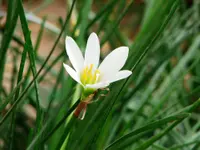
Autumn zephyrlily (Zephyranthes candida) is a small bulbous perennial often grown for its neat grass-like foliage and clean white, crocus-like flowers. It typically forms low clumps that send up blooms in late summer to fall, especially after rain.
This species is native to South America but is widely used in warm-temperate and subtropical gardens as a border edging, groundcover, or in pots. Flowers open in good light and last a few days, with new buds appearing in waves.
It is generally considered easy to grow, as the bulbs tolerate short dry spells and light neglect once established. To care for Autumn zephyrlily, provide plenty of sun, moderately moist but well-drained soil, and avoid waterlogged conditions.

Care Difficulty
Easy Care

Light Preference
Full Sun

Water Requirements
Moderate Water

Temperature Preference
Warm Climate

Hardiness Zone
7–10

Soil Texture
Sandy, Loamy, Organic-rich

Soil pH
Acidic (5.5–6.5), Slightly acidic (6.5–7.0)

Soil Drainage
Well-drained

Fertilization
Light (every 4–6 weeks)
Scan your plant to receive care tips personalized for your specific plant
Available on iOS and Android
This bulb prefers bright conditions that mimic an open, lightly sheltered meadow.
This bulb prefers rhythmic wet–dry cycles rather than constantly moist soil.
This species grows best in mild, frost-free conditions with warm summers.
This species handles typical indoor humidity well and rarely needs special adjustments.
Zephyranthes candida prefers a loose, fast-draining mix that still holds moderate moisture around the bulbs.
This bulb is well suited to container growing on patios, balconies, or small outdoor spaces.
Zephyranthes candida responds well to light feeding but does not require heavy fertilization for reliable flowering.
Zephyranthes candida needs minimal pruning, mainly to keep the clump tidy and support healthy bulb performance.
This bulb-forming species prefers to stay slightly crowded, so repotting or transplanting is infrequent but sometimes helpful.
New plants of Zephyranthes candida are most reliably produced by bulb division, with seeds as a slower secondary option.
In mild climates Zephyranthes candida is generally hardy and needs little winter attention once established in the ground.

Plant Health Check
Not sure what's wrong with your plant? Check your plant's health inside the app.
This species often initiates flowering after late-summer or early-autumn rains, responding to changes in soil moisture and temperature that mimic its native South American seasonal patterns.
In mild climates it can self-seed into dense lawn-like clumps, forming low, grass-like foliage with scattered white flowers that persist through much of the warm season.
The bulbs tolerate moderately alkaline, clay-heavy soils better than many ornamental geophytes, which helps explain their success and persistence in some urban and roadside plantings.

Zephyranthes candida has become so widely naturalized in regions like southern China that in some areas it is treated as part of the traditional local flora, despite originating in South America.
Lack of blooms usually comes from insufficient dormancy, overcrowded bulbs, or low nutrition. Allow foliage to die back naturally, avoid constant moisture in the off-season, and divide congested clumps every few years to restore flowering.
Keep your plants happy and healthy with plant identification, disease detection, and easy care guidance.