Snow cover management
Leave a light, even snow cover over plants in winter as insulation, but gently break up and remove compacted, icy layers that could smother crowns and encourage rot.

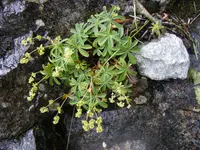
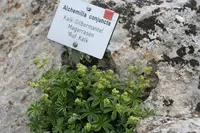
Limestone Alp Lady's Mantle (Alchemilla alpigena) is a compact, clump-forming perennial from mountain regions of central and southern Europe. It typically grows in rocky, lime-rich slopes and alpine meadows. Plants form low mounds of rounded, softly lobed leaves that collect dewdrops, with small yellow-green flowers held in airy clusters above the foliage. The species prefers cool conditions and well-drained, alkaline soils, which makes it best suited to rock gardens and edges rather than hot, humid sites. Once established, it is relatively hardy and low maintenance, so it is not difficult to care for Limestone Alp Lady's Mantle in suitable climates.

Care Difficulty
Easy Care

Light Preference
Partial Shade

Water Requirements
Moderate Water

Temperature Preference
Cold Hardy

Hardiness Zone
4–7

Soil Texture
Loamy, Rocky, Organic-rich

Soil pH
Acidic (5.5–6.5), Slightly acidic (6.5–7.0)

Soil Drainage
Moist but well-drained

Fertilization
Minimal (feed rarely)
Scan your plant to receive care tips personalized for your specific plant
Available on iOS and Android
This alpine perennial prefers cool conditions with bright but softened light rather than intense sun.
This species prefers evenly moist, cool soil that drains freely and never stays waterlogged.
This alpine plant thrives in cool to mild conditions and shows strong cold tolerance once established outdoors.
Humidity is rarely a concern for Alchemilla alpigena in typical outdoor conditions.
Alchemilla alpigena prefers cool, moist, well-structured mineral soils that never stay waterlogged.
This species can adapt to container growing when moisture and drainage are managed carefully.
This alpine perennial stays compact and floriferous with modest, well-timed feeding.
Thoughtful pruning keeps Alchemilla alpigena neat, encourages fresh foliage, and supports flowering performance.
This species is usually grown in rock gardens or borders, so transplanting mature clumps is more common than repotting.
Alchemilla alpigena is most often propagated by division, with seed used where many plants are needed.
This alpine lady's mantle is cold hardy and usually needs minimal winter attention in temperate climates.

Plant Health Check
Not sure what's wrong with your plant? Check your plant's health inside the app.
This species is naturally restricted to limestone alpine habitats in parts of the Alps, growing in rocky turf and crevices at higher elevations where many lowland plants cannot survive.
It has a strong preference for calcareous, lime-rich substrates, often occurring where thin soils overlay exposed limestone, which is reflected in the common name limestone alp lady's mantle.
Compared with many other lady's mantle species, it forms a low, tight cushion of leaves, an adaptation that helps it resist strong mountain winds and reduce moisture loss in exposed alpine sites.
This species forms a low, slowly spreading clump rather than running aggressively. It can self-seed modestly in suitable rock or alpine beds, but usually stays contained and is easy to edit or divide if needed.
Keep your plants happy and healthy with plant identification, disease detection, and easy care guidance.