Encourage Dense Clumps
Shear spent flower stalks back by 2–3 in after the main bloom flush to trigger compact new growth and a heavier second wave of flowering.

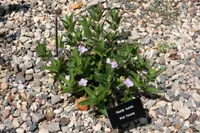
Fringeleaf wild petunia (Ruellia humilis) is a compact, herbaceous perennial native to prairies and open, rocky sites in central and eastern North America. It forms low clumps with narrow, slightly fuzzy leaves and produces soft lavender to pale purple, petunia-like flowers through the warm season.
The plant has a naturally tidy habit and works well in sunny borders, meadows, and native plant gardens. It is adapted to dry, well-drained soils and shows good drought tolerance once established, which makes it relatively easy to maintain.
Because it is slow spreading and not aggressive, it suits small spaces and mixed plantings. Understanding how to care for fringeleaf wild petunia mainly involves providing full sun and avoiding poorly drained, constantly wet soil.

Care Difficulty
Easy Care

Light Preference
Full Sun

Water Requirements
Low Water

Temperature Preference
Cold Hardy

Hardiness Zone
4–9

Soil Texture
Sandy, Loamy, Rocky

Soil pH
Acidic (5.5–6.5), Slightly acidic (6.5–7.0)

Soil Drainage
Well-drained

Fertilization
Minimal (feed rarely)
Scan your plant to receive care tips personalized for your specific plant
Available on iOS and Android
Ruellia humilis thrives in open, bright conditions that mimic sunny prairies and dry meadows.
This species prefers evenly drying soil between rains rather than constantly moist conditions.
This hardy perennial tolerates a wide temperature range but responds best to warm growing conditions.
This prairie species handles typical indoor humidity but grows best in slightly dry to moderate air.
Ruellia humilis prefers loose, well-drained mineral soils that do not stay wet for long.
This species is suitable for containers, especially in sunny, well-drained outdoor spots.
This native perennial usually needs minimal feeding in garden soil, but light fertilization can support blooms in poor or sandy sites when caring for fringeleaf wild petunia.
Ruellia humilis benefits from light, periodic pruning to maintain a compact, floriferous habit.
This species is more often transplanted in the ground than repotted, as it is usually grown as a hardy native perennial.
Ruellia humilis is commonly propagated by seed or division in home gardens.
This native perennial is cold hardy through typical Midwestern and Northeastern winters and usually needs little special care.

Plant Health Check
Not sure what's wrong with your plant? Check your plant's health inside the app.
This species is native to dry prairies and open glades of the central United States, where it is adapted to thin, rocky, or sandy soils that heat up and dry out quickly in summer.
It develops a relatively deep taproot for its size, which allows the plant to survive extended dry periods and return reliably year after year as a small herbaceous perennial.
Its pale lavender, funnel‑shaped flowers open mainly in bright light and are especially attractive to native bees and small butterflies that fit easily into the narrow floral tube.

Unlike many ornamental Ruellia species that can become invasive in warm climates, Ruellia humilis is considered a regionally conservative native plant in much of its range and is often used in prairie restorations to support local pollinator communities without aggressive spread.
This species forms small clumps and slowly spreads by short rhizomes and self-seeding. It usually stays in place and is not considered aggressive. Seedlings are easy to thin if it appears in unwanted spots.
Keep your plants happy and healthy with plant identification, disease detection, and easy care guidance.