Use rainwater trays
Set the pot in a shallow tray with 0.5–1 cm of rainwater or distilled water and let it evaporate fully every few days before refilling to reduce mineral buildup while still keeping the roots consistently moist.

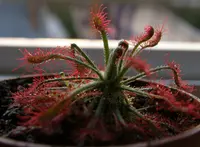
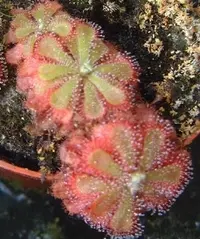
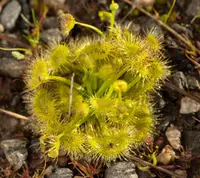
Drosera neocaledonica is a small carnivorous sundew native to New Caledonia, where it grows in open, nutrient-poor, often wet habitats. It forms low rosettes of narrow leaves covered in sticky, glandular hairs that trap small insects. These insects supplement the plant’s nutrition and are slowly digested on the leaf surface. The plant shows compact growth and can color up attractively under strong light. It is considered moderately challenging, as it needs consistently pure, mineral-free water and low-nutrient, acidic media. Stable moisture and bright light are key if you want to care for Drosera neocaledonica successfully.

Care Difficulty
Hard Care

Light Preference
Full Sun

Water Requirements
Aquatic

Temperature Preference
Tropical / Frost Sensitive

Hardiness Zone
11–12

Soil Texture
Sandy, Peaty, Organic-rich

Soil pH
Strongly acidic (4.5–5.5)

Soil Drainage
Waterlogged tolerant

Fertilization
Minimal (feed rarely)
Scan your plant to receive care tips personalized for your specific plant
Available on iOS and Android
This sundew thrives in bright conditions but needs protection from harsh midday sun.
This species prefers constantly moist, low-mineral conditions without drying out.
This tropical sundew prefers warm, stable temperatures without frost exposure.
This species prefers humid air to keep its carnivorous leaves functioning well.
Drosera neocaledonica requires a nutrient-poor, airy, and consistently moist substrate rather than standard houseplant potting soil.
This sundew is well suited to container culture when moisture and stability are managed carefully.
This carnivorous species gains most nutrients from prey, so fertilization for Drosera neocaledonica must stay minimal and highly diluted.
Pruning for Drosera neocaledonica is light and focuses on removing spent tissue to maintain healthy new growth.
Repotting keeps this sundew stable and prevents mineral buildup in its low-nutrient substrate.
This species is commonly propagated vegetatively to maintain its traits and avoid seed variability.
This tropical sundew is not frost hardy and needs warm, stable conditions during winter.

Plant Health Check
Not sure what's wrong with your plant? Check your plant's health inside the app.
This sundew occurs naturally only in a restricted area of New Caledonia, growing on nutrient-poor, often lateritic or sandy soils exposed to strong light and seasonal variation.
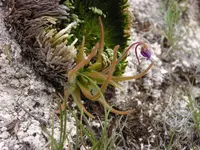
Unlike many sundews that remain rosette-forming, it develops a small, woody, upright stem with leaves spiraling around it, giving mature plants a miniature shrub-like appearance.
In strong light the leaves and tentacles often turn an intense red, which is thought to enhance attraction of insect prey and also provide some protection from high UV radiation.
This species usually performs better outdoors in bright, humid, mild climates that mimic its native habitat. Indoors it needs intense light, high humidity, and pure water, so conditions are harder to maintain but possible for dedicated growers.
Keep your plants happy and healthy with plant identification, disease detection, and easy care guidance.