Winter rest setup
Provide a cooler, slightly dimmer spot for 2–3 months in winter (around 50–59°F) to allow a mild dormancy, which helps the plant reset and produce stronger growth in spring.

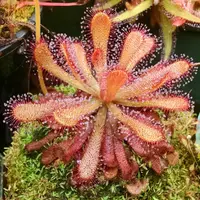
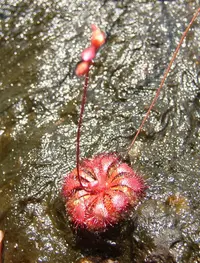
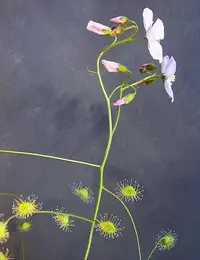
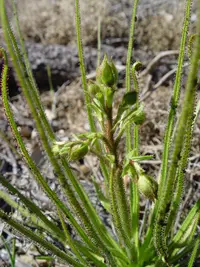
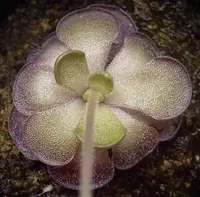
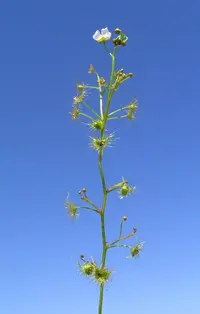
Drosera venusta is a small, rosette-forming carnivorous plant from South Africa. It grows low to the ground, with narrow leaves covered in sticky, glistening tentacles that trap insects. The leaves often show pink to reddish tones under strong light, giving the plant a delicate but striking appearance. In season, it sends up slender flower stalks holding small, usually pink blooms above the foliage. It naturally occurs in sunny, moist habitats with nutrient-poor, acidic soils. These traits make it sensitive to water quality and soil type but relatively forgiving if light and moisture are stable. Understanding how to care for Drosera venusta helps keep it compact, colorful, and actively insect-hunting indoors or in a greenhouse.

Care Difficulty
Moderate Care

Light Preference
Full Sun

Water Requirements
Keep Soil Moist

Temperature Preference
Tropical / Frost Sensitive

Hardiness Zone
Unknown

Soil Texture
Sandy, Peaty, Organic-rich

Soil pH
Strongly acidic (4.5–5.5)

Soil Drainage
Waterlogged tolerant

Fertilization
Minimal (feed rarely)
Scan your plant to receive care tips personalized for your specific plant
Available on iOS and Android
This sundew needs high light to maintain strong red coloration and sticky traps.
This species prefers consistently wet, low-mineral conditions at the roots.
This sundew prefers mild, frost-free conditions with stable temperatures.
This species prefers consistently humid air to maintain active dew production.
Use a very low-nutrient, airy, and consistently moist mix for Drosera venusta.
This sundew is well suited to container culture under controlled moisture conditions.
This carnivorous species gains most nutrients from captured insects, so Drosera venusta needs extremely light fertilization, if any.
Pruning for this sundew is minimal and focuses on hygiene rather than shaping.
Repotting helps maintain airy, low-mineral media for healthy roots and consistent dew production.
This sundew is commonly multiplied by leaf cuttings, division, and seeds under warm, bright conditions.
This species dislikes freezing conditions and needs protection in colder climates.

Plant Health Check
Not sure what's wrong with your plant? Check your plant's health inside the app.
This species occurs naturally only in a restricted area of the Cape region of South Africa, where it grows on nutrient-poor, often quartzitic sandstone substrates exposed to high light and regular winter rainfall.
It forms a compact, flat rosette that can tolerate relatively cool winter conditions for a sundew, remaining evergreen in mild climates rather than dying back to a resting bud as some related species do.
Under strong light, the leaves often develop intense orange-red to deep red pigmentation, produced by anthocyanins that help protect the plant from high ultraviolet radiation in its exposed native habitats.

In its native habitat, this sundew often grows in very thin, seasonally wet soils where few other plants can survive, effectively exploiting a niche where its insect-trapping leaves compensate for the extreme lack of available soil nitrogen and phosphorus.
Brown leaves usually come from mineral buildup, tap water use, low humidity, or intense direct sun scorch. Use rain, distilled, or reverse-osmosis water, keep the soil evenly damp, and provide bright light without harsh midday burning.
Keep your plants happy and healthy with plant identification, disease detection, and easy care guidance.