Lead Bladderwort Care (Utricularia livida)

Also known as: Leaden Bladderwort
Lead Bladderwort

About Lead Bladderwort

Lead bladderwort, Utricularia livida, is a small carnivorous plant that naturally grows in wet, nutrient-poor soils and shallow water. It uses tiny underwater bladders to trap microscopic animals for nutrition.

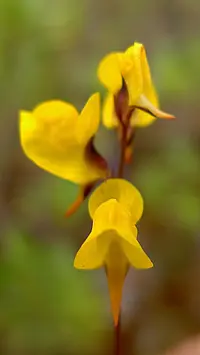
The plant usually forms low, mat-like growth with fine foliage and delicate pale purple or white flowers held above the leaves. It is native to parts of Africa and South America, often found in bogs, marsh edges, and seasonally wet grasslands.

In cultivation it suits terrariums, bog setups, or very wet pots, and prefers soft, low-mineral water and bright, filtered light. Once its moisture needs are understood, many growers find it relatively manageable and can learn how to care for Lead Bladderwort successfully.

Main Plant Requirements

Care Difficulty

Hard Care

Light Preference

Partial Shade

Water Requirements

Aquatic

Temperature Preference

Tropical / Frost Sensitive

Hardiness Zone

10–11

Soil Texture

Peaty, Organic-rich, Sandy

Soil pH

Strongly acidic (4.5–5.5), Acidic (5.5–6.5)

Soil Drainage

Waterlogged tolerant

Fertilization

Minimal (feed rarely)

Get Personalized Care Plan

Scan your plant to receive care tips personalized for your specific plant

Available on iOS and Android

How to Care for the Lead Bladderwort

This small carnivorous plant prefers bright, gentle light that mimics open, boggy habitats.

  • Provide 3–5 hours of soft morning sun with bright, filtered light the rest of the day; avoid harsh midday sun, especially in summer.
  • Tolerates light partial shade, but very dim sites cause weak, pale foliage and sparse flowering in Lead Bladderwort.
  • Outdoors, give dappled light under taller plants; in high-sun climates, use 30–40% shade cloth during the hottest months to prevent leaf scorch.

This bog-dwelling species needs consistently wet conditions and low-mineral water.

  • Keep the substrate saturated, never allowing the surface to dry; a shallow water tray or standing water at soil level mimics its natural marshy habitat.
  • Use rainwater, distilled, or reverse-osmosis water, as Utricularia livida is sensitive to mineral buildup and may decline in hard tap water.
  • Reduce standing water depth slightly in cooler months, but never let the medium become merely damp; wilting or crisp leaf tips often indicate underwatering.

This tropical to subtropical species prefers mild, stable temperatures without frost.

  • Aim for 65–80°F (18–27°C) for active growth, which suits most homes and mild outdoor climates.
  • Protect from cold below 40°F (4°C); freezing conditions damage the delicate roots and bladders, and repeated frosts can kill the plant.
  • In hot spells above 90°F (32°C), increase humidity and shade, and avoid hot, stagnant air to reduce stress and prevent foliage burn.

This species prefers consistently high humidity to grow well in cultivation.

  • Aim for 60–80% humidity, especially in heated or air-conditioned rooms where air dries out.
  • Lead Bladderwort tolerates brief dips to 40–50%, but prolonged dry air stunts growth and reduces flowering.
  • Crisping leaf edges, stalled new growth, or shrinking traps signal low humidity; use trays with water, clustered pots, or a humidifier to raise levels.

This carnivorous plant needs a very airy, nutrient-poor, consistently damp medium.

  • Use a mix of 1:1 sphagnum peat moss and silica sand or fine perlite to create a loose, open structure.
  • The substrate should stay moist to wet yet not muddy, allowing water to move freely through the pot.
  • Keep pH mildly acidic, roughly 4.5–6.5, which matches the boggy habitats of Utricularia livida in nature.
  • Avoid compost, fertilizers, bark-heavy mixes, and regular potting soil, which add nutrients and compact the medium, suffocating the delicate roots and traps.

This species is very suitable for container growing, especially shallow trays or pots.

  • Choose a wide, shallow container so the fine stolons can spread horizontally and form a dense mat of growth.
  • Use plastic or glazed ceramic pots, which slow evaporation and help keep the medium evenly wet without sudden drying.
  • Select a container deep enough to hold a standing water tray zone at the bottom without flooding the entire substrate surface.

Utricularia livida is a nutrient-sensitive carnivorous plant that needs very light feeding, if any.

  • Use only very weak fertilizer, such as 1/8–1/4 strength balanced NPK orchid or carnivorous-plant formula, never standard houseplant feeds.
  • Apply to the water, not directly on foliage, at most every 6–8 weeks during active warm-season growth.
  • Skip fertilization in winter or any dormancy-like slowdown to avoid mineral buildup and root damage.
  • Rely mainly on very pure, low-mineral water; Lead Bladderwort obtains much of its nutrition from its traps.

Pruning needs for Utricularia livida are minimal and focus on hygiene rather than shaping.

  • Trim dead or yellowing leaves and spent flower stalks at the base using small, clean scissors to limit rot and algae growth.
  • Remove any decomposing material from the surface of the potting medium to maintain good air and light penetration.
  • Thin out dense, smothering mats only slightly if they shade new growth, as heavy cutting can slow flowering.
  • Disinfect tools before use to reduce the risk of fungal or bacterial problems in the fine foliage.

This bladderwort prefers stable, undisturbed conditions, so repotting is infrequent and should be gentle.

  • Repot every 2–3 years or when growth slows, the medium compacts, or roots and stolons reach the pot edges.
  • Plan repotting for late winter to early spring, just before strong new growth begins.
  • Prepare a fresh, nutrient-poor mix (such as 1:1 peat and sand or perlite) and pre-moisten with pure water.
  • Lift the mat carefully, keeping roots attached to the medium, and place into the new pot with minimal disturbance to reduce stress.

Propagation of Utricularia livida is commonly done by division rather than by seed.

  • Divide mature mats in spring or early summer when plants grow actively and recover quickly.
  • Gently tear or cut sections 2–4 cm across, keeping fine roots and stolons attached to some original medium.
  • Lay divisions on fresh, saturated carnivorous-plant mix and keep evenly moist with low-mineral water.
  • Maintain bright, indirect light and high humidity to support establishment and new foliar growth.

This species is frost-sensitive and needs mild, consistently above-freezing conditions in winter.

  • Keep indoor or greenhouse temperatures around 55–70°F, avoiding any frost exposure to leaves or traps.
  • Move outdoor containers indoors before night temperatures drop below 45°F for reliable Lead Bladderwort indoor care.
  • Maintain the potting medium moist but not waterlogged, as cold, stagnant water encourages rot.
  • Provide bright, indirect light and good air movement to limit fungal issues during shorter days.

Care Tips

Water Tray Method

Stand the pot in a shallow tray with 0.5–1 cm of distilled or rainwater during active growth so the fine roots never dry, then let the tray fully drain for 1–2 days every few weeks to reduce stagnation and algae buildup.


Shallow Potting Strategy

Use a wide, shallow pot (7–10 cm deep) so the stolons can spread horizontally, which usually results in a denser mat of foliage and more flowering spikes compared to deep, narrow containers.

Seasonal Light Adjustment

Shift the plant to the brightest safe spot available in winter and a slightly more shaded, cool position in summer to keep flowering more regular and reduce heat stress on the delicate foliage.

Avoid Nutrient Contamination

Keep the pot isolated from fertilized plants and avoid any water runoff or splashing from nutrient-rich soil, since even small amounts of fertilizer salts can damage the traps and stunt growth.

Clean Water Routine

Rinse the potting mix thoroughly with fresh distilled or rainwater every 2–3 months by top-watering generously, which helps flush accumulated minerals and keeps conditions stable for caring for Lead Bladderwort.

Common Pests and Diseases

Aphids

These insects feed on the soft stolons and flower stalks, sucking sap and weakening the fine foliage and traps. Symptoms include distorted growth, sticky honeydew, and sometimes black sooty mold on nearby surfaces.

Solution

Rinse the plant gently but thoroughly under a soft stream of water, including the tray surface, to dislodge colonies. If needed, use a dilute insecticidal soap sprayed lightly on foliage and supports, then flush with pure water after a few hours, and avoid any fertilizer or rich soil that would further stress this nutrient‑sensitive carnivorous species while growing Lead Bladderwort.

Fungus gnats

These insects often appear in constantly wet carnivorous plant media and their larvae feed on algae, decaying material, and sometimes young roots and stolons. Symptoms include tiny black flies around the pot and reduced vigor in very young or freshly divided plants.

Solution

Allow the surface of the medium to be just barely less saturated between waterings while keeping the lower layer wet, and improve air movement around the tray. Use yellow sticky traps to catch adults and, if infestation is heavy, apply a biological control such as Bacillus thuringiensis israelensis (BTI) in the water to target larvae without harming the plant.

Botrytis blight

This disease is a gray mold that develops on older leaves and flower stalks under cool, stagnant, humid conditions. Symptoms include soft, water‑soaked patches that quickly become covered with gray fuzzy growth.

Solution

Remove and discard all affected leaves and flower stalks immediately, and increase air circulation while keeping humidity moderate rather than saturated. Avoid overhead misting, keep the foliage as dry as possible while maintaining a wet medium, and if outbreaks persist, use a low‑residue fungicide suitable for carnivorous plants at the lowest effective dose.

Algal overgrowth

This problem occurs when bright light and constantly wet, nutrient‑contaminated media favor rapid algae growth on the soil surface. Symptoms include a green slimy or crusty layer that can smother stolons and reduce oxygen and light reaching the growing points.

Solution

Flush the pot repeatedly with pure rain, distilled, or reverse‑osmosis water to remove dissolved nutrients, then gently scrape off or top‑dress away the top few millimeters of medium if needed. Reduce direct light on the pot surface (but not the foliage), avoid any fertilizer, and repot into fresh low‑nutrient carnivorous plant mix if algae returns quickly.

Powdery mildew

This disease can appear on dense mats of foliage grown in poorly ventilated indoor terrariums or windowsills. Symptoms include white, powdery patches on leaves and flower stalks, sometimes leading to yellowing and premature dieback.

Solution

Increase ventilation by opening the terrarium or adding a small fan, and avoid crowding multiple pots too tightly together. Remove affected leaves, reduce excessive humidity spikes, and if needed apply a mild sulfur‑based or bicarbonate fungicide sparingly, then monitor new growth for any recurrence as part of careful Utricularia livida plant care.

Interesting Facts

Two-clone flower strategy

This species has two main floral clones in cultivation, often called the large-flowered and small-flowered forms, which differ noticeably in flower size, color intensity, and spur shape while remaining the same species.

Subterranean carnivorous habit

Most of its tiny bladder traps form underground or within the moss and substrate, so it captures microscopic soil and water organisms out of sight rather than in visible above-ground traps.

Terrestrial–lithophytic lifestyle

In nature it grows as a terrestrial or lithophytic plant in seasonally wet, nutrient-poor habitats, often rooting in thin, sandy or peaty layers over rock where competition from other plants is low.

Botan icon

Did you know?

This species is thought to be of hybrid origin within the genus Utricularia, which helps explain its broad variability in flower form and its strong adaptability to cultivation compared with many other bladderworts.

FAQs about Lead Bladderwort

Lack of flowers often comes from insufficient light intensity, water that is too mineral-rich, or poor seasonal cues. Use soft, low-mineral water, maintain stable warmth, and provide a slight day–night temperature difference to encourage bud formation.

Grow Healthy Plants with Botan Care

Keep your plants happy and healthy with plant identification, disease detection, and easy care guidance.

Botan plant care app — identify plants on mobile

Explore More Plants