Host root planning
Site plants within 30–90 cm of compatible oak or hickory seedlings or saplings so roots can make contact, since this hemiparasitic species relies on nearby host roots for long‑term vigor.

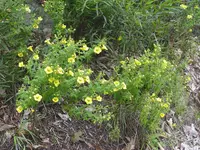
Fernleaf yellow false foxglove (Aureolaria pedicularia) is a perennial wildflower native to eastern North America. It often grows in open woodlands and along forest edges. The plant forms upright stems with finely divided, fern-like foliage and bright yellow, tubular flowers that appear in late summer. It is a hemiparasitic species, meaning its roots tap into nearby tree roots, usually oak, for part of its water and nutrients. This special growth habit makes it less predictable and harder to cultivate in ordinary garden beds. Those who want to learn how to care for fernleaf yellow false foxglove should understand its preference for sunny woodland conditions and well-drained, slightly dry to moderately moist soil.

Care Difficulty
Moderate Care

Light Preference
Partial Sun

Water Requirements
Moderate Water

Temperature Preference
Cold Hardy

Hardiness Zone
4–8

Soil Texture
Sandy, Loamy, Rocky

Soil pH
Acidic (5.5–6.5), Slightly acidic (6.5–7.0)

Soil Drainage
Well-drained

Fertilization
Minimal (feed rarely)
Scan your plant to receive care tips personalized for your specific plant
Available on iOS and Android
This hemiparasitic wildflower prefers bright, open conditions typical of sunny woodland edges and prairies.
This species prefers moderately moist but well-drained soils and does not thrive in waterlogged conditions.
This temperate wildflower is adapted to seasonal outdoor conditions in much of eastern North America.
This hemiparasitic wildflower tolerates a broad humidity range and rarely needs special humidity control outdoors.
This species prefers lean, well-drained mineral soils that mimic dry woodland or open roadside conditions.
This species is generally unsuitable for long-term container growing due to its hemiparasitic roots that depend on nearby host plants.
This native hemiparasitic wildflower typically grows well in natural soils and usually needs no additional fertilizer.
Aureolaria pedicularia needs only light, targeted pruning to maintain health in a garden setting.
This species is rarely kept in pots and is best managed by careful outdoor transplanting.
Raising new plants relies mainly on seed, as this hemiparasitic species is not well suited to division or cuttings.
This hardy perennial generally overwinters without special care in its native range, even in snowy climates.

Plant Health Check
Not sure what's wrong with your plant? Check your plant's health inside the app.
This species is a hemiparasite that attaches its roots to the roots of oaks, drawing water and dissolved minerals while still performing its own photosynthesis. It shows a marked preference for dry, upland oak woods rather than richer, wetter forests.
Plants typically flower in mid to late summer, producing tubular bright yellow blooms when many woodland herbs have already finished. This flowering time supports late-season pollinators such as bumblebees that can access the deep corolla tube.
Populations are most often found in relatively undisturbed, mature oak forests with a long history of continuity. Because it depends on both suitable oaks and stable woodland conditions, its presence can indicate a relatively intact forest understory.

The seeds are very small and light and are often dispersed downslope by gravity and surface runoff on thin, rocky soils, so colonies frequently appear in loose bands below parent plants along dry oak-covered hillsides.
This species is a hemiparasite that relies on oak roots, so it usually does not spread aggressively in gardens. It may seed around near suitable hosts, but tends to form scattered clumps rather than dense, choking colonies.
Keep your plants happy and healthy with plant identification, disease detection, and easy care guidance.