Jack in the pulpit Care (Arisaema triphyllum)

Also known as: Jack-in-the-Pulpit, Indian turnip, Preacher John, common Jack-in-the-pulpit
Jack in the pulpit

About Jack in the pulpit

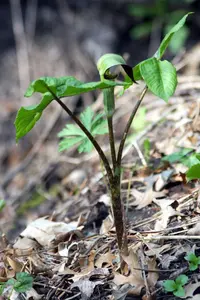
Jack in the pulpit, Arisaema triphyllum, is a woodland perennial native to eastern North America. It grows from a corm, sending up one or two three-part leaves and a hooded flower structure. The striped hood, or spathe, curves over a central spike, giving the plant its common name. Later, the flower is replaced by a tight cluster of bright red berries. In nature it occurs in deciduous forests, often in moist, humus-rich shade. It is not a beginner plant outdoors in hot, dry, or very sunny locations, but is fairly dependable in cool, consistently moist shade. Understanding how to care for Jack in the pulpit starts with providing stable shade and never letting the soil dry out completely.

Main Plant Requirements

Care Difficulty

Moderate Care

Light Preference

Shade

Water Requirements

Keep Soil Moist

Temperature Preference

Cold Hardy

Hardiness Zone

4–9

Soil Texture

Loamy, Silty, Organic-rich

Soil pH

Acidic (5.5–6.5), Slightly acidic (6.5–7.0)

Soil Drainage

Moist but well-drained

Fertilization

Minimal (feed rarely)

Get Personalized Care Plan

Scan your plant to receive care tips personalized for your specific plant

Available on iOS and Android

How to Care for the Jack in the pulpit

This woodland perennial grows best in soft, filtered light that mimics a forest understory.

  • Provide bright dappled shade or filtered light with 1–3 hours of gentle morning sun and no harsh afternoon sun.
  • Site Jack in the pulpit where it receives high shade from trees or shrubs; full sun can scorch foliage and dry the soil too quickly.
  • In summer, ensure overhead canopy or shade cloth in exposed gardens; in spring, brief extra sun is tolerated before trees fully leaf out.

This species prefers consistently moist, humus-rich soil without staying waterlogged.

  • Aim for soil that feels evenly moist at 5–8 cm depth; do not allow the root zone to dry hard, especially during active growth.
  • Use organic mulch on the planting area to retain moisture and improve drainage, preventing standing water around the corms.
  • Reduce watering once foliage yellows and dies back, as Arisaema triphyllum enters dormancy and excess moisture can lead to rot.

This woodland plant is adapted to cool to mild conditions with a pronounced winter dormancy.

  • Active growth is strongest around 55–75°F (13–24°C), typical of spring and early summer in temperate climates.
  • Dormant corms tolerate winter lows near 0°F (−18°C) when planted in the ground with good drainage and a 5–10 cm mulch layer.
  • Prolonged heat above 85°F (29°C) can stress plants; provide shade and consistent moisture, allowing natural dieback if summers are very hot.

This woodland species prefers steady, moderately humid air similar to a shaded forest floor.

  • Aim for 50–70% humidity, which is usually met outdoors in shaded beds or in sheltered, moist garden corners.
  • It tolerates short dry spells, but prolonged very dry air with hot wind can cause leaf edges to brown and wilt.
  • Increase local humidity by mulching heavily around the plant and grouping it near other moisture-loving shade plants when possible.

This plant thrives in loose, moisture-retentive but well-drained soil rich in organic matter.

  • Use a deep loamy mix with 40–60% composted leaf mold or garden compost plus native soil for structure and moisture holding.
  • Ensure the soil drains freely yet stays evenly moist; avoid heavy clay that stays waterlogged or sand that dries out quickly.
  • Target a slightly acidic pH around 5.5–6.5, similar to woodland soils where Arisaema triphyllum naturally occurs.
  • Improve aeration and drainage by working in shredded bark or fine pine fines and avoiding compaction from foot traffic.

This species can be grown in containers, but performance is usually better in the ground.

  • Choose a tall, relatively narrow pot to accommodate the corm at an adequate depth while keeping moisture more even than in a shallow dish.
  • Use a heavy or weighted container so the tall foliage and flower spadix do not tip the pot in wind or rain.
  • Fill the pot with a humus-rich mix that retains moisture but includes 20–30% mineral aggregate to prevent water from sitting at the bottom.

This woodland native usually needs minimal fertilizer when planted in rich, moist soil.

  • For Jack in the pulpit in poor or depleted soil, top-dress in early spring with 1–2 cm of leaf mold or compost.
  • In containers, use a balanced slow-release fertilizer (around 10-10-10) at half strength once in spring.
  • Avoid high-nitrogen feeds that push soft foliage instead of healthy corm development.
  • Do not fertilize during summer dormancy or winter, since inactive roots cannot use added nutrients.

Pruning Arisaema triphyllum is limited to light cleanup rather than shaping.

  • Cut back yellowing or collapsed foliage at soil level in late summer or fall using clean, sharp scissors or hand pruners.
  • Remove any dead, diseased, or pest-damaged leaves promptly to reduce disease spread.
  • Leave healthy foliage intact through the growing season so the plant can photosynthesize and recharge its corms.

Arisaema triphyllum is usually grown in the ground and only moved when necessary.

  • Transplant clumps in late fall or very early spring while dormant to limit stress.
  • Look for crowded clumps, declining vigor, or small flowering spikes as signs that division or relocation is needed every 4–6 years.
  • Lift corms gently with a fork, keeping as much surrounding soil as possible around the roots.
  • Replant at the same depth in a shaded, moist, humus-rich site, then water thoroughly to settle soil and reduce air pockets.

Arisaema triphyllum is commonly propagated by division and more slowly from seed.

  • Divide established clumps in late fall or early spring while dormant, separating corms by hand.
  • Replant divisions at the same depth in cool, moist, humus-rich soil, spacing them 15–20 cm apart.
  • Sow fresh seed in autumn outdoors or in a cold frame; natural cold stratification improves germination.
  • Keep seed pots evenly moist and shaded; seedlings may require several years to reach flowering size.

This species is cold hardy in much of its native range and usually needs little winter care in the ground.

  • Allow foliage to die back naturally after frost, then remove it to reduce overwintering pests and disease.
  • In colder areas or exposed sites, apply a 5–8 cm layer of leaf mulch over the root zone after soil cools.
  • For container plants, move pots into an unheated garage or cold frame to prevent repeated freeze–thaw cycles around the corms.

Care Tips

Mark Dormant Sites

Flag or discreetly label the exact spots where the clumps grow before foliage dies back so you do not accidentally dig into or compact the corms when the plant is dormant.

Leaf-Litter Mulching

Maintain a 3–5 cm layer of shredded leaves around the plants year-round to mimic woodland duff, protect corms from freeze–thaw cycles, and provide slow nutrient release as the litter decomposes.

Careful Division Timing

If clumps become crowded, lift and divide corms only in late summer to early fall after foliage has yellowed, replanting offsets at the same depth and spacing them 10–15 cm apart to reduce transplant shock.

Slug And Snail Management

Place iron phosphate slug bait or rough barriers like crushed gravel around plantings in early spring to protect emerging shoots from slug and snail damage without disturbing soil structure.

Seed Head Management

If self-seeding is undesirable, remove the seed heads as the berries start turning red, but leave a few in tucked-away areas if you want a slow, naturalized colony when growing Jack in the pulpit in woodland beds.

Common Pests and Diseases

Slugs and snails

These pests feed on tender foliage and flower structures, often leaving irregular holes and ragged edges on leaves and spadix. Symptoms include slime trails on soil and damaged emerging shoots in spring.

Solution

Hand-pick slugs and snails in the evening, use iron phosphate bait around clumps, and place coarse grit or copper barriers to reduce access. Keep mulch thin and remove damp debris close to plants so hiding spots are fewer, especially during cool, wet periods when caring for Jack in the pulpit.

Aphids

These insects cluster on young stems and flower stalks, sucking sap and causing distortion or yellowing of foliage. Sticky honeydew may appear on leaves and can lead to sooty mold growth.

Solution

Rinse colonies off with a firm stream of water, then spot-treat remaining clusters with insecticidal soap or a ready-to-use horticultural oil, following the label. Encourage natural predators by avoiding broad-spectrum insecticides in the surrounding garden.

Leaf spot

This disease produces brown or black lesions on leaves, sometimes with yellow halos or irregular margins, which can merge and cause partial leaf blight. Symptoms include premature yellowing and early collapse of foliage in midsummer.

Solution

Remove and discard affected leaves as they appear and clean up all fallen foliage at season’s end to reduce overwintering spores. Improve air circulation by spacing plants, avoid overhead watering, and if the problem recurs yearly, apply a labeled copper or chlorothalonil fungicide at the first sign of spotting.

Rhizome rot

This disease affects the underground corm-like rhizomes, causing soft, discolored tissue and sudden collapse of the aboveground growth, often in poorly drained or waterlogged sites. Symptoms include stunted shoots, yellowing, and plants that fail to re-emerge in spring.

Solution

Dig up and discard any soft, foul-smelling rhizomes and replant only firm, healthy tissue in a different, well-drained, humus-rich location. Improve drainage with organic matter, avoid overwatering, and do not replant in the same saturated spot where plants previously failed.

Interesting Facts

Seasonal sex change

This species can switch between male and female flowering from year to year, depending on how much energy is stored in the underground corm. Smaller, weaker plants usually produce only male flowers, while larger, well-nourished plants often become female.

Fungus gnat pollination

Pollination is mainly carried out by tiny fungus gnats that are lured into the hooded spathe by scent. The floral chamber is shaped so some insects are temporarily trapped, increasing the chance they pick up or deposit pollen before escaping.

Calcium oxalate defense

All parts of the plant contain abundant needle-like crystals of calcium oxalate, which can cause intense irritation if chewed. This chemical defense discourages herbivores from eating the leaves, corms, and ripe berries.

Botan icon

Did you know?

The bright red berries are highly attractive to birds such as thrushes, which eat the fruits and then disperse the hard seeds intact through their droppings, helping the species colonize new moist woodland patches over time.

FAQs about Jack in the pulpit

Blooming may fail if the corm is too young, depleted from past flowering, or lacks stored energy. Poor spring moisture, heavy disturbance, or insufficient nutrients can also prevent flower formation, even when foliage appears normal.

Grow Healthy Plants with Botan Care

Keep your plants happy and healthy with plant identification, disease detection, and easy care guidance.

Botan plant care app — identify plants on mobile

Explore More Plants