Anchusa stylosa Care

Anchusa stylosa

About Anchusa stylosa

Anchusa stylosa is a perennial flowering plant from the borage family, valued for its vivid blue, star-shaped blooms. It usually forms upright, branching clumps with narrow, slightly rough leaves and long flowering stems.

This species is native to southeastern Europe, where it grows in dry, sunny, open habitats. It suits gardeners who appreciate a slightly wild, informal look.

Anchusa stylosa is moderately easy to grow if its need for full sun and well-drained, not overly rich soil is respected. Understanding how to care for Anchusa stylosa mainly involves managing sunlight, drainage, and avoiding heavy, wet conditions.

Main Plant Requirements

Care Difficulty

Moderate Care

Light Preference

Full Sun

Water Requirements

Moderate Water

Temperature Preference

Cool Climate

Hardiness Zone

5–8

Soil Texture

Sandy, Loamy, Rocky

Soil pH

Slightly acidic (6.5–7.0), Neutral (7.0)

Soil Drainage

Well-drained

Fertilization

Minimal (feed rarely)

Get Personalized Care Plan

Scan your plant to receive care tips personalized for your specific plant

Available on iOS and Android

How to Care for the Anchusa stylosa

This sun-loving perennial performs best in open, bright positions with minimal shade.

  • Provide 6–8 hours of direct sun daily; morning and midday sun are ideal, with only light shade in late afternoon in very hot regions.
  • Anchusa stylosa tolerates light partial shade, but flowering and compact growth decrease noticeably with less than 4–5 hours of direct sun.
  • In summer, monitor for leaf scorch or drooping in exposed west-facing sites, and in cloudy seasons avoid overcrowding so nearby plants do not block light.

This species prefers moderately dry conditions and is sensitive to waterlogged soil.

  • Allow the top 3–5 cm of soil to dry before watering; in well-drained garden soil this often means deeper but less frequent watering rather than light daily splashes.
  • Increase watering slightly in peak flowering if leaves wilt early in the day, but reduce in cool or wet seasons to prevent root problems.
  • Use sharply draining soil or raised beds so water runs through quickly; yellowing lower leaves and soft stems suggest overwatering, while dull, limp foliage indicates underwatering.

This plant is adapted to temperate climates with cool to warm summers and relatively mild winters.

  • Active growth and flowering are strongest around 60–75°F (16–24°C), with good performance in typical spring and early summer conditions.
  • Established plants can tolerate brief drops to about 15–20°F (-9 to -6°C) with mulch, but young plants are more vulnerable to hard frost.
  • In hot regions, periods above 85–90°F (29–32°C) can cause stress; provide afternoon shade and consistent soil moisture during heatwaves to limit leaf scorch.

This species grows best in relatively dry air and does not have demanding humidity requirements.

  • Aim for 30–50% humidity, similar to a typical outdoor summer climate in temperate regions.
  • Plants tolerate dry air well; humidity stress is more likely from overly wet soil than from low atmospheric moisture.
  • If foliage wilts or spots appear while soil stays wet, reduce crowding around plants to improve air movement rather than raising humidity.

Anchusa stylosa prefers lean, very well-drained, slightly alkaline soil that never stays waterlogged.

  • Use a gritty mix such as 50% sandy or loamy garden soil, 30–40% coarse sand, and 10–20% fine gravel to keep roots aerated.
  • Aim for pH 7.0–8.0; in acidic ground, lightly work in garden lime according to product directions before planting.
  • Incorporate only modest compost (no more than 20% of the mix) to avoid overly rich, moisture-retentive conditions that encourage weak, floppy growth.
  • Avoid heavy clay, peat-heavy, or compacted substrates; if drainage is slow, raise the planting area in a low mound or bed to keep crowns dry.

This species can be grown in containers, but it performs best in deep, very free-draining pots placed in full sun.

  • Choose a tall, heavy container to provide enough root depth and prevent the plant from toppling in wind as stems elongate.
  • Fill the pot with a sharply draining, gritty mix so that water runs through within seconds rather than pooling on the surface.
  • Position the container where rain cannot continually saturate it, such as under slight eaves, to keep the root zone from remaining wet for long periods.

Feeding supports strong flowering in Anchusa stylosa grown in poorer soils, but heavy fertilization is unnecessary.

  • Use a balanced granular or slow-release fertilizer (around 10-10-10) or light compost in early spring.
  • Apply once at the start of the main growing season; a second light dose in midsummer is enough in very lean soil.
  • Water before and after feeding, using about half the label rate to avoid soft, floppy growth.
  • Stop fertilizing in late summer so growth hardens before winter dormancy.

Thoughtful pruning keeps Anchusa stylosa flowering well and maintains a tidy, upright habit.

  • Cut back spent flower spikes in late spring and summer to encourage new blooms and reduce self-seeding.
  • Remove dead, diseased, or storm-damaged stems whenever seen, using clean, sharp hand pruners.
  • Thin out congested shoots at the base to improve air flow and reduce foliar diseases.
  • Shear the clump lightly after main flowering to refresh foliage and control overall shape.

Anchusa stylosa is usually grown in open ground, so transplanting young plants correctly is more important than frequent repotting.

  • Move or plant on in early spring or early fall, when soil is moist and temperatures are mild.
  • Transplant if roots circle the pot, growth stalls, or the root ball dries out very quickly.
  • Handle the taproot gently, loosening only the outer roots and keeping the core root mass intact.
  • Replant at the same depth in well-drained soil, water thoroughly, then keep evenly moist until established.

Anchusa stylosa is most often propagated from seed, with division or basal cuttings used more selectively.

  • Sow fresh seeds in late summer or early spring in free-draining mix; cool conditions improve germination.
  • Cover seeds very lightly, keep evenly moist, and provide bright light to prevent weak, leggy seedlings.
  • Take non-flowering basal cuttings in spring, use rooting hormone, and place in a gritty, moist medium.
  • Divide only younger clumps in early spring, replanting divisions promptly to reduce taproot stress.

Anchusa stylosa is generally hardy in temperate climates and needs only light winter care once established.

  • Tolerates typical frosts in much of the US, but young plants benefit from extra protection in the first winter.
  • After top growth dies back, leave some stems to catch insulating snow and reduce crown heaving.
  • Apply a 5–8 cm mulch around, not on, the crown to buffer freeze–thaw cycles, especially in colder zones.
  • In containers, move pots to a sheltered, unheated spot to prevent rootball freezing and waterlogging.

Care Tips

Staggered Rejuvenation

Cut back only one-third of the clump at a time after flowering to encourage fresh basal growth while preserving some bloom and photosynthesis for ongoing energy storage.

Self-Seeding Management

Mark the best-performing plants during peak bloom, then allow only those to set seed while deadheading the rest to control spread and gradually select for stronger, more floriferous plants when growing Anchusa stylosa.

Root Zone Cooling

Apply a light, pale-colored mineral mulch such as fine gravel around but not touching the crowns to keep the root zone slightly cooler and drier, which reduces crown rot risk in hot summers.

Support Against Lodging

Install low, circular plant supports or discretely place short bamboo canes and soft ties early in the season so tall, brittle stems are held upright before wind or rain causes them to flop or snap.

Proactive Rust Monitoring

From late spring, inspect the lower leaf surfaces weekly for small orange-brown pustules, and remove and bin affected foliage immediately to slow rust spread without resorting to frequent fungicide use.

Common Pests and Diseases

Powdery mildew

This disease causes a white, powdery coating on leaves, stems, and sometimes flower buds, often appearing in warm, dry weather with poor air movement. Symptoms include distorted new growth and premature leaf yellowing or drop.

Solution

Remove and discard the most affected leaves to reduce spore load, then improve airflow by thinning crowded stems and nearby plants. Avoid overhead watering, water at the base in the morning, and if needed apply a sulfur, potassium bicarbonate, or neem-based fungicide labeled for ornamentals according to label directions.

Downy mildew

This disease produces yellow or pale patches on the upper leaf surface with grayish or purplish fuzz beneath, especially in cool, humid conditions. Symptoms include leaf curling and eventual browning and drop, which weakens the plant and reduces flowering.

Solution

Promptly remove and dispose of affected foliage, then increase spacing and ventilation around plants to keep leaves dry. Water early in the day at soil level, reduce overhead irrigation, and in recurrent cases use a copper-based or phosphonate fungicide suited to flowering perennials as a preventive spray during cool, damp periods.

Leaf spot

This disease causes small brown, tan, or purplish spots on leaves that may merge into larger dead patches. Symptoms include thinning foliage and reduced vigor in dense clumps, especially after wet weather or overhead watering.

Solution

Trim off and discard heavily spotted leaves and any dead basal foliage to limit spread, and keep the crown area clean. Water at the base, allow the soil surface to dry between waterings, and where needed apply a chlorothalonil or copper-based fungicide labeled for leaf spots on ornamentals during extended wet spells.

Aphids

These insects cluster on soft stems, buds, and the undersides of leaves, sucking sap and excreting sticky honeydew. This pest can cause curled, distorted growth and may attract sooty mold on the leaf surface.

Solution

Spray colonies off with a firm stream of water, then inspect regularly and repeat as needed to keep numbers low. For persistent infestations, treat with insecticidal soap or a light horticultural oil, making sure to cover the undersides of leaves and young shoots while protecting beneficial insects as much as possible.

Leaf-mining fly

This pest creates pale, winding tunnels inside the leaves, which look like whitish or translucent trails between the upper and lower leaf surfaces. Symptoms include cosmetic damage and, in severe cases, reduced photosynthesis and vigor in clumps of Anchusa stylosa care instructions grown in stress conditions.

Solution

Remove and discard mined leaves as soon as trails are noticed to physically remove larvae and reduce future adults. Encourage natural predators, avoid broad-spectrum insecticides, and if damage is heavy consider using a systemic insecticide labeled for ornamental leaf miners, applied according to local guidelines and label instructions.

Interesting Facts

Mediterranean limestone specialist

Anchusa stylosa is naturally restricted to rocky limestone slopes in parts of Greece, especially on the Peloponnese, where it grows in shallow, mineral-rich soils with very low organic matter.

Distinctive bristly foliage

This species has narrow, rough, bristly leaves and stems, a typical feature of the borage family (Boraginaceae), which helps reduce herbivory and water loss in its dry, sunny native habitats.

Branched blue flower spikes

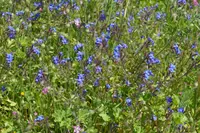
Anchusa stylosa forms tall, much-branched inflorescences with many small, intense blue, funnel-shaped flowers that are arranged in coiled cymes, a flower structure characteristic of the borage family.

FAQs about Anchusa stylosa

This species is highly attractive to bees, hoverflies, and butterflies due to its rich nectar and vivid blue flowers. Planting it in sunny borders helps support pollinator diversity and can improve pollination of nearby fruiting plants.

Grow Healthy Plants with Botan Care

Keep your plants happy and healthy with plant identification, disease detection, and easy care guidance.

Botan plant care app — identify plants on mobile

Explore More Plants