Stabilize In Sandy Sites
Pin down young runners with short pieces of biodegradable garden twine or small U-shaped wire staples so the plant can anchor quickly in loose sand and resist wind disturbance.

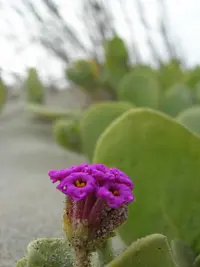
Red sand verbena, Abronia maritima, is a low, spreading coastal perennial native to sandy beaches of the Pacific coast of North America. It forms dense, mat-like clumps with fleshy leaves and showy clusters of deep pink to red flowers.
This plant is adapted to harsh, salty, and shifting dune conditions, which makes it tough but also quite specific about its growing environment. Gardeners who care for red sand verbena usually need very well-drained, sandy soil and exposure similar to full sun on a coastal site.
It suits naturalistic seaside gardens, restoration projects, and dry, sandy banks where many other plants struggle to establish.

Care Difficulty
Moderate Care

Light Preference
Full Sun

Water Requirements
Low Water

Temperature Preference
Tropical / Frost Sensitive

Hardiness Zone
9–11

Soil Texture
Sandy, Rocky

Soil pH
Slightly acidic (6.5–7.0), Neutral (7.0)

Soil Drainage
Well-drained

Fertilization
Minimal (feed rarely)
Scan your plant to receive care tips personalized for your specific plant
Available on iOS and Android
This coastal species thrives in strong light and open exposure typical of sunny shorelines.
This dune plant is adapted to dry, fast-draining conditions and is prone to root problems in wet soil.
This species is adapted to warm, coastal climates with mild winters and limited temperature extremes.
This coastal species handles low humidity well and rarely needs special moisture control.
Abronia maritima prefers very fast-draining, sandy soil that mimics coastal dunes.
This species can be grown in containers if the setup mimics its naturally dry, free-draining habitat.
Abronia maritima is adapted to nutrient-poor sandy soils and needs only light feeding in cultivation.
Abronia maritima benefits from light, occasional pruning to keep the plant compact and flowering well.
This coastal species is usually grown in the ground, so care focuses more on transplanting than frequent repotting.
Abronia maritima is most often propagated from seed but can also be increased by softwood cuttings under the right conditions.
In mild coastal climates, red sand verbena usually needs minimal winter care once established.

Plant Health Check
Not sure what's wrong with your plant? Check your plant's health inside the app.
This species naturally grows almost exclusively on Pacific Ocean sandy beaches of southern California and northwestern Mexico, where it anchors loose dune sand and helps stabilize the shoreline.
The plant tolerates high salinity and intense sun, with thick, somewhat succulent leaves that store water and reduce water loss in its hot, dry, maritime habitat.
Its deep red to magenta flower clusters release a stronger fragrance in the evening and night, which is thought to help attract nocturnal pollinators such as moths.

Abronia maritima often forms low, sprawling mats that can trap and accumulate wind-blown sand, gradually building small dunes that create microhabitats for other coastal plants and invertebrates.
This coastal wildflower is highly attractive to night-flying moths and various native bees. The tubular red flowers provide nectar, supporting pollinators in dry, sandy habitats and enhancing biodiversity in dune or coastal-style plantings.
Keep your plants happy and healthy with plant identification, disease detection, and easy care guidance.

-1-200x133.webp)